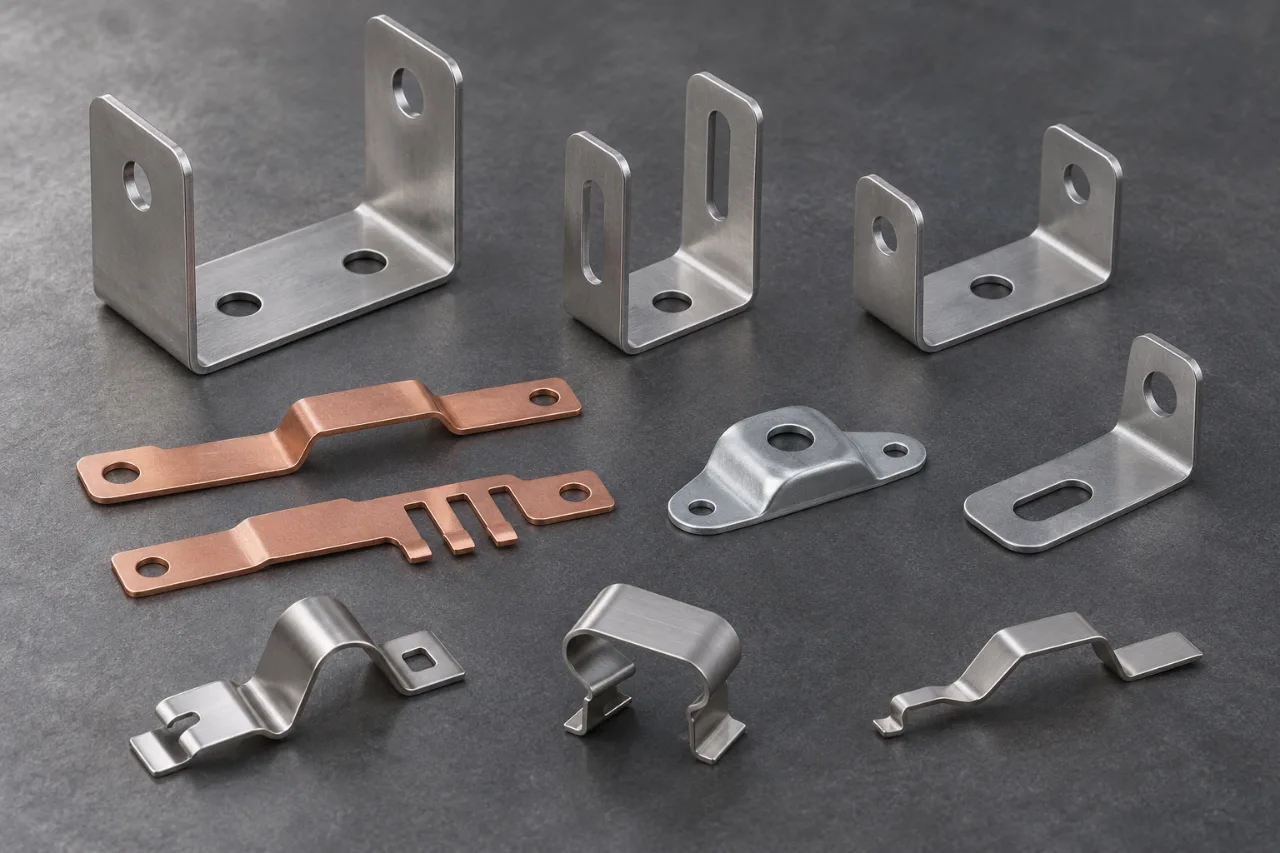
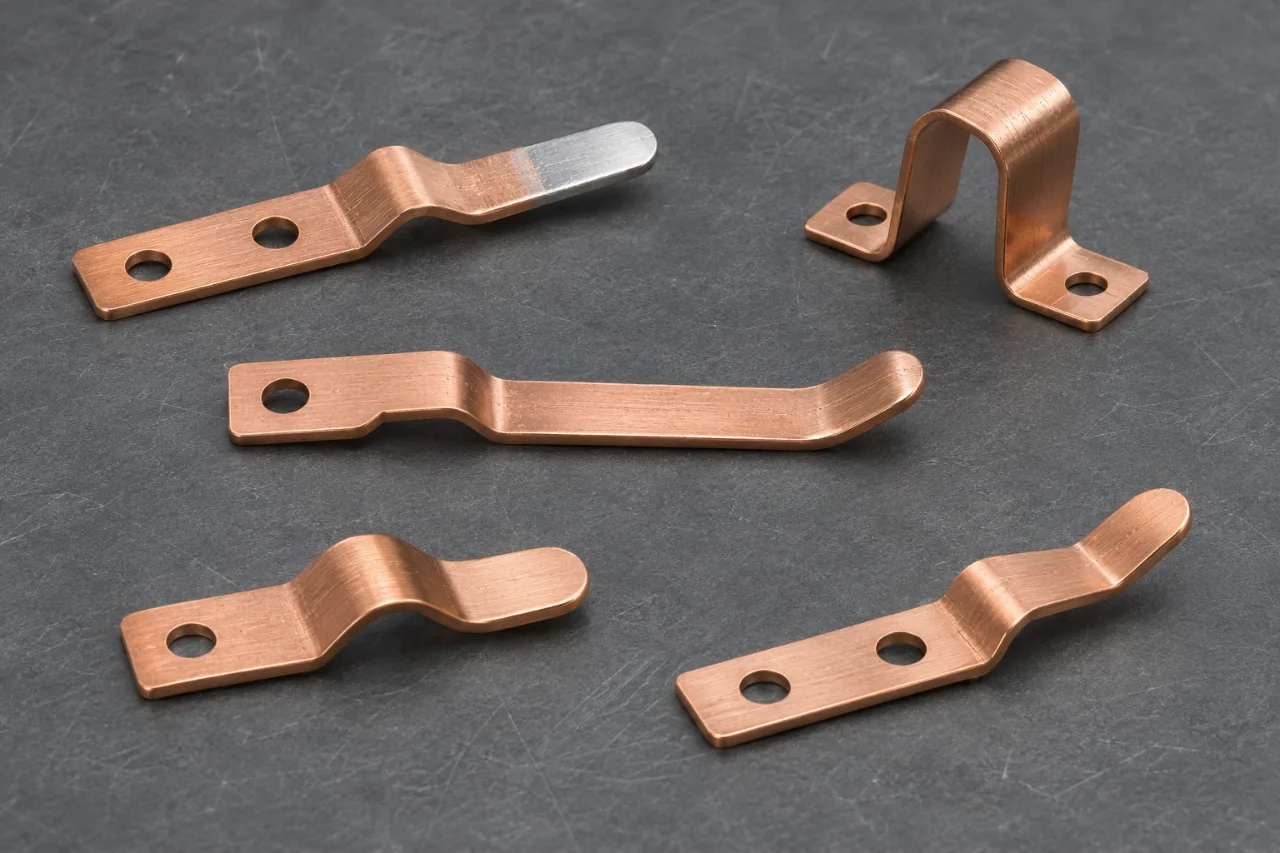
OEM sourcing / production route review
From Cutting and Bending to Progressive Die Production
A repeat part needs a production route that fits the program behind the drawing. This engineering case examines the purchasing decision between a flexible cutting-and-bending route and a dedicated progressive die. The review connects design stability, release demand, strip layout, finished-part requirements and tooling ownership, giving the buyer a way to assess the complete program before committing to the next production route. Each decision uses the same finished part requirement, so tooling investment and ongoing supply can be assessed together.
- Customer
- OEM component purchasing team
- Component
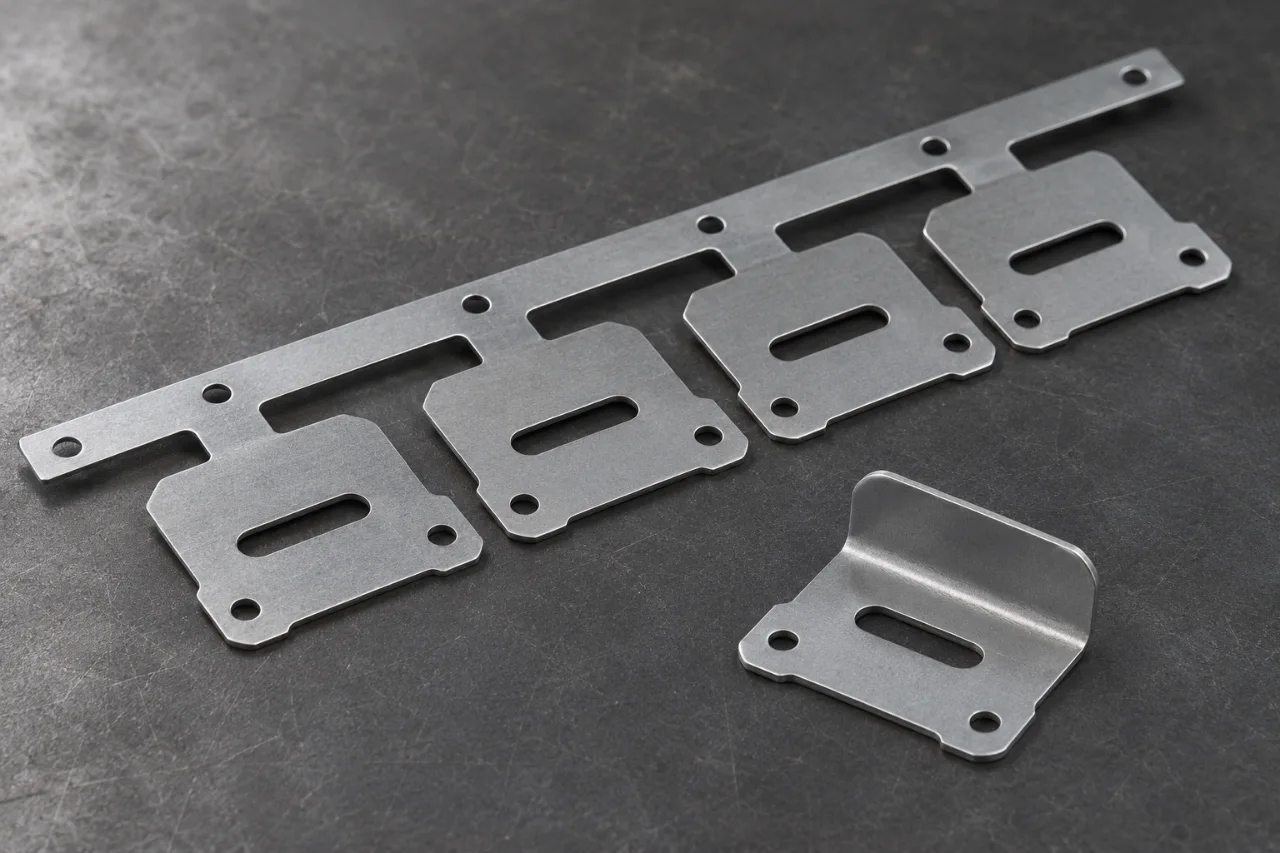
- Recurring sheet metal component with pierced features and formed flanges
- Manufacturing route
- Route comparison between cutting and bending and progressive die stamping
- Material
- Sheet or strip metal in the specified grade, thickness and condition
01 / The challenge
Make the requirement work in the real assembly.
An attractive unit price does not explain whether a progressive die is the right investment. The buyer needs to understand what the tool includes, which operations remain outside it and how the full proposal serves expected releases. Engineering needs the same comparison to preserve the geometry and interfaces already accepted by the assembly team.
The transition also needs a clear approval path. A new die produces a component through a different sequence, so the trial and finished-part checks must establish the agreed requirement before the route serves a release. The project treats demand, tool scope and approval as connected purchasing decisions.
- Sourcing decision
- Compare an existing flexible cutting-and-bending route with a progressive die using the same finished-part specification and approval requirements.
- Program inputs
- Bring the release forecast, design stage and expected revisions into the comparison rather than judging the tool investment from one order alone.
- Engineering work
- Review the strip, carrier, station sequence, part separation and any secondary work needed to supply the complete approved component.
- Release plan
- Define trial approval, ownership, maintenance and the milestone that authorizes the new route for repeat purchase releases.
02 / Engineering approach
Turn the difficult details into a manufacturing plan.
Compare the same finished component
The starting application is a sheet metal component with pierced features and formed flanges. Cutting and bending provide a flexible route for early builds or variable releases. A progressive die offers another route when the drawing and expected demand support dedicated tooling. The purchasing review begins by freezing the comparison basis: part revision, material condition, finish, functional dimensions, inspection and packing. Both proposals must reach the same delivered component.
Build the existing route into the brief without assuming every operation transfers directly into a die. Identify cutting, edge preparation, forming, secondary work and finishing separately. List the approved assembly interfaces and the checks used at receipt. This gives the tool review a clear finished-part requirement while leaving room to propose a different operation sequence that preserves the same accepted function.
Make demand and design stability visible
Include the first release, the expected repeat pattern and the forecast horizon used for the decision. The die investment serves a program of releases, so the first purchase alone rarely describes the whole commercial picture. State known drawing changes, product-development milestones and the features still being evaluated. A route comparison becomes more useful when engineering and purchasing use the same view of the design stage and expected demand.
Compare scenarios using the quantities and timing that your team can support. Separate the die cost from recurring part cost, then include the operations and services needed under each route. Discuss setup, material use, finishing, inspection, packing and the commercial terms for tool care. A stable forecast gives the review a basis for assessing the investment; a changing forecast can be evaluated through clearly identified alternatives rather than a single assumed annual total.
Turn the part geometry into a strip concept
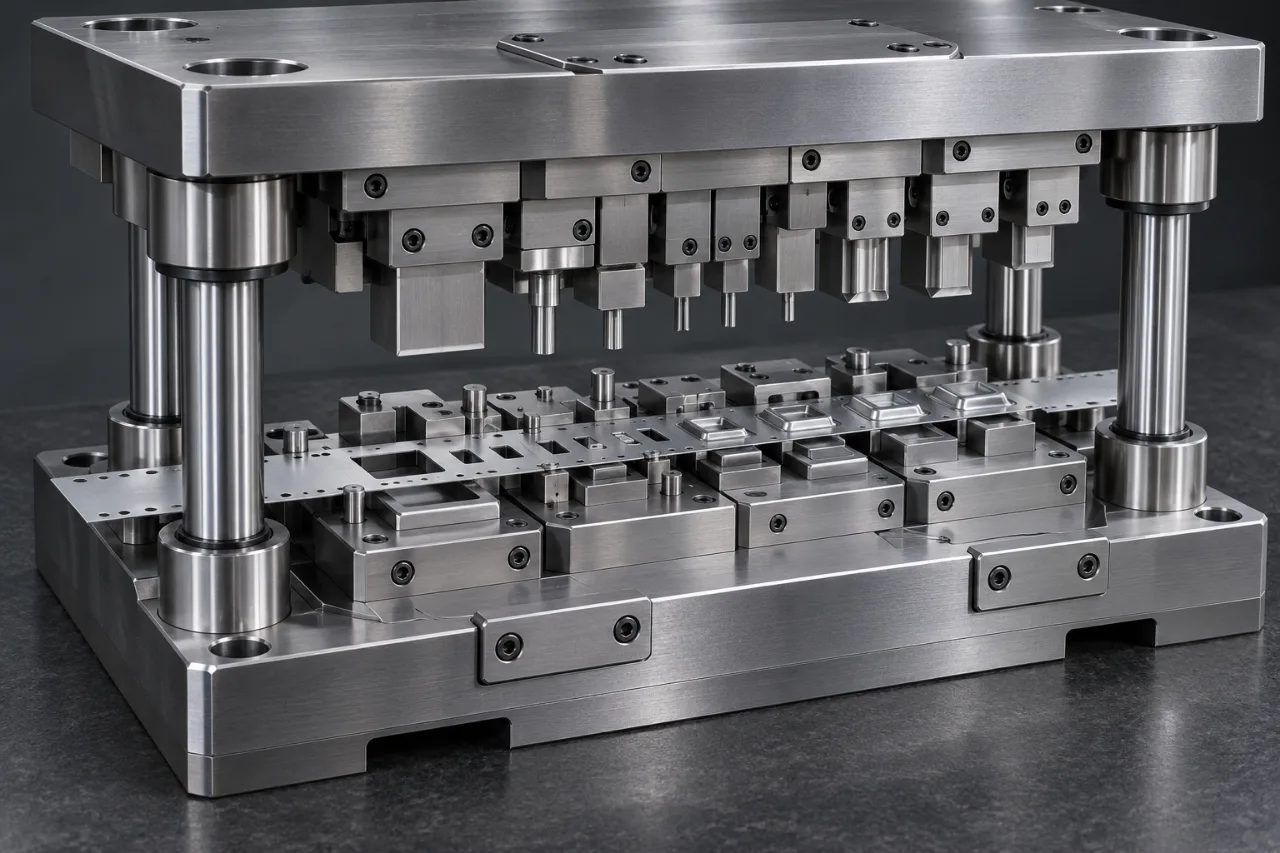
The progressive concept needs to show how piercing, trimming and forming fit into a connected sequence. Review part orientation, the carrier arrangement, feed direction and the location of final separation. The strip supports the component while features are created, so the die concept must connect handling and locating to the functional dimensions. Include burr direction and any permitted witness at the cutoff point in the part requirements.
Review material utilization alongside station function and part support. A layout that appears compact on paper still needs a practical route for forming and removing scrap. Connect the proposed concept to the specified strip grade, thickness and condition, then identify any operations that remain outside the press. The buyer should be able to see what the progressive die includes, what follows it and how the finished part reaches its approval condition.
Make approval a planned transition
Agree the die-trial material, sample quantity and inspection scope before construction is released. Use the controlled part revision and agreed critical features for the trial review. Include the finished condition needed to evaluate assembly, whether that requires later plating, coating or secondary work. This distinguishes a trial of the tool concept from approval of the complete delivered part and makes the required sample stages visible in the project plan.
Keep the current supply route connected to the transition milestones. State which approval allows the new route to serve a purchase release, and retain an identifiable baseline for the existing component. Record trial corrections, drawing clarifications and buyer-requested changes separately. The objective is an orderly transfer from one accepted route to another, with the sample and inspection evidence needed by the team that authorizes the release.
Compare complete program cost and ongoing control
A useful commercial comparison shows one-time tooling, recurring manufacturing and any route-specific work as separate items. Include maintenance responsibilities, included wear components, storage and the handling of later drawing revisions. Define ownership of the physical die and any included files or gauges. These terms affect the continuing program and belong beside the quoted unit price when the team evaluates the proposed production route.
Once the route is approved, connect the tool identity, accepted sample, material condition and part revision in the repeat-order package. Agree the production checks, shipment records and packing requirements. A later revision should identify the affected features and the follow-up sample or report required. The tooling decision then becomes part of a controlled sourcing plan that purchasing can use for future releases, with both the commercial scope and approval baseline clearly stated.
03 / Production route
From the first drawing to the next release.
- 01
Freeze the comparison
Use one part revision, material, finish and approval requirement for the flexible route and progressive proposal. List all operations needed to reach the delivered component.
- 02
Review program demand
Share release quantities, forecast timing and planned engineering changes. Compare one-time tooling with complete recurring scope over the agreed program scenarios.
- 03
Approve concept and trials
Review the strip and station concept, included operations and tool ownership. Agree trial material, sample condition and the acceptance evidence before construction release.
- 04
Authorize the route transfer
Connect approved samples and inspection to a defined purchase release. Preserve the accepted part specification and record any process or engineering changes.
04 / Quality & acceptance
Give engineering and receiving the same reference.
| Control point | What defines approval |
|---|---|
| Comparable scope | Each proposal includes the same finished geometry, material, surface, inspection and packing requirement. |
| Explained die concept | Station sequence, carrier, feed direction and separation connect to the component and its critical features. |
| Trial approval | Identified samples and inspection results refer to the controlled drawing and agreed finished condition. |
| Repeat-order baseline | Tool identity, accepted revision, material, care responsibilities and shipment requirements remain connected. |
05 / Results & repeat supply
Connect the engineering work to purchasing value.
Manufacturing performance benchmarks for sampling, production and final acceptance.
- Lead-time reduction
- 25–40%
- Delivery lead-time reduction baseline
- Overall cost reduction
- 15–30%
- Comprehensive manufacturing cost reduction range
- First-pass inspection
- 99.7–99.9%
- First-pass inspection acceptance range
- Production window
- 12–20 days
- Repeat production window
The operating baseline includes a 25–40% reduction in delivery lead time and a 15–30% reduction in comprehensive cost. Apply the same finished-part scope when evaluating the two production routes: material, secondary operations, finish, approval work and packing all belong in the comparison. This keeps the purchasing review aligned with the component actually delivered to the next build.
Repeat production follows a 12–20 day window, with first-pass inspection in the 99.7–99.9% range. First-order approval leads into long-term batch reorders using the accepted drawing and production baseline. Tool identity, ownership, maintenance and engineering changes remain part of that continuing release plan rather than separate decisions made after the initial tooling purchase.
The buying objective is a tooling decision based on the complete finished part and a realistic release program. A comparable quote, explained strip concept and planned approval path make the investment easier to assess. Bring the existing drawing, current route and repeat forecast so the discussion can compare practical options against the same requirement.
Ask for a written comparison that distinguishes one-time die work from recurring manufacturing and identifies the approval deliverables attached to each route. The buyer can then assess design maturity, expected demand and continuing responsibilities alongside price. That provides a practical basis for approving tooling, retaining a flexible route or planning a phased change.
Customer feedback
Customer feedback centers on stable tolerances, quick responses and support resolving earlier supplier yield and delivery problems. In a route-transfer review, those priorities translate into a clear finished-part baseline, timely technical decisions and a continuing supply plan after first-order approval. The commercial discussion stays connected to the buyer's repeat program.
06 / Project questions
Before you quote a similar component.
At what quantity should a part move to a progressive die?
The decision depends on the part, tool scope, release pattern, design stability and complete recurring cost. Compare the same finished component across realistic program quantities rather than using a universal order threshold. Include the responsibilities and approval work attached to the proposed die.
Can the current route continue while a new die is being approved?
A transition plan can identify the supply route used before tooling approval and the milestone that authorizes the new route. Keep the accepted part specification common to the comparison and record the samples, reports and purchase release needed for the transfer.
What belongs in a progressive die quotation besides tool cost?
Define the included operations, trial material and samples, inspection scope, ownership, storage and maintenance responsibilities. List any secondary machining, finish and packing separately within the full component proposal. This lets purchasing compare the program beyond the initial physical die.
How should a design change be handled during the transfer?
Identify the changed features against the released part and tool baseline. Separate a new design requirement from a correction needed to meet the existing drawing, then agree the affected tool work and approval evidence. State which purchase release uses the revised specification.
07 / Your project
Compare the route before you commit the tool.
Bring the current drawing, existing route and repeat forecast. Review the complete cost, strip concept, tooling scope and approval path for your next production stage.
- Released drawing, formed model and current finished-part specification
- Existing cutting, forming, secondary work and inspection scope
- First release, repeat forecast and known engineering changes
- Material, finish, edge direction and critical assembly features
- Tool ownership, trial deliverables, maintenance and transition milestones