
Metal stamping / progressive dies
Progressive Die Stamping for Repeat Metal Parts
Progressive die stamping is a core route within WenXinDa's stamping and tooling work. Piercing, blanking and forming are arranged along an advancing metal strip for repeat brackets, clips, terminals and formed components. We review the strip concept, die development, trials and production controls together, so the tooling investment is connected to the finished part and expected demand.
Process at a glance
Cutting and forming repeated along the strip
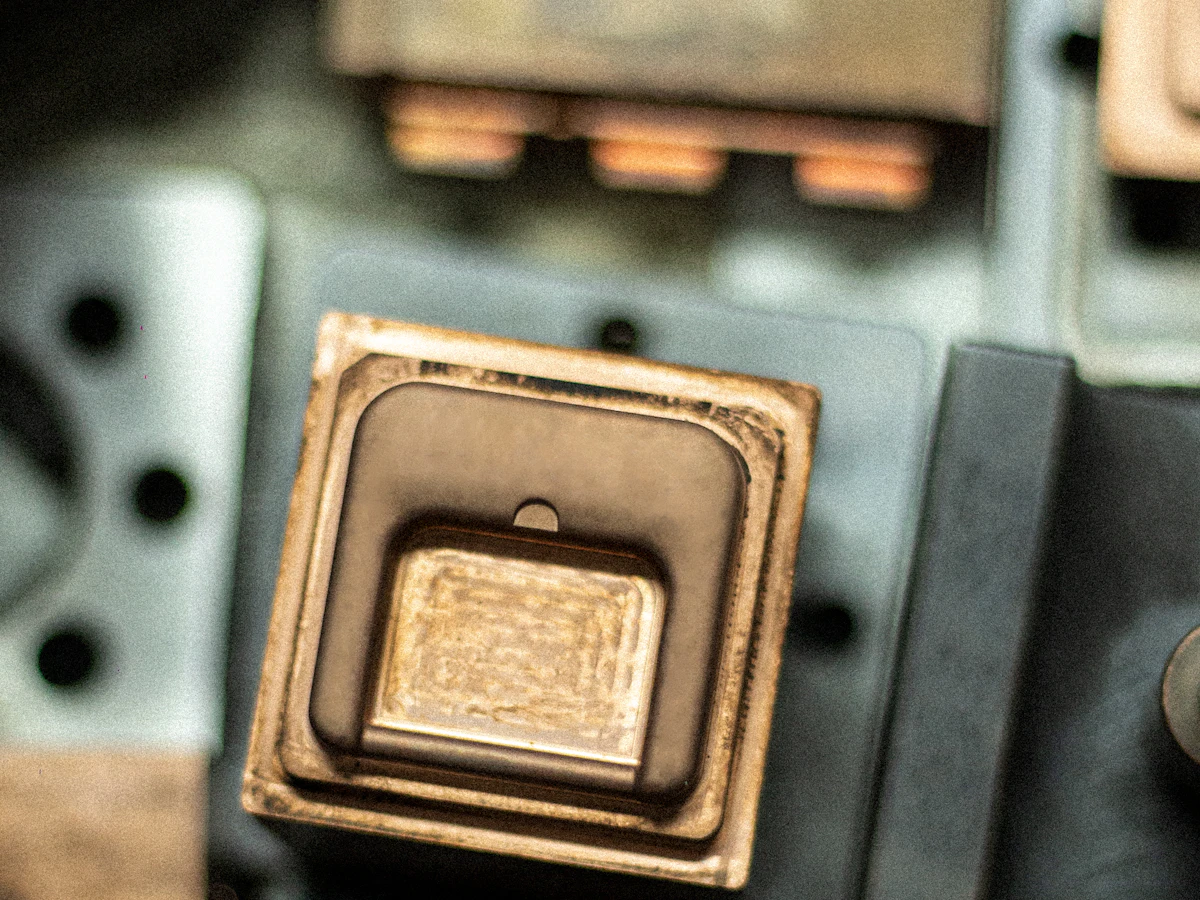
Each station uses tooling to cut or form a feature. In a progressive die, the strip carries the part from station to station until it separates. The strip plan must account for location, forming clearance, scrap and burr direction as well as the finished geometry.
The operation creates the geometry; the part function determines which features need the closest control.
01 Fit
Progressive stamping for stable, repeated part demand
A progressive die earns its value over repeated production. It is most useful when the geometry is established and the demand forecast supports a dedicated sequence of operations.
Repeated small components
Brackets, clips and terminals with several cut or formed features can be candidates when annual demand is meaningful.
Multi-operation profiles
Piercing, trimming and forming can be sequenced in one strip plan rather than quoted as unrelated steps.
Controlled revisions
A released drawing and forecast help establish whether the tooling investment has a sensible payback.
Design review
Design for the strip, die and inspection
A productive strip layout must carry the part securely through each station, leave room for forming and use material efficiently. The review connects those decisions to the dimensions and edge condition needed in the assembly.
- Provide a controlled 2D drawing, formed model, material specification and expected order pattern.
- Identify grain direction, burr direction and cosmetic side if they affect the application.
- Review holes and narrow bridges near bends, lances or formed features.
- Define critical feature datums, first-article checks and monitoring during repeat runs.
- Review die and press compatibility, material feeding and part release before construction.
- Agree who owns the die, where it is stored and how wear components and revisions are handled.
02 Decisions
The economics and controls of a progressive die
Compare the total program cost, including die investment and material yield. The lowest piece price is useful only when the finished part, trial work and ongoing tool care are included.
| Decision | What to specify | Why it matters |
|---|---|---|
| Tooling investment | Die scope, approval samples and ownership | Upfront work needs a clear approval and payment boundary. |
| Material use | Strip width, feed pitch and scrap strategy | Yield affects both unit cost and material planning. |
| Part quality | Burr direction, formed height and critical features | Agree the checks and action limits that trigger a tooling review. |
| Production continuity | Tool identification, storage and service responsibility | Repeat orders rely on the approved die condition and part revision. |
| Demand pattern | Order size, forecast and revision stability | The best process depends on total demand, not one release. |
03 Project route
From part drawing to repeat releases
Develop the strip and die around the released part, use trials to settle the critical features, then carry the approved settings and inspection points into repeat orders.
- 01
Assess the part
Review drawing, material, geometry, demand and alternative processes.
- 02
Develop the die concept
Agree the strip layout, station sequence, press requirements, ownership and trial criteria before construction.
- 03
Trial and approve
Inspect trial parts in the specified material, record corrections and approve the finished-part condition before release.
- 04
Release repeat stamping
Keep the accepted sample, drawing revision, inspection plan and tool service responsibilities with subsequent orders.
04 Applications
Progressive stamped parts for repeated assembly
Several piercing and forming operations can be combined while the strip maintains part orientation from station to station.
Electrical contact carrier
A small part where piercing, forming and orientation must repeat.
Mounting clip
A formed strip component with spring behavior and burr limits.
Automotive bracket feature
A repeat component with cutouts, bends and controlled locating points.
If the design is still changing, use a pilot, staged or laser-and-bend route to learn first. Compare progressive tooling once the geometry and expected demand give the investment a clear purpose.
05 Common questions
Questions before you request a quote
Straightforward answers to the design, manufacturing and purchasing questions that come up before an order.
How does a progressive die work?
A metal strip advances through a sequence of stations. Each station pierces, cuts or forms a feature, and the finished part separates at the end of the sequence. The strip layout controls orientation and material use.
When is progressive die stamping economical?
It becomes attractive when a stable part is ordered repeatedly and the per-part saving can recover the die investment. Compare expected lifetime demand, material yield, secondary work and maintenance against alternative routes.
Can the part design change after the die is built?
Yes, but the change may affect a punch, insert, forming station or strip layout. Review the new revision with the tool design and identify any new trial or inspection work before releasing it.
What should trial samples establish?
Trials should show that the agreed material and tool produce the required geometry, burr direction, formed features and fit. The accepted samples and inspection results provide a reference for subsequent production.
Prepare an RFQ
Compare a progressive die route for your part
Send the drawing and forecast together. The tooling proposal needs to address the part geometry and how often you expect to buy it.
- • Released drawing, formed model and mating context
- • Material, thickness, temper, release quantity and annual demand
- • Burr, grain, finish and critical feature requirements
- • Die ownership, trial deliverables and inspection expectations