
About WenXinDa
WenXinDa is a metal stamping and die tooling supplier in Dongguan, China. We help OEM buyers connect part design, stamping tools, trial samples, and repeat production, with sheet metal fabrication and CNC machining available for supporting work.
01 Our focus
Stamping and tooling
A clip, contact, or formed bracket needs more than a die that makes the shape. Material condition, burr direction, springback, functional dimensions, and repeat demand all affect the tooling and production plan.
Based in Dongguan, China, WenXinDa focuses on metal stamping and stamping die projects for OEM buyers and product teams. We connect the released drawing with tool scope, sample approval, recurring part requirements, and the delivery your receiving team expects.
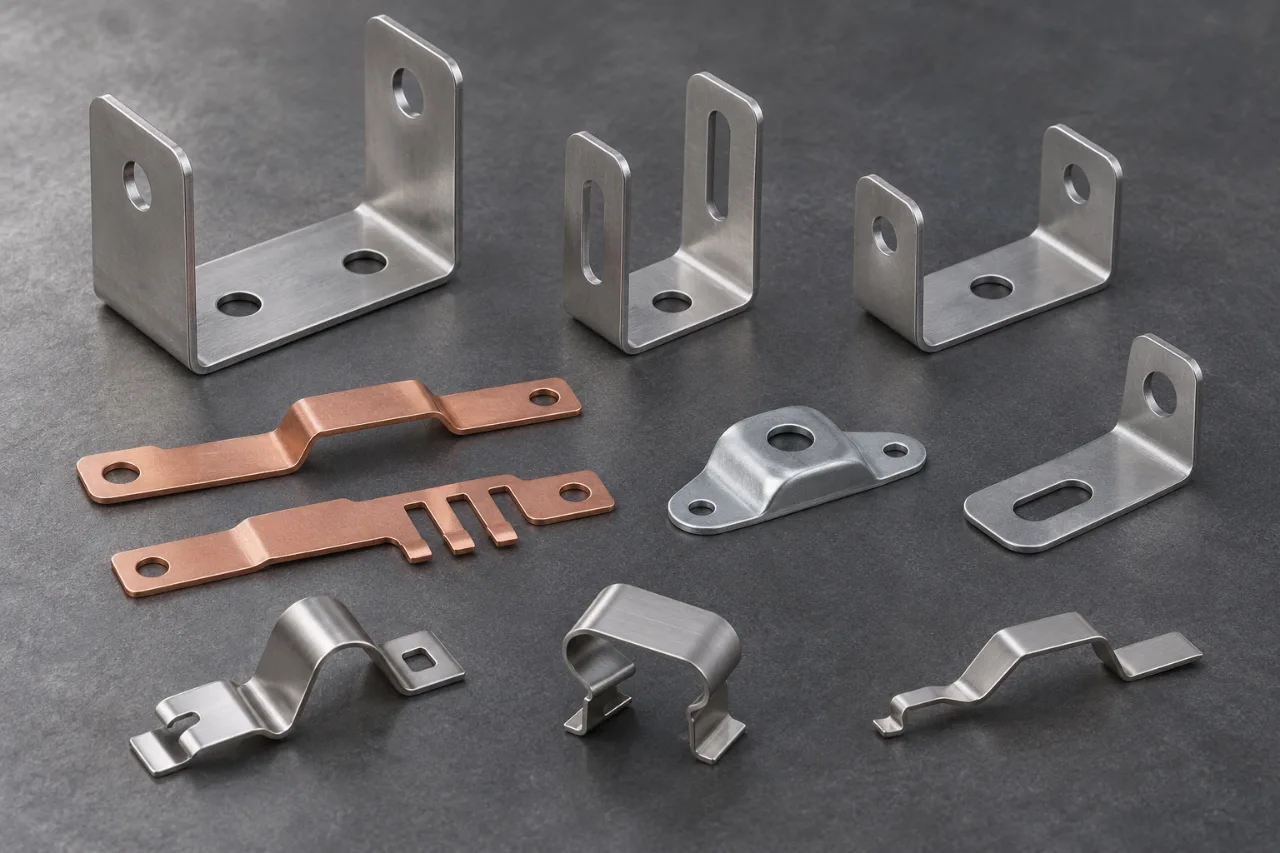
We work with custom parts such as brackets with repeated hole patterns, retaining clips with a defined fit, and contacts with controlled working surfaces. You bring the application knowledge; we help translate it into drawing, tooling, and inspection details.
From the first tooling enquiry to repeat stamped-part orders, we keep the approval points visible: drawing release, tool design scope, trial samples, corrective work, and production acceptance. Supporting fabrication or CNC work is included where the finished part needs it.
02 Stamping and tooling first
Manufacturing scope
Metal stamping and stamping dies are our main focus. We develop the project around repeat-part requirements and the tool that supports them; fabrication and CNC machining cover complementary components or secondary features.
Metal stamping
Clips, contacts, brackets, and formed hardware for repeat orders. Plan material thickness and temper, edge condition, sample approval, and batch inspection around the working part.
Explore metal stampingStamping dies and tooling
Define the die concept, production material, trial criteria, and handover package before committing to tooling. Keep ownership, maintenance, spare parts, and later changes in the agreed scope.
Explore stamping toolingSupporting operations
Sheet metal fabrication and CNC machining support related components, prototypes, and secondary features. Review these operations with the stamped part so the complete assembly follows one specification.
Review supporting servicesFor a supplied die, review the receiving press and feed requirements alongside the part. For supplied components, define the finishing, secondary work, and inspection included in each production release.
03 How we work
Project coordination
We want your purchasing and engineering teams to understand the same quote. Material, operations, tooling, finishing, inspection, and packing belong in one clear scope, with optional work easy to identify.
Tooling decisions are easier to address before the design is frozen. A hole close to a formed edge, a clip that depends on material temper, or a burr on a contact face can affect fit and die design. We bring those questions into the drawing review.
An approved part number and revision give repeat orders a reliable reference. When a design changes, we review the affected tooling, process, finish, and inspection together so the next batch follows the right specification.
04 Working together
Order process
A straightforward order process helps your team see what happens next, who needs to approve it, and what will be included in the delivery.
- 01
Define the part
Send the drawing, material, quantities, and intended use. We identify the features and customer requirements that drive the job.
- 02
Review the route
Compare the manufacturing operations, tooling, finish, and practical design adjustments before committing to the order.
- 03
Agree acceptance
Set the sample approval, critical dimensions, surface requirements, and inspection records around the finished part.
- 04
Plan the handover
Organize packing, labels, delivery terms, and required documents around the receiving location and order schedule.
05 Purchasing support
Engineering and quality records
Good communication reduces the work around a purchase order. We bring the manufacturing scope, critical features, and required records into the quotation so engineering, purchasing, and quality can work from the same information.
- Manufacturing: a defined process, tooling or fixture scope, and sequence for secondary operations.
- Quality: critical feature checks, sample approval, and an inspection format suited to your receiving process.
- Material: a clear grade, condition, and finish specification, with required material records included in the order.
- Order records: the approved drawing, quotation scope, and delivery requirements kept connected to the part number.
06 Buyer priorities
Buyer requirements
Fit, finish, approval, and delivery each influence the success of a custom part. We connect these priorities to the same manufacturing brief.
| Decision | Why it matters | What to provide |
|---|---|---|
| Function & assembly | A dimension can be easy to measure yet unimportant, while a small mating feature determines whether the assembly works. | Critical interfaces, datum references, mating parts, thread requirements, and the consequences of a mismatch. |
| Material & finish | Grade, stock condition, coating, and visible surfaces affect process planning and the finished part. | Exact material designation, permitted alternatives, finish standard, color or texture reference, and masked areas. |
| Approval & records | The first acceptable part and the evidence required with a shipment should be understood before production. | Sample approval criteria, inspection plan, report format, certificate requirements, and record retention needs. |
| Delivery & ownership | Tooling, packing, freight, and trade terms can be substantial parts of the overall purchase decision. | Release schedule, destination, packing constraints, required documents, and responsibility for any dedicated tool. |
07 From die trial to repeat order
Trials and repeat orders
Trial parts should answer a useful question: does the forming route work with the production material, do the critical dimensions meet the drawing, and does the part fit its assembly? Record what the sample proves before releasing the next stage.
- Die trial: identify the tool version, production material, sample quantity, and dimensions or functions to be evaluated.
- Pilot order: agree the drawing revision, approved trial sample, burr and cosmetic limits, inspection plan, and packing before a larger release.
- Repeat purchase: preserve the approved specification and identify forecast, batch size, and any change to supply or delivery requirements.
For overseas orders, we include destination, packing, and shipping requirements in the project discussion. Your receiving team gets a clearer picture of the shipment and the documentation to expect.
Plan export and shipping08 Clear communication
Enquiry and quotation
You should leave the first exchange with a clearer manufacturing direction and a useful next step, whether that is a quotation, a design clarification, or a sample plan.
What we clarify first
We read the drawing in the context of the application. Critical fits, visible faces, material, and order quantity help us focus the review on the details that affect the part and its cost.
What a quote should show
A practical quotation explains the manufacturing route, one-time charges, part price, finish, inspection, and delivery basis. It gives your team the information needed to compare options and make a purchasing decision.
What happens after approval
The approved drawing and sample become the reference for production. We keep later design or finish changes connected to that reference so the next release reflects the specification your team has approved.
Already have a supplier checklist or inspection template? Include it with your enquiry. We can work through the requirements alongside the drawing instead of adding them at the end of the project.
09 At a glance
WenXinDa at a glance
- Manufacturing focus
- Metal stamping and stamping dies; supporting fabrication and CNC machining
- Project information
- Drawing revision, material grade, thickness, temper, quantity, and finish
- Order planning
- Die scope, trial samples, pilot release, and repeat stamped-part demand
- Quality requirements
- Critical features, inspection method, and documentation
- Export planning
- Destination, named delivery point, packaging, and trade term
Contact
Request a quote
- 5th Floor, Building A, Zhenghao Electronics, Qishi Town, Dongguan, Guangdong, China
- +86 15812872696
- [email protected]
- WhatsApp chat
Built around your next release
Sourcing and project stages
Your engineer needs the right revision. Your buyer needs a complete cost. Your quality team needs a clear approval. Your receiving team needs to recognize every package. Bring those priorities into one manufacturing conversation.
Launching a new part?
Start with the function and the design choices still open. Separate a fit-check sample from the production-intent trial that will approve material, tooling, and repeat geometry. Define the assembly question each sample must answer, then carry the accepted features into the next release.
Comparing a second source?
Send the same drawing, approved sample criteria, order quantities, and delivery basis used for your current supply. Add the issue you want to solve: a formed feature, cosmetic handling, an incomplete report, or a recurring communication gap. A focused comparison helps your team evaluate the whole purchase.
Moving an existing die?
Add the tool drawings, condition, last approved parts, wear-component references, and press interfaces. Review what can transfer directly, what needs adaptation, and how the new trial will be approved. Keep the tool asset and the finished-part requirement connected.
Preparing repeat releases?
Share the expected order pattern, packaging unit, and revision-control needs. Identify who approves engineering changes and which delivery records your team uses. Those details let the quotation reflect how your purchasing and production teams actually work.
Tell us what must work, what can change, and what decision your team needs to make next. You can start with a released drawing or a developing design. We use the application, material, and demand to turn the first discussion into a useful next step for the part and its tooling.