When the alloy isn’t stock, the quote becomes a different conversation
Two people sit with the same drawing. The design engineer chose the alloy because the part has to survive a temperature, a load, or a chemical it will meet in service. The procurement lead holds a quote and cannot tell whether the material line is fair, padded, or simply unknown. Neither can sign off alone, yet both signatures land on the same PO.
That is the knot worth pulling on. In custom CNC machining, the material line is usually the least transparent number on the page, and on a short run it is the one that moves price, lead time and risk the most. A stocked grade is simple: the shop pulls plate or bar from a distributor and quotes against known stock. A non-stock alloy turns the same RFQ into a mill conversation — minimum quantity, heat lot and condition, and a mill schedule that runs alongside machine time rather than after it.
So the real decision comes before the RFQ leaves: send it as drawn, revise the drawing so a stocked grade works, or accept the special buy. On a batch of a few dozen parts, the mill minimum and the machine setup are spread across very few pieces, so one wrong assumption reopens the price after the first delivery.
Which custom CNC machining quote lines change when the alloy isn’t stocked?
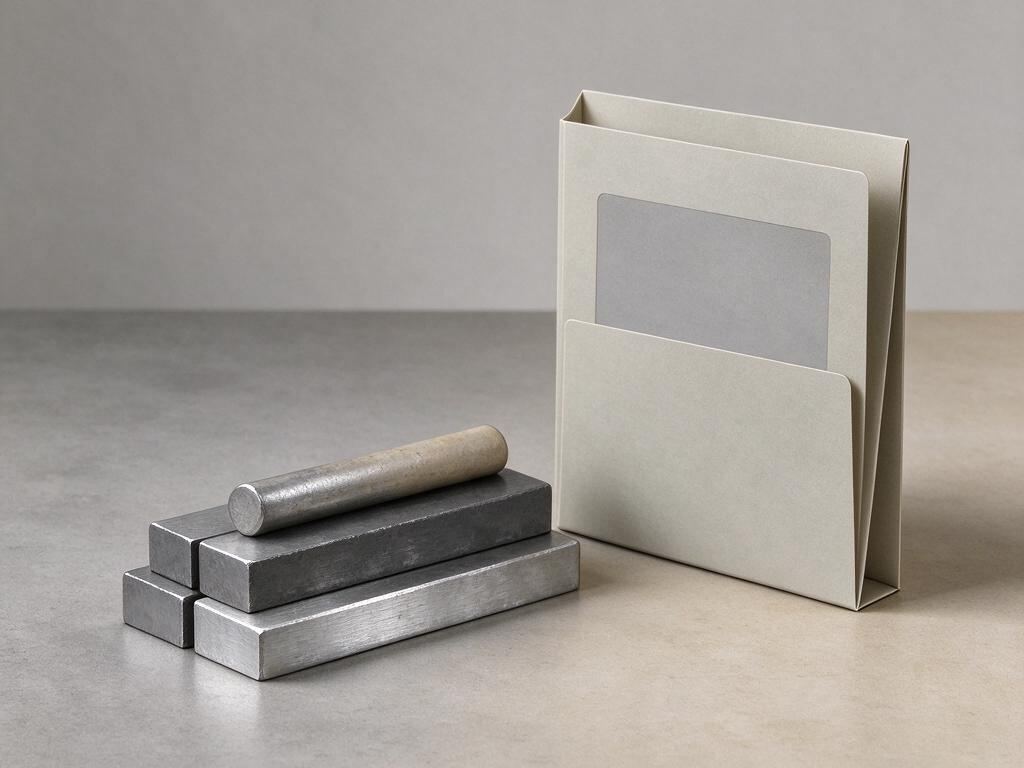
Material form, condition and paperwork travel together on a non-stock alloy.
A non-stock alloy doesn’t move one number on the quote; it moves five, and each one maps to a line on the drawing. Read them side by side before you accept anything, because the supplier who answers these on paper is a different supplier from the one who reassures you on a call.
| Decision factor | What to ask before the quote | What a good answer looks like | Risk if the answer is vague | Who owns the call |
|---|---|---|---|---|
| Material form, condition and cert | Which mill, which form (bar, plate, forging), what temper, and does the certificate travel with the parts? | A mill certificate naming the heat lot and temper, not just the alloy family, plus a written statement of what arrives and when | A substitute grade shows up as an “equivalent”; structural or fatigue behaviour changes silently | Engineering sets the grade and condition; procurement holds the paperwork |
| Heat-treat route and distortion | Is heat treat inside your quote or subcontracted, and at what point in the routing does it happen? | A named sequence, with the shop stating where it plans to leave stock for post-treat finishing | Distortion discovered after finishing means rework or scrap, and the price reopens | Engineering owns the sequence; procurement asks who carries the scrap |
| Tolerance callouts vs. process capability | Which tolerance class does the drawing actually require, and on which machine class will you hold it? | General commercial work around ±0.1 mm to ±0.2 mm on 3-axis equipment; precision assembly at ±0.015 mm to ±0.05 mm on high-rigidity 4- and 5-axis machines. A shop should say which one it is quoting | Tightening past a workable ±0.05 mm assembly target is a documented path to a 30% price jump. Demanding ±0.01mm where ±0.05mm fits buys hours, not quality | Engineering owns the callout; procurement should challenge it |
| Quantity band and setup absorption | What quantity did you price, and what changes at the next band up? | A written range, plus a statement of how setup and tooling are amortised. High cost below 50 units is normal; the question is what the next step looks like | A unit price that only holds for one quantity, or an assumption about volume the buyer never agreed to | Procurement |
| Inspection scope | Sampling or 100%? Are first article reports included, and are critical dimensions measured on the part or on the machine? | A named inspection plan tied to the tolerances that matter, and reports that arrive with the shipment | Latent defects surface at assembly, weeks after the invoice clears | Engineering defines critical features; procurement confirms reports are contractual |
The tolerance line and the material line are not independent. An odd alloy usually comes with different machinability, and a harder or gummier grade shifts how much material moves after a cut, especially on thin walls. That means the tolerance you wrote on the drawing may be achievable in the prototype and not repeatable across the batch, which is where scrap rate at sub-±0.05mm callouts starts to bite. A supplier quoting tight tolerances on an alloy they have not run before should be describing a first article, not a production promise.
Use the table as a filter, not a scorecard. If two suppliers answer every row in named documents and one answers half of them with assurances, the gap in the price is buying you the paper trail.
Sample, bridge batch, or full run: which one are you actually buying?
A first-off run of a handful of parts in an odd alloy is not really a part purchase. Setup, fixturing, and the mill’s minimum buy dominate the price, often more than the machining itself. So the deliverable worth paying for is the first article, not the cheap part: dimensions measured against the print, a mill certificate naming the heat lot and condition, and a written note of anything the shop had to change to hold the drawing. A low unit price at this stage usually means setup is being deferred into whatever comes next.
Once the design looks like it will hold, a pilot run of 500 to 2,000 units starts to amortize that setup and gives the shop room to prove repeatability instead of a single lucky hit. Lock finish and tolerance before the first cut. A finish change after the first few hundred pieces reopens the price and often the schedule, because anodize, passivation and coating are batch processes with their own minimums and their own scrap risk. Lock the finish specs before the first 500 units hit the line, and confirm the tolerance call at the same moment, since both sit on the same quote line and both get re-quoted together.
At volume the alloy stops being the story. Published guidance puts the switch to die tooling or metal stamping somewhere around 3,000 to 7,000 units. Below that band, custom CNC machining usually stays the cheaper route even with a special buy of material, because you have not yet earned back the cost of a die. Above it, tooling becomes capital you amortize, and the question shifts from “can this shop hold the tolerance” to “can this process run 50,000 units without drifting.”
Where small-batch CNC machining of odd alloys goes wrong
Most of the damage on a short run is done before the first chip is cut, and the mistakes tend to arrive together.
The first is tolerance inflation. Every tight callout should have a named mating feature behind it: a bore that has to take a bearing, a face that has to sit flush, a hole pattern that has to line up with a bracket. If nobody on the call can name that feature, the tolerance is buying inspection time and scrap risk rather than function. The price jump for that extra decimal is already baked into the quote, which is why it never appears as its own line. Ask the engineer to justify each tight call in one sentence. The ones that cannot be justified are the ones to relax before the PO, not after the first article fails.
The second is a verbal alloy swap. “Equivalent” grade can mean a different temper, a different response to heat treatment, or a different mill source. Any of those turns the first article into an argument about whose fault the deviation is. The rule is simple: no grade, temper, or mill change without written engineering approval and a mill certificate naming the heat lot and condition, agreed before cutting starts.
The third is machining to final dimension and then heat treating as an afterthought. Parts move in heat treat, and thin walls in tough alloys move more. Decide before quoting whether heat treat comes before or after final machining, and ask how the supplier holds dimensions through it. When that step runs through a secondary vendor, the extra leg can stretch the schedule toward 45 days, so the machining plan has to leave room for it.
How to vet a custom CNC machining supplier on material evidence
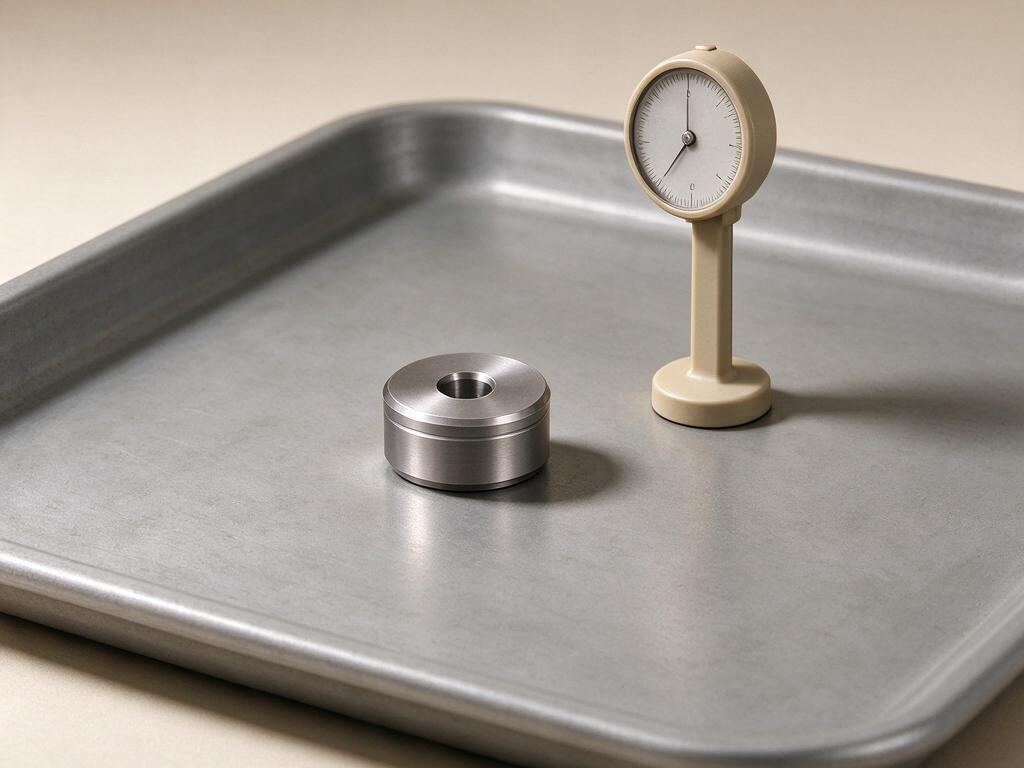
Inspection evidence should arrive with the parts, not after them.
The part is settled. What’s left is whether the shop can prove anything about the material before it cuts. Five written questions do most of that work, and none of them are answered well by reassurance.
| Ask | Expected evidence | Red flag | Owner |
|---|---|---|---|
| Show the mill certificate for this heat lot, with condition and temper named | A mill cert or MTR carrying a heat number that matches the stock, plus temper or condition; grade alone is not enough | “Our material is certified” with no document offered until after shipment | Quality |
| Prove you hold a dimension across a batch, not once on a sample | Inspection data or control charts from a comparable run, plus how tool wear and offsets are tracked | A part dialled in by hand over 24 hours and shown holding ±0.05 mm, offered as proof of capability | Quality / engineering |
| What did you change on my drawing? | Quote returned with comments on material, tolerance and datum scheme | A price back within the hour with no questions attached | Engineering |
| Who keeps the remnant from the mill minimum? | A written answer: credited against the order, stored for the next run, or buyer-owned | “We’ll sort that out later” | Procurement |
| What does the inspection report look like? | A sample report and packing spec agreed before the run starts | Report format first discussed when goods are ready to ship | Procurement / quality |
Drawing review carries the most weight. A price plus a lead time means nobody compared the tolerance callouts against the datums; a quote that comes back with questions about material condition or a datum scheme means someone actually read the file. Calibration records belong in the same conversation. A shop that cannot pull a report from the last 12 months is guessing at its own machine state, and that guess shows up as drift on your second order.
What to send with the RFQ
One controlled drawing at a named revision is the starting point, so the quote and the first article argue about the same geometry. Name the alloy as grade plus condition, not a trade name: the temper, the heat-treat state, or the mill designation you actually intend to buy. Give quantity bands for the sample, the bridge batch and the annual volume. That is what lets a shop show you where setup stops dominating the price, and where it stops mattering.
Tie each tolerance callout to what it does in the assembly rather than copying a block note off an older print. Lock the finish spec before anyone prices it, and put your documentation list (mill certificate, inspection report, first article) on the table with the date you need parts. wenxinda takes RFQs on custom CNC machining work of this kind and runs a pre-production DFM review before pricing is fixed, so the material and tolerance questions get settled against your drawing. What comes back should address alloy availability, datum scheme and finish alongside the number, not a price on its own.
FAQ
Does a non-stock alloy always push the lead time out?
No. Ask for material lead time and machining lead time as separate quote lines, because a mill run can add weeks while the machine schedule stays open, and one blended date hides which one you are waiting on.
What drives the minimum order for custom CNC machining in an odd alloy?
Usually the mill’s minimum quantity, not the shop’s appetite for small runs. Ask who owns the leftover material, whether it is credited back, held for your next order, or billed to you, since that decides the real cost of a short run.
Can we buy the material ourselves and ship it to the shop?
Often yes, but the shop then quotes machining only and usually drops material risk from its warranty. Confirm who checks the mill certificate and heat number on arrival, and who absorbs a scrapped lot if the stock turns out wrong.
Can the shop swap in an equivalent grade to save a few weeks?
Only with your written approval, because an equivalent grade can change structural or fatigue behaviour silently. Ask for a mill certificate naming the heat lot and temper, and have engineering sign off before any substitute is cut.