

The Critical Metal Stamping Audit: What to Ask Your Supplier Before Releasing Tooling Budgets
Why Your Metal Stamping Run Lives or Dies in the First Tooling Phase
A 0.15 mm dimensional drift on a mounting bracket flange doesn’t start on the production floor; it starts weeks earlier when a toolmaker tries to shave a few hundred dollars off a die build by rushing the grinding phase. When a high-speed press is hammering away at 120 strokes a minute, any shortcut taken during the First Tooling Phase At the design and fabrication stage will show up as a catastrophic line stop. Buyers often focus on the per-part cost in an RFQ, but that number is irrelevant if the toolroom substituted cheap local carbon steel for premium tooling alloys in the active inserts. A cheap tool is an operational liability that forces your line down just as you’re hitting peak production volume.
Experienced procurement managers understand that toolroom fabrication is a commercial risk-management exercise disguised as mechanical engineering. Rushing a toolroom to hit an aggressive product launch date introduces micro-stresses into the die steel during wire EDM cutting—flaws that are completely invisible during the initial hand-selected sample runs, only to cause chipping after the first 50,000 hits. We treat this initial setup as a hard technical and legal gate, establishing clear ownership clauses, documented maintenance intervals, and raw material mill certifications before the first die plate is machined. If a supplier cannot prove they used the specified tool steel grades, the unit price on the invoice is a liability, not a saving.
The true cost of a custom metal stamping run is measured over its lifetime, not its first prototype batch. When you’re comparing bids, a low-ball tooling quote is almost always a sign that the supplier is skipping the critical stress-relieving tempering cycles or using soft, low-grade alignment pins that wear out prematurely. Investing in premium tool steels and robust alignment systems upfront ensures the die survives millions of hits without continuous deburring or dimensional drift. In high-volume manufacturing, the cheapest tool always ends up being the most expensive per stroke.
The Core Procurement Benchmarks for Custom Stamping Dies
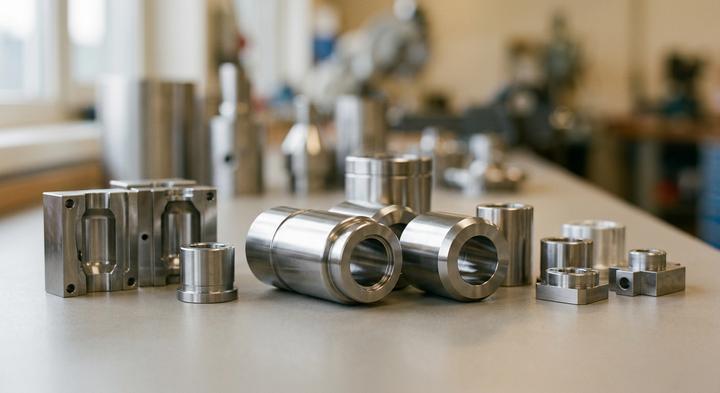
Figure 1: High-quality toolroom components and precise alignments minimize long-term wear.
When evaluating a supplier’s quote for a new tooling package, relying solely on total cost will almost certainly lead to unforeseen delays and quality failures. Successful procurement requires establishing explicit technical standards for tooling components before the design phase is completed. Your primary benchmarks must cover heat treatment, guide element tolerances, and active sensor protection.
First, require verifiable heat treatment logs for all active die plates and insert blocks. High-carbon, high-chromium tool steels such as D2 or DC53 must be hardened to 58-62 HRC and undergo at least three tempering cycles to stabilize the microstructure. Without this, the micro-shocks of repeated high-volume strokes will cause premature chipping and rapid wear along the cutting edges.
Second, mandate precision guide elements. Ball-bearing guiding units and ultra-precise alignment pins are non-negotiable for progressive dies running thin-gauge or high-tolerance materials. If a supplier attempts to use standard steel-on-bronze sliding guide bushings on high-speed lines, thermal expansion will lead to binding, guide-post wear, and subsequent misalignment of the punches, resulting in heavy burr formation on your stamped parts.
Mapping Tooling Contracts to Your Production Volume
At 6:00 AM on a cold Tuesday, a lead tooling engineer is already checking a progressive die under an optical comparator to verify that a critical punch hasn’t drifted by even 0.02 mm during a midnight run. This micro-level quality gate is standard on the shop floor, but your contractual terms must adapt directly to Your Production Volume At the start of procurement. A contract drafted for high-volume automotive stamping will quietly bleed cash if forced onto a low-volume medical line, while a loose prototype contract will leave you exposed to ruinous downtime on a high-volume run. Balancing tool cost against downstream operational risk requires structuring agreements for the specific demands of your volume class.
Precision Electronics: Prioritizing Cpk Over Tooling Cost For Low-Volume Runs
For thin-gauge medical connectors or specialty telecom terminals, raw tooling price is a secondary concern compared to long-term dimensional repeatability and automated quality tracking. In this sector, progressive dies are built with ultra-hard tungsten carbide inserts and integrated in-die sensors that check punch force and feed progression in real time, stopping the high-speed press before a single bad part leaves the strip.
The contract for this class of tooling must mandate a process capability index of Cpk 1.67 or higher, backed by 100% automated sensor-logged data rather than sporadic manual micrometer checks. Buyers should expect to pay a 30% premium on the initial tool build to integrate these active safety features, understanding that avoiding a single batch recall on a micro-connector easily covers the upfront cost of the electronics.
Volume Structural Brackets: Sheet Metal Nesting When Running High-Volume Runs
When managing a blanket purchase order for half a million heavy-duty automotive brackets, the commercial math shifts entirely to material consumption and press efficiency. A progressive tool strip layout that improves Sheet Metal Nesting When feeding coil stock by just 2% can save forty thousand dollars in scrap waste over a single program lifecycle.
Tooling contracts in this tier must tie final tool acceptance and payment milestones to verified strip layouts, target scrap-to-part ratios, and continuous strokes-per-minute running thresholds. Rather than accepting a generic warranty, secure a guarantee that the supplier absorbs all maintenance and replacement costs for high-wear punches and dies for at least one million cycles. A simple rule of thumb for negotiations: buy the security of active sensor monitoring when tolerances are tight, but buy the security of material yield warranties when your volume shifts to seven figures.
The High Cost of the “Golden Sample” Myth in Metal Stamping
A single flawless sample tells you how a toolmaker behaved on a quiet Tuesday morning; it tells you absolutely nothing about how a progressive die will perform under the continuous thermal and mechanical stress of a 120-stroke-per-minute run. Relying on a low-speed prototype as a green light for mass production is a common, expensive shortcut that technical buyers make when sourcing custom metal stamping.
If the toolmaker’s hand-fed sample looks perfect, the progressive die is ready for high-speed manufacturing.
Prototype samples are typically run on slow, manual-feed hydraulic presses that hide the real-world dynamics of high-speed stamping. A manual stroke completely masks critical issues like slug-pulling, strip-feeding resistance, and progressive material springback—all of which only emerge when the progressive die is run at rate. If you do not mandate that the final sign-off sample is run on the actual high-speed mechanical press planned for production, you are essentially paying to diagnose tool-progression failures on your first commercial batch.
Standard commercial tolerances of ±0.10 mm on our CAD model are precise enough for mating components.
Standard commercial tolerances look clean on a digital model but fail on physical assembly lines where stamped metal parts must mate with tight-tolerance plastic connectors. At WenXinDa, we push engineering teams to explicitly map out Critical-to-Quality (CTQ) dimensions directly on the 2D drawing before the tool steel is cut. Defining these exact datums and measurement methods early isolates high-risk features, preventing downstream sorting costs, assembly line stoppages, and disputes over nominal print variation.
A basic caliper check and visual inspection are enough to sign off on first-article approval.
A parts-to-print inspection often misses the physical and metallurgical limits that dictate whether a part survives its long-term operational life. Buyers must enforce a second engineering-level verification gate that specifically checks the burr height direction relative to mating faces, the exact positioning of bend relief notches, and sheet metal grain direction relative to high-stress bend lines. Forming a bend parallel to the rolling grain rather than perpendicular will cause micro-cracking under load, a failure that you will never catch on a flat inspector’s table.
Always measure tooling readiness by how a die handles the physical realities of high-speed progression, not by how a master toolmaker coaxes a single piece to spec on a workbench.
The Five Questions to Put in Your Toolroom Technical Audit

Figure 2: Consistent production runs depend on structured technical audits and strict maintenance thresholds.
Relying on a pristine “golden sample” to greenlight a high-speed metal stamping run ignores the physical reality of tool wear over millions of strokes. To ensure a supplier can actually maintain those initial tolerances, procurement must look past the showroom and run a rigorous audit directly on the factory’s toolroom capabilities. By asking The Five Questions during a physical or virtual factory visit, buyers can uncover hidden quality risks before any tool steel is cut.
| Audit Question | Minimum Verifiable Evidence | Critical Red Flag | WenXinDa Production Standard |
|---|---|---|---|
| 1. Tool Steel Grade & Source What is the specific grade and source certificate of the tool steel used? |
Original mill sheets and metallurgical certificates matching the purchase order for D2, DC53, or tungsten carbide inserts. | In-house test certificates or photocopied mill sheets lacking traceable batch numbers or matching heat numbers. | 100% material traceability back to premium mills (such as Assab or Uddeholm) backed by incoming spectrometer testing. |
| 2. Active In-Die Protection What active in-die sensor protections are integrated into the tool? |
Electrical schematics of the sensor circuit and a physical demo of misfeed and double-feed automatic press shutdown. | Sensors bypassed, missing junction blocks on the die, or operators manually overriding press fault loops on the control panel. | Standard integration of proximity sensors and optical misfeed detection wired directly into the press control PLC. |
| 3. Stroke-Based Maintenance How is stroke-based preventive maintenance tracked and logged? |
Digital or physical logbooks tied to physical stroke counters on each die, showing sharpening schedules before burr limits exceed drawing specifications. | Maintenance logged by “calendar time” rather than cumulative stroke counts, or logs updated only after part quality fails. | Mandatory tool teardown, sharpening, and lubrication at strict 100,000-stroke intervals with automated ERP maintenance triggers. |
| 4. Tooling ECN Protocol What is the documented engineering change protocol (ECN) for modified tooling parts? |
Laser-etched revision codes on individual tooling inserts matching the current CAD revision and ECN sign-off. | Shims added under inserts without updating the tool drawing, or hand-ground modifications with zero drawing updates. | Every tooling modification requires an updated 3D CAD file, revision-stamped wire-EDM components, and digital ECN tracking. |
| 5. Strip Layout Verification What is the verification protocol for first-run strip layouts? |
A physical, stamped carrier strip showing material utilization, nested progression layout, and scrap shedding clearance audits. | Visual-only inspection of stamped parts without checking the carrier strip for feeding alignment, twisting, or scrap pulling risks. | Mandatory full progression strip analysis and scrap-shedding audit on every new tooling setup or major modification. |
Securing Your Production Line with Contractual Guardrails
To ensure your capital investment is completely protected, you must translate these technical standards into binding contractual guardrails. First, explicitly define tool ownership and recovery terms. The contract must declare that the buyer retains 100% legal title to the physical stamping dies, tooling inserts, 3D CAD models, and progression strip designs from the moment the initial tooling payment milestone is cleared. This prevents your intellectual property or production capability from being held hostage in the event of commercial disputes.
Second, tie your payment milestones directly to objective technical checkpoints. A standard and robust structure involves a 40/30/30 split. Pay the initial 40% only upon joint sign-off of the 3D tool design and nesting strip layout. Release the next 30% when the physical tool is assembled and produces the first dimensional T1 sample parts. Finally, withhold the remaining 30% until the tool successfully completes a full-rate, uninterrupted production run on the target high-speed press, meeting all critical process capability metrics (such as Cpk 1.67) and receiving final quality department sign-off.