
The Metal Stamping RFQ Checklist: Securing Tool Life Guarantees and Design Assets Up Front
Why Your Metal Stamping Project Lives or Dies in the Toolroom (Not on the Press)
The piece-price on your metal stamping RFQ is a completely useless metric if the supplier is pinching pennies on the tool steel chemistry of your progressive die. It is easy for a factory to win an order with an aggressive piece-price quote, only to quietly substitute low-grade Cr12 steel for high-wear inserts. This is the unit-cost trap: that initial discount disappears the moment a progressive die deforms after 20,000 hits, dragging your assembly schedule down with it. Many procurement teams fall into the “first 50” sample trap, assuming that perfect initial samples from a slow-speed trial run prove a progressive die can survive a high-volume run without excessive burring. In reality, a hand-polished trial run tells you nothing about how tool steel behaves under continuous thermal stress, friction, and physical fatigue on a fast press line.
When production grinds to a halt, the issue is rarely the press itself. It is punch chipping, nitrogen spring pressure drops, or early-stage fatigue in thin-gauge cavities—all of which point directly back to cheaped-out tool steel. At WenXinDa, we prevent these line stops by pushing for direct-factory technical alignment on tool steel chemistry before any tooling budgets are signed off. If your parts have complex geometries or high-strength steel specs, we specify exactly where we need D2, where we need upgraded DC53 to resist chipping, and where high-volume runs justify premium powder-metallurgy options like ASP-23. If a vendor refuses to list the specific steel grades, heat-treatment methods, and hardness ranges on the tooling layout, they are planning to offset their thin margins on the back of your maintenance downtime.
To protect your supply chain from sudden line stops, treat the tooling material spec sheet with the same contractual weight as the physical product drawing.
Tooling Classifications: How to Specify Die Grades and File Ownership in Your RFQ

Securing native engineering files ensures true ownership of your manufacturing assets.
How do I specify stamping die classifications and tooling file ownership in an RFQ?
If you do not explicitly separate Class I progressive dies from cheap Stage Tooling in your RFQ, suppliers will quote the lowest common denominator to win on piece-price. You end up with standard D2 tool steel that fatigues at fifty thousand hits instead of ASP-23 powder metallurgy inserts designed to run millions of parts. Worse, if you don’t lock down native 3D CAD design files in the initial contract, that supplier owns your technical equity and can block you from transferring the work later.
| Sourcing Tier | Tooling Class & Steel Specs | Life & Metal Stamping Speed | Primary Risks | Sourcing Verdict |
|---|---|---|---|---|
| High-Volume OEM Annual runs: >1M units |
Tooling Class I (Progressive) Steel Specs: Powder-metallurgy (ASP-23) or Carbide inserts; Japanese DC53 base |
Up to 1,000,000+ strokes 200–400 PPM Sharpening: ~150k strokes |
High initial CAPEX; longer fabrication lead time | Mandate Class I. Specify steel chemistries and native CAD file delivery in the contract. |
| Volume Industrial Annual runs: 100k–500k units |
Tooling Class II (Progressive) Steel Specs: High-grade D2 or DC53 tool steel |
250,000–500,000 strokes 80–150 PPM Sharpening: ~50k strokes |
Premature edge wear; micro-cracking if heat treatment is rushed | Balanced Fit. Require mill test reports (MTRs) and wear-part drawings. |
| Low-Volume Proto Annual runs: <50k units |
Tooling Class III (Stage Tooling) Steel Specs: Standard Cr12 or low-tier D2 steel |
20,000–50,000 strokes 30–60 PPM (manual transfer) Sharpening: ~10k strokes |
High manual labor cost; rapid dimensional drift; burring | Use Class III. Minimize upfront cost; secure flat drawings for fast modifications. |
Securing Your Engineering Assets: The CAD File Clause
Most suppliers treat tooling CAD files as proprietary IP to make switching vendors as painful as possible. At WenXinDa, we deliver complete native 3D CAD assemblies, strip layouts, and spare parts drawings as a standard project closeout step because locking clients in through technical barriers is bad business. When drafting your RFQ, do not accept flat PDFs; mandate the delivery of fully parameterized design files and heat-treatment logs as a condition for final tooling payment.
Matching Tool Life Guarantees to Your Production Run Sizes
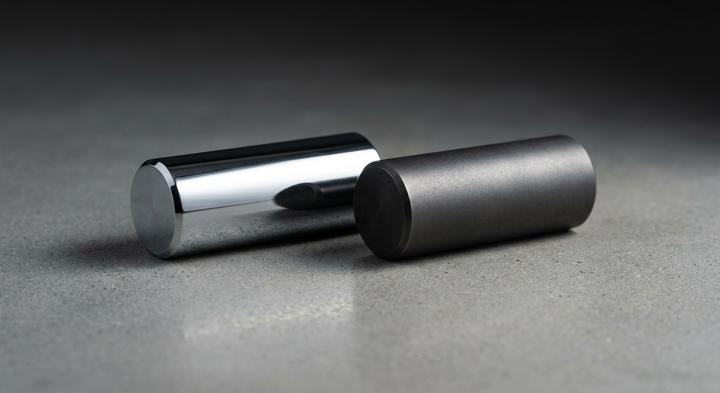
Matching the correct tool steel grade to your production volume prevents premature tool wear.
An engineering lead reviewing three competing metal stamping bids on a Monday morning knows that a generic “lifetime tool warranty” is usually a commercial decoy. The real calculation of tooling amortization requires a cold look at how the die material behaves under the stress of your actual production run sizes.
High-Volume EV Components: Justifying Class I Carbide Dies
When an EV component design is frozen for a multi-year cycle, cheap tooling is a recipe for catastrophic downtime on the metal stamping line. These programs demand Class I progressive dies built with tungsten carbide inserts, capable of guaranteeing over one million strokes before requiring major refurbishment. While the upfront cost for carbide is triple that of standard tool steel, it drives the per-part amortization cost to fractions of a cent over high-volume runs. Reputable manufacturers like WenXinDa back these runs with explicit stroke guarantees, shifting the financial risk of premature tool wear back to the toolroom.
Moderate-Volume Industrial Hardware: Balancing Cost with Scheduled D2 Maintenance
For mid-tier runs of 250,000 to 500,000 parts, paying for a million-stroke carbide die is an over-specification that drains capital. The pragmatic path is standard AISI D2 tool steel, a dependable workhorse that manages wear well if the supplier adheres to a scheduled maintenance program. Running D2 requires planning for tool resharpening every 50,000 to 75,000 strokes to prevent burrs from creeping past quality limits. Your contract should mandate that the stamper maintain physical logs of these sharpening cycles, ensuring the tool does not suffer from premature heat checking.
Low-Volume Iterative Parts: Mitigating Risk with Modular Stage Tooling
When a component is in its first generation and subject to rapid revisions, progressive dies are a dangerous financial liability. Modular stage tooling—using universal master die shoes with customized, swappable inserts—allows you to modify specific part features for a fraction of the cost of a new tool build. Production is slower because parts transfer manually between stations, but the trade-off is a low entry barrier that protects cash flow during early launch phases.
The Tooling Custody Safeguard
Regardless of the volume tier, your contract must contain a robust “die relocation” clause. This safeguard stipulates that the physical tooling, native parameterized 3D CAD files, and strip layouts are your property and must be surrendered in running condition within 48 hours of notice. The clause must define “running condition” as the tool’s ability to produce parts to print at rated press speeds, verified by a strip sample. If your contract does not tie final tooling payment to the delivery of these fully editable design files, you do not truly own your production asset; you are merely renting it under the factory’s terms.
Three Costly Tooling Assumptions That Blow Procurement Budgets
Your piece-price savings disappear the moment a stamping tool goes down and the finger-pointing begins. Many procurement teams treat the initial tooling invoice as a pass to trouble-free manufacturing, only to watch margins get eaten by post-launch surcharges. These unexpected costs stem from vague contracts that leave maintenance, file ownership, and modification rates to the supplier’s discretion.
A “lifetime tooling guarantee” means the factory covers all repair, sharpening, and replacement costs.
This is the most expensive assumption in metal stamping. In reality, these un-capped guarantees almost always classify punches, die plates, and nitrogen springs as routine consumables. When running high-tensile materials, the tool experiences severe deflection and accelerated wear that degrades a progressive die long before its nominal lifespan. Without a contract that explicitly details who pays for rebuilding the die when this wear occurs, you face endless billing cycles for “non-covered maintenance” that should have been factored into the initial quote.
The supplier is solely responsible for maintaining tooling tolerances when running high-strength materials.
High-yield steels cause extreme tool deflection, and that wear is rarely covered under standard maintenance clauses. If your parts require advanced high-strength steels (AHSS), punches chip and die plates deform far faster than they would with mild steel. Unless your RFQ specifies the exact division of cost for routine sharpening versus catastrophic component failure—with clear wear limits for tool steel replacement—expect heavy surcharges when the die needs a complete rebuild midway through your run.
Paying the tooling invoice automatically grants the buyer full ownership of the native 3D tool designs.
Most factories treat 3D tool drawings as proprietary intellectual property, delivering only flat PDFs that make transferring production to another stamping shop nearly impossible. This PDF-only handover forces you to pay a new manufacturer to redesign the progressive tool from scratch if you ever need to relocate production, adding redundant engineering fees and weeks of lead-time delays. At WenXinDa, we prevent this vendor-lock by delivering complete, native 3D CAD assemblies, strip layouts, and heat-treatment logs as standard project closeout steps. Ensure your RFQ mandates the delivery of these native, parameterized design files as a strict condition for final tooling payment.
Tooling modification costs for post-launch engineering design changes can be negotiated fairly once the tool is built.
Vetting the Factory Toolroom: A Checklist for Procurement Audits

An in-house toolroom with precise alignment is vital for stable high-volume production.
How do I audit a metal stamping factory’s internal toolroom to ensure they can maintain our high-volume progressive dies?
When conducting Procurement Audits How you verify the Factory Toolroom determines whether your tooling stays in alignment or slowly degrades over half a million cycles. If a factory outsources its tool modifications, even a simple chipped punch stops your production for days while the die is crated and trucked to an external workshop. A supplier that controls its tooling in-house can grind inserts, run wire-cut EDM, and swap spare parts in hours. This distinction is what separates stable high-volume production from constant fire-fighting.
Toolroom Audit Verification Matrix
| Ask | Expected evidence | Red flag | Responsible party |
|---|---|---|---|
| Is tool maintenance and repair handled entirely in-house? | Dedicated CNC centers, wire-cut EDM systems (Sodick/Mitsubishi), and surface grinding machinery located physically on the shop floor. | “Partnership agreements” with outside tool shops or no active machining equipment on-site. | Toolroom Supervisor |
| How are die sharpening and preventive maintenance tracked? | Digital or physical logs showing stroke counters, re-grind depths (grinding history), and replacement schedules for high-wear punches. | “As-needed” maintenance with no records of actual steel removal or stroke counts. | Maintenance Engineer |
| Are specified tool steels and heat treatments actually used? | Original steel mill test reports and Rockwell C scale hardness testing logs showing 58–62 HRC for D2/DC53 inserts. | Hand-written internal summaries without official mill stamps or missing heat-treat logs. | Quality Assurance Lead |
| Are critical spare parts cataloged and stocked on-site? | Dedicated, organized inventory with spare punches, matrix inserts, and springs labeled with matching CAD drawing numbers. | Missing spare parts inventory or relying on expedited ordering from third-party shops. | Tooling Inventory Clerk |
A practical audit isn’t about looking for clean floors; it’s about checking the transition logs to see if the maintenance crew is actually tracking how much material they grind off a die. If the factory cannot produce a detailed record of the exact grind depth removed during the last sharpening cycle, die clearances will eventually drift, throwing massive burrs on your parts and wearing out the tool prematurely. Export-grade manufacturers like WenXinDa keep their machining lines right next to the stamping presses so engineering adjustments can happen instantly. If a supplier tries to hand-wave their lack of on-site CNCs as “standard subcontracting,” they are offloading their maintenance overhead—and the resulting line-stop risks—directly onto your delivery schedule.
Securing Your Stamping Supply Line with Clear Contractual Safeguards
Once you have matched your tool steel spec to your expected volume, those parameters need to move from an engineer’s email chain straight into your supply contract. Leaving tooling custody and design file ownership ambiguous is how suppliers trap you. Shaving a fraction of a cent off a stamped copper terminal looks great on a spreadsheet, but if a fractured die shuts down your assembly line for a month while you argue over who actually owns the tooling, that paper saving vanishes instantly. A progressive die isn’t a consumable like a box of packaging; it’s the core capital asset of your product line. We see buyers assume they own the physical tool because they paid a tooling deposit, only to discover their contract lacks the teeth to force its release when lead times slide. At WenXinDa, we keep this simple: once the tooling invoice is cleared, you own the asset. This includes raw-material mill certificates, heat-treatment logs, and native 3D CAD files—not flattened PDFs. If a supplier tries to hide behind ‘proprietary tooling details’ to deny you access to these files, they are setting up a vendor-lock trap because they know they cannot win your next run on pure cost-to-performance metrics.
Securing your stamping supply line requires these Clear Contractual Safeguards Now, before steel meets the CNC machine. The best way to start is by testing our technical feedback with your actual design. Send our engineering team your 3D CAD files or initial part drawings. We will run a thorough design-for-manufacturability (DFM) check and supply a realistic tool-life assessment for your target volume, giving you the hard engineering numbers you need to lock down your supply line.