

Stabilizing Supply Chains: Blanket PO and Recurring Tiered Pricing for Direct Metal Stamping
Tooling Custody and Transfer Rights in Factory-Direct Stamping Contracts
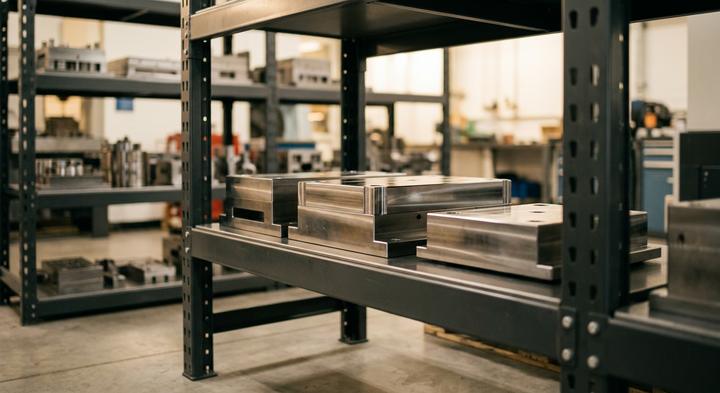
Securing physical tooling assets requires clean, well-documented toolroom management and storage protocols.
A flatbed truck idling outside a stamping plant at 7:00 AM is a miserable place to discover that ‘owning’ a progressive die on paper doesn’t mean you can actually load it. When production bottlenecks or quality failures force a procurement team to pull a tool, the outgoing factory often holds the tool steel hostage under the guise of unamortized design fees, ‘die maintenance reconciliation,’ or storage surcharges. These exit penalties are rarely highlighted in the initial RFQ; they are buried deep in the fine print of the vendor agreement, turning physical tooling into a bargaining chip just when your assembly line is about to go down.
This custody trap is most common when buyers rely on middleman brokers rather than direct-to-factory relationships. Because a trading company sits between you and the manufacturing floor, the actual stamper operates under local lien rights that ignore your purchase order’s intent, leaving you with zero legal recourse when a dispute arises. In these transactional setups, an attractive, low piece-price is almost always a loss-leader designed to claw back margin later through unhedged raw material index changes or sudden tooling release penalties. True supply chain security requires direct-to-factory agreements that formalize who owns what and who can move it, right from the start.
At WenXinDa, we address these operational risks by building explicit Tooling Custody rules and clear Transfer Rights directly into our initial RFQ phase. Instead of leaving amortization to back-alley negotiations, we specify the exact volume-based pricing tiers and die-ownership thresholds before the first coil is fed. This transparent direct-to-factory alignment ensures you aren’t just paying for the physical steel, but also securing the necessary design data—including sensor feeds, press compatibility specs, and shut-height documentation—required to run the tool elsewhere if volume demands change. Ultimately, never sign off on a progressive die based on a simple ‘paid in full’ invoice; ensure the physical transfer protocol, down to the bolster plate dimensions and press stroke requirements, is locked into your Direct Stamping Contracts before the first sample run is approved.
Analyzing Tooling Amortization and Scrap Yield Across Stamping Volumes

Optimizing nesting layout directly reduces material scrap rates and lowers final unit stamping costs.
How does custom metal stamping volume dictate the actual piece-part cost and tooling amortization schedule?
Analyzing Tooling Amortization and Scrap Yield Across Stamping is a core part of strategic vendor selection. At different production Volumes How you structure the progressive die contract determines your actual piece-part break-even point. Rather than looking solely at the unit price, procurement teams must balance initial capital expenditure for hard tooling against the ongoing material waste built into the stamping run.
| Annual Production Volume (Buyer Type) | Tooling Charge Amortization (Financial Fit) | Scrap Rate & Nesting Yield | Press Setup & Maintenance Costs |
|---|---|---|---|
| Low Volume (<50,000 units / Custom OEM) | 100% upfront tooling charge; zero amortization rebates on piece price. | 15% to 25% Scrap Rate; manual stage tools limit the Nesting Yield. | High setup fees per release; minimal progressive die wear. |
| Medium Volume (50,000 units to 250,000 units / Mid-Market) | 50% upfront fee; remaining 50% amortized over the first 100,000 units. | 8% to 15% Scrap Rate; progressive dies optimize Nesting Yield. | Moderate setup costs; preventative maintenance is absorbed by the factory. |
| High Volume (250,000 units or more / High-Capacity Industrial) | 100% tool fee rebated upon reaching the volume commitment. | Under 5% Scrap Rate; multi-cavity tools maximize Nesting Yield. | Negligible setup cost per part; systematic maintenance is built into the contract. |
Balancing Capital Expenditure Against Production Yields
Selecting the correct tooling structure is not just about pushing for a lower per-piece price during the RFQ. For low-volume runs, paying a massive upfront tooling charge for a highly efficient progressive die rarely makes sense if the tool sits idle after a single run. Conversely, choosing cheap stage tools for high-volume programs guarantees you will lose money on raw scrap-strip waste and constant press downtime. As a rule of thumb for your next sourcing call, never accept a blanket piece-part quote without seeing the proposed strip nesting layout—if the factory cannot show you how they calculated their Scrap Rate, you are likely subsidizing their material waste.
Release Cadences in Action: Blanket PO Structures for Three Operational Models
A shipping supervisor in Ohio rejects a flatbed truck at 6:30 AM because a subtle design change on a bracket wasn’t cleared, while down the road, a dry-running assembly line threatens to trigger a $10,000-per-hour line-down penalty. In precision metal stamping, managing the friction between mill lead times for raw steel coils and volatile line pull rates requires more than transactional purchase orders. At WenXinDa, we’ve found that structured blanket POs act as the contractual buffer, letting industrial buyers lock in high-volume tiered pricing while deferring physical delivery over a rolling 12-month period. Here is how these Release Cadences function across Three Operational Models.
High-Growth EV Parts: Managing Sudden Volume Spikes
An EV battery pack line suddenly spikes demand by 40% on a Tuesday, but the specialized automotive-grade steel coils require a 16-week lead time from the mill. To survive these swings without halting production or over-purchasing finished parts, buyers use a blanket PO containing a raw material authorization clause. This commits the buyer to the total annual tonnage of raw steel upfront—allowing the metal stamping factory to purchase the master coils—while leaving the actual stamping releases flexible. The supplier holds the raw master coils as safety stock and stamps parts in agile, short-run batches to match fluctuating weekly assembly pulls, insulating the buyer from raw material inflation while ensuring they never get stuck with a warehouse full of obsolete, pre-stamped components if the battery casing design changes.
State Appliance Assembly: Supplier-Held Buffer Stock
An appliance assembly planner checks the physical racks to find only a three-day supply of structural brackets left for the high-volume range lines. For a large-scale State Appliance Assembly plant pulling 500,000 units annually, storing months of bulky sheet metal parts on the factory floor is a logistical disaster. Instead, they structure a rolling 12-month blanket PO that triggers scheduled bi-weekly shipments from the supplier’s inventory. Running the brackets in massive, cost-effective quarterly runs on progressive dies, the stamping partner absorbs the physical storage footprint, rendering on-Site Warehousing An unnecessary operational expense while guaranteeing the buyer a fixed, high-volume unit cost.
Tolerance Medical Components: Navigating Engineering Change Orders
Contractual Blindspots in Long-Term Stamping Agreements
Unanticipated costs in multi-year metal stamping runs rarely come from the initial piece-part quote. Failing to define operational thresholds is why Term Stamping Agreements Unanticipated cost hikes often arise six months into production.
A blanket PO locks in your piece price for the life of the contract.
Relying on a blanket PO without a raw material index is a massive risk. Standard contracts for copper, brass, or steel must tie pricing to public benchmarks like the London Metal Exchange. Specify a trigger band—usually ±5%—using a rolling monthly average. When raw coil pricing moves outside this buffer, the piece price adjusts proportionally based on part net weight plus planned scrap. At WenXinDa, we map these index ranges during the RFQ stage so budgets stay predictable.
Tooling maintenance is entirely the stamper’s responsibility under a lifetime agreement.
While factories handle minor care like punch sharpening, this covers only daily wear. A hardened tool steel progressive die has a hard structural limit—often between 1 and 5 million hits. The contract must explicitly separate routine dressing from capital rebuilds of worn-out die segments, stripper plates, or lifter pins. Agree on who covers replacement costs for worn-out tungsten carbide or D2 inserts before tooling hits its fatigue limit.
Rushing high-speed progressive runs without pause lowers overall costs.
Forcing a tool to run continuously at maximum speed without maintenance windows backfires. High-speed stamping generates thermal stress, accelerating dimensional drift and chipping punches, leading to out-of-spec batches. Planned, short-duration press stops for lubrication and visual checks preserve tool precision and prevent catastrophic mid-run failures.
Scrap metal is factory waste and has no commercial value.
When stamping brass or copper, scrap can account for up to 60% of coil weight. Failing to negotiate who retains this credit is a costly oversight. Ensure your contract details a scrap recovery credit tied to market rates, where skeleton material value is credited back against processing fees. Honest suppliers show this net-weight calculation upfront.
Locking down these operational friction points during the RFQ phase is the only reliable way to keep your long-term piece-part costs predictable.
The Toolroom Audit: Hard Technical Benchmarks for Your Next Factory Tour
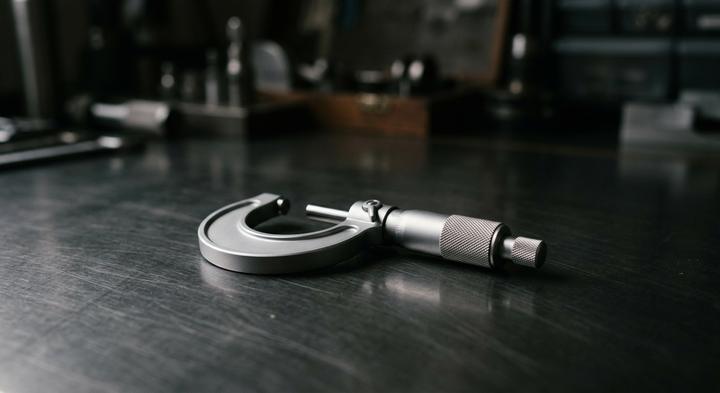
A rigorous toolroom audit checks physical calibration tolerances down to the micron.
Reviewing strip nesting layouts and calculated scrap yields on a spreadsheet is a good paper defense, but those margins vanish the moment a progressive die misfeeds or wears out prematurely on the press floor. Moving from a contract negotiation to a physical factory tour means getting your shoes dirty in the toolroom, where die maintenance logs and actual machine tolerances show whether the factory can deliver what they promised.
| Audit Focus Area | Physical On-Site Evidence | Underlying Technical Red Flag | Required QC Sign-Off |
|---|---|---|---|
| Preventative Maintenance | Stroke-counter logs stamped directly on progressive dies; sharpening records showing exactly how much steel was ground off (typically 0.10–0.15 mm per grind) after 100,000 runs. | Sharpening scheduled by arbitrary calendar dates instead of real stroke counts; visible micro-cracks on carbide punch tips under a magnifier. | Toolroom Master Machinist |
| Press Alignment | Maintenance sheets tracking bolster-to-ram parallelism within 0.05 mm per meter; gib clearance records showing slide play under 0.03 mm. | Oil pooling or scoring on the slide guides; frame deflection visible during high-speed runs. | Chief Maintenance Engineer |
| Raw Material Traceability | Stenciled heat numbers on active metal coils matching their respective Mill Test Certificates (MTCs); incoming inspection records tracking Rockwell hardness. | Unmarked master coils sitting on the warehouse floor without tags; no thickness checking station at the uncoiler. | Receiving QC Supervisor |
| Die Protection Systems | Proximity and photoelectric sensors wired directly into the press controller, programmed to kill the run within one stroke during a misfeed. | Sensor bypass keys left turned “on” at the controller panel; manual operator intervention required to stop a double-feed. | Lead Automation Technician |
When walking the floor, look past the swept aisles and freshly painted walkways to inspect the tooling benches. A shop that takes high-volume metal stamping seriously doesn’t run dies to failure; they pull them for maintenance based on data, and they document every micron of tool steel ground away. If a supplier cannot show you their press calibration histories or matching heat numbers for the current run, those tight tolerances on their initial samples are just luck.
Securing Your Stamping Supply Line with WenXinDa
While locking down a blanket PO solves the scheduling side of your logistics, it doesn’t solve the volatility of the raw metal market. If you are running millions of copper terminals or structural steel brackets, a sudden 15% spike in the LME or AMM index can wipe out a supplier’s margin—or force them to halt your line to renegotiate. To bypass this friction, we build bilateral indexation agreements directly into the contract. It’s a transparent, math-driven formula that ties your piece-part price directly to the monthly spot averages. If raw copper or steel prices fall, your unit cost drops automatically on the next release; if they rise, the impact is capped and predictable, removing the incentive for any factory-side games.
We aren’t a prototype shop that happens to have a few big machines. Securing Your Stamping Supply requires a dedicated commitment to high-volume production. Our facility is engineered for automated progressive and transfer die stamping on multi-year programs, not short-run, single-piece orders. When our engineers design a progressive tool, they are planning for millions of hits—integrating optical in-die sensors to catch misfeeds and sourcing premium carbide inserts for high-wear areas. If your part volume is under ten thousand units a year, the tooling amortization won’t make sense. But for high-volume programs, this upfront rigor is what keeps press downtime under 3% and spares you from unannounced maintenance charges.
If you have a high-volume part currently running or slated for launch, send over your custom 2D or 3D files (STEP, IGES, or DWG formats). We will run a complete tooling amortization analysis and provide a tiered-pricing proposal mapped to your annual delivery schedule, showing exactly where indexation bands and automated stamping can stabilize your unit economics.