
Managing the Stamping Bottom Line: Tiered Pricing and Amortization Secrets in Bulk Metal Stamping
The Production Volume Reality: Why Your Piece-Price Means Nothing Without a Tooling Amortization Strategy

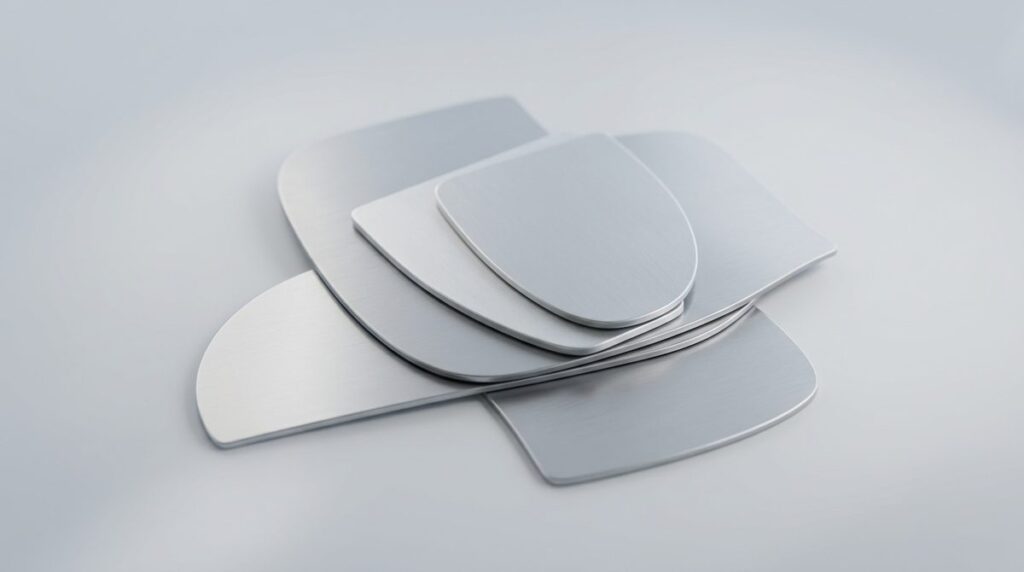
Visualizing amortization: how volume scale steps down your initial tooling cost barrier.
The RFQ sheet arrives with a tempting $0.15 unit price, but the next column over shows a $45,000 progressive tooling fee. If your actual program life cycle only calls for 20,000 units, that initial cheap-looking run carries a hidden $2.25 amortization penalty per part, immediately wiping out any expected cost savings. Buyers frequently miss this calculation because procurement departments often separate capital expenditure (CapEx) from operating expense (OpEx) budgets, creating a false economy where the piece-price is optimized in a vacuum. In metal stamping, a unit cost is a theoretical fiction unless it is tied directly to a firm, multi-year volume projection.
As production scales, tooling requirements shift. A project launching with 5,000 units might run on inexpensive, single-stage manual dies that carry low upfront costs but high labor rates. Scale that same part to 100,000 units, and you need a progressive die setup where the continuous raw coil feed reduces cycle times and labor. However, standard quotation matrices regularly obscure the true cost of this shift by hiding die maintenance, sharpening schedules, and setup fees in the contract footnotes. An experienced buyer will skip the piece-price column and ask how many strokes the tool steel is guaranteed for before a rebuild charge is billed back to the project.
At WenXinDa, we have manufactured custom metal stampings since 2010, and we regularly see programs stall over these hidden tooling fees. Part of our standard process is to run a Design for Manufacturability (DFM) review before cutting any steel. If we can relax an unnecessarily tight bend tolerance or adjust a hole diameter to run on a standard station, we can often simplify the progressive tool layout. Eliminating just one stamping station can shave thousands off the initial die cost, ensuring your amortization model actually closes the gap between prototype and high-volume release.
To get a true picture of your per-part cost, divide the total tooling charge across your first guaranteed batch release rather than amortizing it over an imaginary high-volume lifetime that your market demand may never actually reach.
Comparing Stage Tooling, Transfer Dies, and Progressive Runs: The Tool Steel and Cost Trade-Offs
Which stamping die setup actually saves money when tool steel wear and production volume are factored in?
A cheap per-part quote often blinds procurement to the massive risk of downstream tooling maintenance and modification costs. Choosing between modular stage tooling, automated transfer dies, or high-speed progressive runs is not just a volume calculation; it is a risk-mitigation strategy based on design stability and material abrasiveness.
| Buyer Type | Tooling Architecture | Upfront Cost Index | Per-Hit OpEx | Tolerance Limits | Primary Risks | Verdict |
|---|---|---|---|---|---|---|
| Low-Volume (<20k) | Stage Manual Dies | Low (1.0x baseline) | High (Manual labor) | ±0.15 mm | Inconsistent manual nesting | Best for validation and fluid designs |
| Mid-Volume (20k–100k) | Transfer Dies | Moderate (2.5x to 4.0x) | Medium (Automated) | ±0.10 mm | Transfer arm alignment drift | Best for stable mid-tier components |
| High-Volume (>100k) | Progressive Runs | High (5.0x to 10.0x+) | Very Low | ±0.05 mm | Expensive progressive ECOs | Recommended for stable long runs |
While progressive lines drive per-hit operating costs down to near zero, they demand absolute design finality; if you modify the part late in the game, the long-term Cost Trade equation and the design trade-Offs Which seemed favorable during quoting will evaporate.
Tool Steel Selection and Modification Costs
The Metallurgy of the tool determines how long your press runs before shutting down for regrinding. The Tool Steel choice should be governed by your material thickness and volume; standard D2 steel handles mild steels on shorter runs, but running high-strength alloys on high-speed Progressive Runs will quickly chip D2 edges. Upgrading to premium DC53 or vacuum-hardened SKD11 tool steel is an expensive upfront decision, but DC53 offers twice the toughness of D2, making it essential to withstand continuous wear.
Beyond wear, the commercial trap most buyers fall into is ignoring the cost of post-production Engineering Change Orders (ECOs). In progressive tooling, a minor 1 mm geometry shift at the end of the part can require reworking multiple upstream progressive stations because all steps are cut into one massive, integrated die block. When Comparing Stage Tooling to progressive systems, the modular nature of stage dies allows you to change a single block for a fraction of the cost. At WenXinDa, we run rigorous DFM checks before cutting metal to ensure your tool steel investment is matched to a fully frozen design.
Never authorize high-cost progressive tooling until your engineering team has signed off on the final physical prototypes and frozen the design.
From Pilot to Scale: Matching Part Geometry and Runs to the Right Press Setup
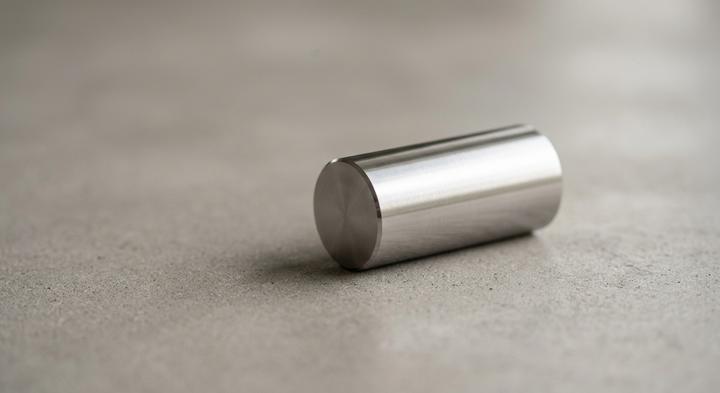
Material integrity and high-grade finishing are critical to maintaining tolerances in production runs.
The QC manager standing by the assembly line at 7:00 AM on a Tuesday holds a caliper to a newly stamped steel bracket, realizing a critical mounting hole is off by 0.15 mm—not because the high-speed press slipped, but because the secondary milling shop used a different datum point. When custom metal stamping and post-press CNC machining are split across two separate companies, tolerances inevitably get lost in translation. Keeping both metal stamping and secondary CNC operations under WenXinDa’s single roof eliminates the multi-vendor blame game when finished components fail to slide into their mating chassis.
The Market Pilot (Under 10,000 Units)
Launching a low-volume run often hits a wall of five-figure tooling quotes that stall the program before it even gets moving. At this stage, keeping your liquid capital free is far more critical than squeezing every fraction of a cent out of the per-piece run rate. The smart move here is using modular stage tools to punch and blank the basic metal geometry, then handing the parts over to a secondary CNC milling setup to cut the high-tolerance internal features. While this hybrid approach raises the individual piece price because of the manual handling, it keeps your upfront tooling bill tiny—meaning you can test the waters without leaving tens of thousands of dollars trapped in hard tool steel.
Continuous High-Volume Supply (Over 100,000 Units)
For multi-year programs with predictable monthly releases, manual handling of individual blanks is a recipe for high labor costs and sudden dimensional drift. This is where fully automated progressive coil-feed lines earn their keep. Running at eighty strokes per minute, a single progressive die handles stamping, drawing, and piercing sequentially in one pass, dropping the human labor cost close to zero. Yes, the upfront tooling is expensive, but it amortizes down to fractions of a cent over the contract life, giving you the lowest total cost of ownership while keeping millions of parts perfectly identical.
The Mid-Volume Transition (20,000 to 50,000 Units)
This mid-volume zone is where procurement teams get stuck, because the run is too big for slow manual stage tooling but too small to justify a massive progressive die investment. Sourcing engineers can solve this bottleneck by working out a structured tooling amortization plan with WenXinDa, splitting the die costs across the first 30,000 units. By pairing semi-automated setups with in-house post-machining under one QA team, you bypass the cash-flow strain of huge upfront tooling charges while securing the tight tolerances of an advanced production line.
To protect your assembly line from costly tolerance stack-up, always require your supplier to sign off on a single-point QC guarantee that covers both the raw metal stamping and the finished CNC tolerances before the dies are cut.
The Procurement Traps: Hidden Costs and Contract Pitfalls in High-Volume Runs
Three operational variables decide whether a high-volume stamping run actually returns its quoted piece-price, or quietly bleeds cash through unmapped maintenance, scrap layouts, and tooling lock-ins. When managing a long-term production program, establishing clear Volume Runs Contractual terms prevents these variables from turning into back-end margin erosion.
If we paid the upfront tooling fee, the supplier is fully responsible for keeping the die sharp and running without extra charges.
A standard “maintenance included” clause typically covers major die damage, not daily wear. High-volume progressive runs require structured sharpening every 50,000 to 100,000 hits to avoid burrs and maintain tight tolerances. If your contract doesn’t explicitly define who pays for replacing worn carbide inserts—and what maximum burr height triggers a teardown—you will face surprise invoices or drifting quality. At WenXinDa, we write these hit-count thresholds directly into the service agreement before the first coil is fed to protect both part tolerance and the buyer’s budget.
The raw material cost is a fixed pass-through based strictly on the finished part’s weight.
Stamping presses run on gross coil weight, not net part weight. Inefficient strip nesting on complex geometries can easily leave you paying for 40% raw material waste without realizing it. If your contract fails to specify the strip layout and the scrap steel buyout credit, the supplier keeps the premium scrap revenue while billing you for the gross weight of the wasted metal skeleton. Sourcing teams should demand the strip layout print during the RFQ to verify nesting efficiency and secure a contractually bound scrap credit offset.
Paying the tooling charge on the initial invoice means we legally own the physical die and can move it to another supplier at any time.
Many sourcing teams discover too late that their tooling payment was contractually classified as a “development contribution.” Without explicit custody terms, the supplier legally retains the physical die and the proprietary CAD files, forcing you to pay massive exit fees or start from scratch if you transfer the line. The contract must state that the physical progressive die, spare components, and native design files belong entirely to you once the tooling invoice is settled. A safe rule of thumb: if you cannot audit the physical tool on short notice, you do not actually own it.
The Toolroom Audit: How to Verify a Supplier’s Tooling Quality Before Placing a PO
Comparing tool steel wear rates on a datasheet is fine, but those calculations fall apart if the factory’s physical toolroom cannot keep a progressive die running on a hot Tuesday afternoon. An ISO certificate on a wall never sharpened a chipped cutting punch or adjusted a failing die-protection sensor mid-run.
The On-Site Toolroom Verification Protocol
| Ask | Expected Evidence | Red Flag | Responsible Party |
|---|---|---|---|
| How are progressive die-protection systems wired and tested? | Inductive proximity or photoelectric sensors run through heavy-duty, oil-resistant conduit on the die set; live fail-safe test (simulated misfeed) during dry-run. | Exposed, hand-spliced sensor wires; bypassed press control terminals; sensors taped over or physically bent back to prevent “false” stops. | Lead Tooling Engineer / QA Inspector |
| How do you prevent progression errors and strip alignment drift during high-speed runs? | Strip layout design detailing pilot punch diameters; physical inspection of hardened pilot pins, strip lifters, and spring-loaded guide plates on the tool. | Deep scoring or galling on pilot pins; loose guide rails; operators using manual brass mallets to nudge the strip mid-production. | Lead Tool and Die Maker |
| What is the trigger for scheduled tool sharpening and maintenance? | Digitized or signed physical logs linked to the unique die serial number, showing stroke-counter thresholds, actual grind depths, and shim thickness tracking. | Handwritten notes on greasy cardboard; “run-to-fail” policies; tool maintenance based on operator memory rather than press stroke-counter logs. | Toolroom Manager |
| How do you verify the tool steel grades used for active inserts? | Mill test reports (MTRs) with matching heat numbers physically stamped on spare tool steel blocks (D2, SKD11, DC53) and active inserts. | Unmarked inserts in spare cabinets; tool steel inventory stored in bulk with no grade color-coding; missing heat certificates. | Sourcing Lead / Warehouse Manager |
Instead of taking these protocols on faith, smart sourcing teams look at how a factory handles its paperwork on a bad day. At WenXinDa, we back up our stamping runs with real-world proof—specifically, detailed die trial reports, material heat numbers, and daily maintenance logs matched directly to every active program. We do not hide our toolroom behind a locked door; we show buyers the grinding records and the calibrated spare inserts because that is where tool life is actually won or lost. If you want to see how this works before sending an RFQ, ask for a blank sample of our maintenance log or book a live virtual tour to watch our toolmakers work.
Smarter Tooling Amortization: Initiating Your Next High-Volume Project with WenXinDa
Now that you can audit a toolroom’s physical maintenance logs and spot check their die-protection sensors, you have to connect those physical safeguards to the amortization curve on your balance sheet. Choosing the right tooling architecture is where high-volume metal stamping programs either lock in profitability or bleed margin to constant tool maintenance. At WenXinDa, we operate as a direct-factory metal stamping supplier, keeping progressive die design, toolmaking, and long-term contract production under one roof. We run carbon steel, stainless steel, and aluminum sheets ranging from 0.5 mm to 6.0 mm thickness on lines backed by in-house progressive die manufacturing. Because we handle post-stamping steps like CNC machining, tapping, countersinking, and surface treatment in the same facility, you bypass the typical logistics friction and tolerance hand-offs that happen when parts bounce between different subcontractors. This keeps the actual wear-and-tear costs transparent, ensuring your initial piece-price quote doesn’t slowly climb through unexpected tooling maintenance fees over a half-million-stroke lifetime.
Getting an honest assessment of your tool’s real-world lifespan is simpler than running speculative amortization scenarios on a spreadsheet. Send your 2D and 3D CAD files to our engineering team to kick off a detailed design-for-manufacturing (DFM) review. We won’t just send back a single flat number; we’ll provide a tiered tooling estimate comparing a low-CapEx stage tool setup with a high-efficiency progressive run. This gives your procurement team a clear, data-backed choice based on actual production schedules and real-world tooling lifespans before you commit to cutting steel.