
Sheet Metal Fabrication vs Dedicated Metal Stamping: Analyzing the Break-Even Volume for OEM Parts
The Tooling vs. Piece-Price Trade-Off in OEM Metal Parts
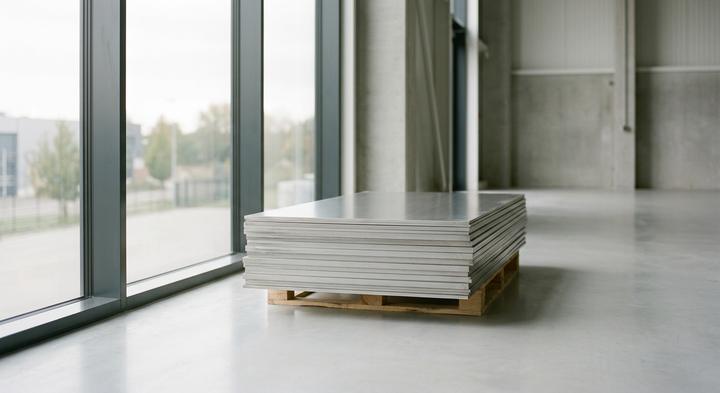
Clean raw materials symbolize the starting point of both fabrication and stamping workflows.
A procurement engineer staring at a Monday morning RFQ spreadsheet is often forced into a classic industrial balancing act: accept a $4.50 piece price with zero upfront tooling fees today, or swallow a $15,000 progressive tooling charge to get that exact same OEM metal part for $0.45 next quarter. This tension defines custom metal sourcing. For prototypes, low-volume engineering test runs, and volatile designs undergoing frequent revisions, traditional sheet metal fabrication remains the standard. Utilizing CNC laser cutters and press brakes, fabrication bypasses the need for hard tooling, allowing engineering teams to modify CAD files and run updated samples within days without throwing away expensive steel dies.
The physical reality changes entirely when shifting to high-speed metal stamping. In a progressive die setup, a coiled strip of raw alloy is automatically fed through a sequence of stations under a heavy press. A single mechanical stroke replaces what would otherwise require multiple manual setups, laser passes, and press-brake bends, converting raw material into finished geometry in a fraction of a second. This transition shifts the production cost model from variable labor-intensive operations to highly efficient, capital-depreciated automation. The core economic thesis is simple: manual fabrication is a continuous labor expenditure, whereas metal stamping is an upfront investment that locks in long-term margins.
Yet, many product teams fall into a costly volume trap by delaying this transition. Out of fear of upfront tooling costs, they continue ordering manually fabricated parts for high-volume production, quietly draining margins through accumulated labor surcharges and scrap rates that hover around 15% instead of the sub-2% typical of progressive dies. Precision manufacturers like WenXinDa help buyers mitigate this risk by analyzing the exact crossover point where tooling depreciation pays for itself. To protect your margin on a scaling line, use this simple benchmark: if the cumulative premium of manual fabrication over a twelve-month period exceeds 80% of the quote for a progressive stamping tool, you are no longer saving capital—you are subsidizing operational inefficiency.
Direct Technical Comparison: Setup Costs, Speeds, and Tolerance Limits
Should you choose sheet metal fabrication or progressive die stamping for a custom OEM part?
Manual fabrication lets you bypass massive upfront costs by using CNC lasers and press brakes. You pay $100 to $500 in software programming fees, which is ideal for low-volume runs or heavy-duty parts up to 6mm. Metal stamping, on the other hand, requires custom progressive tooling that starts at $5,000 and easily scales past $50,000. But while manual lines measure output in minutes per part, progressive presses drop cycle times to a fraction of a second. At WenXinDa, we find that manual press brakes hold a realistic limit of ±0.15 mm over long batches; if your design demands ±0.05 mm repeatability, a progressive die is usually the only physical way to prevent a mountain of scrap.
| Buyer Profile | Key Decision Factors | Process Fit & Tolerances | Primary Risks | Verdict |
|---|---|---|---|---|
| Low-Volume OEM (Under 1,500 pcs) | Low upfront budget, rapid design changes, gauges up to 6mm. | Fabrication: Laser cut & CNC brake; holds ±0.15mm. | High per-piece cost, manual handling variability. | Choose fabrication to protect early-stage capital. |
| Mid-Volume Scaler (1,500 to 15,000 pcs) | Cost crossover, scaling lead times, moderate complexity. | Hybrid / Stage Tooling: Laser blank with simple dies; ±0.10mm. | Amortization losses if volume projections drop. | Start with fabrication, transitioning to stage tooling at 5,000 units. |
| High-Volume Producer (15,000+ pcs) | Unit-price reduction, long tool life, fast throughput. | Progressive Metal Stamping: Multi-station; ±0.05mm. | High initial capital loss if part geometry changes. | Tool the run immediately to drop piece price by up to 90%. |
| Precision Components (Thin gauge under 0.8mm) | Tight dimensional limits, thin-stock micro-bends. | Progressive Metal Stamping: Coined features; ±0.03mm. | Punch wear and burr formation on tight-clearance runs. | Avoid manual handling; stamp-tooling is a physical necessity here. |
Tooling Amortization and Mechanical Limits
When you are working with complex geometries, integrated threads, or stock thinner than 0.5 mm, stamping ceases to be a financial debate and becomes a physical necessity. Manual press brakes cannot bend ultra-thin sheet metal without introducing handling distortion that ruins your yields. Before you sign off on a tooling invoice, ask your supplier to run a digital bend-sequence simulation on your tightest ±0.1 mm tolerance loop to see where the metal will actually deform. For a simple commercial sanity check, if your projected twelve-month volume cannot amortize the progressive tooling cost through piece-price savings, stick to manual fabrication.
Calculating the Break-Even Point: When to Transition from Fabrication to Stamping
An abstract visualization of the cost crossover point between fabrication and tooling.
A production manager looking at 5,000 bracket drawings on a Tuesday morning knows exactly when manual bending stops making sense. For engineering leads, the pivot from fabrication to high-speed progressive tooling is a calculated gamble on design stability. To find the exact Break-Even Point, you must divide your upfront tooling cost by the difference between the manual and stamped piece prices. Take a typical bracket: dividing a $15,000 tooling charge by a $4.05 piece-price delta ($4.50 manual versus $0.45 stamped) yields a hard break-even point of exactly 3,704 units. Before moving to progressive Stamping The engineering team must evaluate how long the current part design will stay locked.
Volume Custom Chassis Keeping Designs Fluid
When you run complex medical device enclosures or specialized server racks, locking your design into hard tooling too early is a recipe for expensive rework. If your project is still going through clinical trials or compliance iterations, paying a premium per part on CNC lasers and press brakes is cheap insurance. This is why WenXinDa advises keeping runs under 1,500 units annually on flexible CNC cells. A ten-minute software tweak to a DXF file costs nothing, whereas modifying a hardened die because an engineering change shifted a port by three millimeters can wipe out your yearly savings. For any low-Volume Custom Chassis Keeping the design on manual lines protects capital.
Volume Automotive and Battery Components For High Run Rates
Conversely, high-Volume Automotive brackets, copper busbars, and Battery Components For electric vehicles require progressive tooling from day one. Trying to run a 50,000-unit contract through manual press brakes is a fast way to burn through operator patience and scrap budgets. For these standardized parts, progressive tooling drops piece-prices by 80% or more while running at hundreds of strokes per minute. The speed of stamping eliminates the variation of manual handling, meaning every part matches the print. If the design is mature and the volume is guaranteed, starting with manual fab is just subsidizing operational waste.
Parts Stalled by Secondary Operations The Hidden Margin Killer
The standard break-even math breaks down when you ignore the manual labor hidden in post-processing. A simple bracket looks cheap on a basic laser-and-bend quote, but if a technician has to manually deburr, tap three holes, and press-fit self-clinching nuts, those touchpoints destroy your unit margins. For these Parts Stalled by manual assembly, progressive tooling can integrate operations like in-die tapping and automated hardware insertion into a single press stroke. By consolidating these Secondary Operations The tool pays for itself far faster than volume alone suggests. When your secondary labor steps exceed two operations per part, buy the tool.
DFM Engineering Blind Spots: Pitfalls in Part Geometry and Tooling Specs

Precision tooling requires flawless geometry and meticulous surface finishes.
Tooling costs and lead times double the moment an engineering team treats high-speed metal stamping as simply a faster version of prototype laser cutting. Moving from manual fabrication to high-volume hard tooling requires a fundamental shift in how physical sheet metal behaves under high tonnage. Most cost blowouts do not happen on the factory floor; they are designed directly into the CAD files weeks before the first tool steel is cut.
“We can hold ±0.1 mm on a prototype, so we should write ±0.1 mm on the production print.”
Laser-cut prototypes hold tight limits easily because they process parts individually. High-volume progressive stamping is entirely different. Forcing a progressive die to hold ±0.1 mm on non-functional clearances drives up toolmaker costs by 30% or more. This over-specification requires expensive wire-EDM passes, precision grinding, and carbide inserts where standard tool steel would perform identically. When reviewing custom DFM specs, isolate critical dimensions from loose clearance boundaries to optimize the die for speed rather than unnecessary precision.
“Metal strip behaves identically in all directions, so layouts can be nested solely to maximize material yield.”
Cold-rolled strip steel has a distinct rolling grain. Bending parallel to this grain during high-speed runs causes outer-radius cracking and micro-fracturing. Unlike slow manual press brakes, high-speed progressive dies strike metal in milliseconds, exposing every micro-structural limitation. Tooling designers must orient critical bends perpendicular or at a 45-degree angle to the grain, even if it reduces nesting efficiency. For complex geometries, this layout adjustment is the difference between high-volume yield and a pile of split scrap.
“Paying the upfront tooling fee guarantees we own the dies and have unlimited lifetime runs.”
Many procurement agreements contain loopholes regarding die ownership. Without explicit clauses, the physical tool often remains the asset of the factory, leaving the buyer facing unexpected refurbishment bills or unable to retrieve their tooling. To protect your investment, your final contracts must include specific Tooling Specs Tooling clauses that clearly define physical die ownership, maintenance overheads, and transfer rights.
Vetting a Custom Metal Stamping and Fabrication Partner in China
Now that the break-even math clarifies when to transition a part from manual fabrication to high-volume metal stamping, the challenge shifts to finding a factory floor capable of running both. It is easy to find a workshop with light press lines, or a rigid plant that rejects projects under 50,000 units. The real operational bottleneck lies in finding a partner who handles prototyping, tooling development, and heavy-capacity production under one roof. Without this integration, your engineering team will spend weeks acting as a project manager between a third-party toolmaker and a subcontracted stamping shop.
Critical Vetting Benchmarks for Dual-Track Production
| Ask | Expected Evidence | Red Flag | Responsible Party |
|---|---|---|---|
| Toolroom Integration | On-site wire-EDM and CNC tooling center with dedicated maintenance staff. | Outsource partners handle all die modifications, adding 7–10 days to simple changes. | Sourcing Lead & Lead Tooling Engineer |
| Floor Quality Control | Active coordinate measuring machines (CMMs), optical projectors, and automated vision systems. | Hand calipers are the primary tool for checking complex progressive die geometries. | Quality Assurance Manager |
| Press Range Verification | Verified press inventory spanning 25T up to 400T on the main production floor. | Only running light 25T–80T presses, meaning heavy structural plates must be subcontracted. | Operations Auditor |
Relying on an outsourced toolroom is the most common reason custom metal stamping schedules collapse [1]. In high-speed runs, a minor tooling chip or a 0.15mm shift in part geometry can halt a line. If the factory must truck the progressive die to a local tool-and-die shop, you lose a week of production to transport, queue times, and finger-pointing. A supplier like WenXinDa, which maintains an in-house wire-EDM and CNC tooling center [1], can pull the die, regrind the damaged insert, and resume stamping in hours. This internal capacity must scale alongside their physical press floor. Running 25T presses allows for the high-speed production of thin connector terminals, while 400T presses deliver the shear force needed for structural plates.
The reality of global supply chains is that the cleanest ISO certificate cannot fix a misaligned progressive die on a Friday night. Before issuing a purchase order, ask the factory manager to see their toolroom maintenance log. If the logs are blank, they are running dies until they fail, and your piece-price margin will be eaten by late delivery penalties. Verifying that your supplier operates both the toolroom and a broad press range eliminates the risk of subcontracting markups and hidden logistics friction.
To review physical floor layouts, procurement teams can download the comprehensive WenXinDa factory capacity guide or contact an engineer directly to arrange a live video walkthrough of the CNC toolroom.
Streamlining Your Custom Metal RFQ: What WenXinDa Needs for an Accurate Quote
Even after the math proves that transitioning to a stamping press makes financial sense, the transition itself often stalls on a desk full of incomplete RFQ files. If you want a pricing commitment that holds up when the parts actually hit the assembly line, the handoff requires more than a rough sketch. The standard baseline is a clean 3D CAD file in STEP or IGES format to verify volume and geometry, but the real commercial terms live on your 2D PDF drawing. Our estimators can only build an Accurate Quote Once the 2D sheet highlights your critical-to-function tolerances, threaded holes, and surface finishes alongside the specific material grade—whether that is 304 stainless steel, 5052 aluminum, or SPCC cold-rolled steel. Standardizing these inputs up front protects you from the ‘risk buffer’ that engineering departments naturally build into vague quotes, while realistic volume projections tell us whether to design a simple manual insert or a multi-stage progressive tool.
With those files locked down, our team runs a Design for Manufacturability (DFM) check to catch tooling bottlenecks before we spark-erode a single block of D2 steel. We look for the small geometry traps that wear down stamping dies prematurely—things like narrow webs between holes, aggressive draw depths, or bend radii that are too tight for your chosen material thickness. Fixing these early preserves your part’s intent while dramatically extending the tool’s run life. Streamlining Your Custom Metal sourcing should not involve guessing at these trade-offs. Send your current CAD files to the WenXinDa engineering team for a comparative analysis; we will map your projected volume against tooling amortization schedules to show you exactly where the piece-price savings overtake the initial fabrication setup costs.