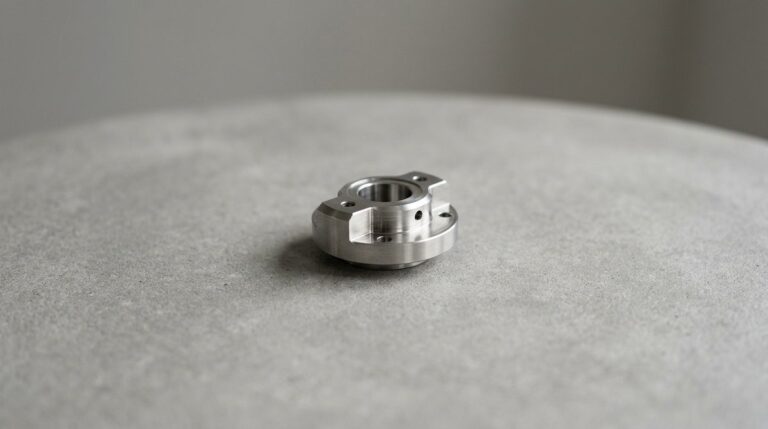
How to Source CNC Machining for Medical-Grade Components
Why Medical-Grade CNC Machining Demands More Than Just Tight Tolerances
At 6:00 AM on a Monday, a quality engineer at a medical device firm isn’t checking the ±0.01 mm tolerance on a new shipment; they are checking the heat lot numbers on the material certification. Anyone who has sat through a regulatory audit knows that the physical part is only half the battle. If a supplier cannot provide a complete, verifiable history of the raw material and every secondary process applied, those parts are non-compliant in the eyes of the FDA, regardless of how perfectly they were machined.
Missing material traceability is a liability that can trigger a full-scale recall if a batch is later flagged for impurities. The real cost isn’t just the scrap; it’s the weeks of investigation required to prove the rest of your inventory is safe. Furthermore, secondary processes like ultrasonic cleaning and passivation are often where dimensions drift or surface integrity is compromised. A supplier who treats these as ‘extra’ steps rather than integrated quality gates is a risk to your project timeline and compliance status.
When evaluating a manufacturing partner, look for those who can demonstrate how their documentation process prevents non-conformity before the first unit is even cut. At the shop-floor level, it requires a system where material certification and process validation are non-negotiable prerequisites. If a supplier cannot show you their audit-ready documentation package during the quoting phase, they aren’t ready to handle your medical-grade production. Always verify that your supplier’s quality management system is as precise as their CNC equipment, because a part without a paper trail is just scrap metal in a regulatory audit.
Comparing CNC Machining Suppliers: A Procurement Matrix

A structured approach to evaluating supplier certification levels is essential for regulatory compliance.
What is the actual cost of a supplier who can’t pass an ISO audit? Most procurement teams look at the unit price on the quote, but that number is a trap if the supplier doesn’t have the documentation to back it up. If you have to chase a factory for material certs or redo their First Article Inspection (FAI) because they missed a dimension, you aren’t saving money—you’re just shifting the labor cost to your own engineering team.
| Certification Level | Traceability Depth | Typical Lead Time | Documentation Package | Risk Profile |
|---|---|---|---|---|
| ISO 9001 | Batch-level only | 2–4 weeks | Basic COA / Packing List | High (Audit Gap) |
| ISO 13485 | Full heat lot tracking | 4–8 weeks | MTR, FAI, & Cpk Reports | Low (Audit Ready) |
When we look at a shop’s capability, we don’t just look at the CNC machines; we look at the paper trail. A shop that treats material certification as an administrative chore will eventually trip you up during a regulatory review. At WenXinDa, we’ve found that the difference between a smooth launch and a stalled project is whether the heat lot tracking is baked into the workflow from day one. If a supplier can’t hand you a complete documentation package the moment the parts arrive, they aren’t ready for medical-grade or high-stakes industrial work.
Don’t let a low quote distract you from the fact that a part without a verified paper trail is just expensive scrap metal. If you have to explain why traceability matters to your vendor, you’re already working with the wrong partner.
Scaling from R&D Prototypes to Full-Scale OEM Production
On a 5,000-unit first run, the conversation usually starts with tooling—not with the unit price. The transition from a five-piece prototype to full-scale OEM production is where most projects hit a wall, not because of the CNC machining itself, but because the documentation and process controls were never scaled alongside the volume.
The Prototype-to-Production Gap
When a startup brings in a five-piece prototype, the machinist often hand-tunes the process to hit the spec. It works for the trade show, but it’s a disaster for mass production. If you don’t lock the CAD-to-CAM workflow and formalize the inspection criteria at the prototype stage, you are essentially asking the factory to reinvent the process every time you place a larger order. A prototype is a proof of concept; a production-validated part is a proof of process. If your supplier isn’t asking for your GD&T (Geometric Dimensioning and Tolerancing) data and material certifications before they cut the first prototype, they are setting you up for a massive, expensive re-tooling cycle once you hit the 500-unit mark.
Managing Batch Consistency at Scale
Moving to OEM volumes means shifting your focus from individual part quality to batch-to-batch stability. In a 50,000-unit run, the variable isn’t just the machine—it’s the material heat lot and the tool wear over time. At WenXinDa, we see buyers get caught out when they assume the material properties of a small batch will hold for a bulk order. You need to verify that your supplier tracks material heat lots and provides Cpk reports that prove the process is capable of holding your tolerances over thousands of cycles. If the supplier can’t show you how they monitor tool wear and manage material procurement to avoid batch-to-batch drift, you aren’t buying a stable production run; you’re buying a series of unpredictable experiments.
Adjusting the RFQ for Lifecycle Stage
Your RFQ should evolve as your project matures. For a prototype, your RFQ should prioritize lead time and engineering flexibility; for an OEM run, it must prioritize process control, material traceability, and long-term supply chain stability. When you move to full-scale production, ask for a clear breakdown of the tooling depreciation and the QC protocol for each batch. If you are still using the same RFQ template for a 50,000-unit order that you used for a 5-piece sample, you are missing the opportunity to lock in the process controls that prevent defects from scaling with your volume.
If you can’t explain your production process to an auditor using only the documentation provided by your supplier, you haven’t scaled your project—you’ve just increased your risk.
Common Procurement Pitfalls and How to Avoid Them
Most CNC machining delays aren’t caused by a machine breaking down; they happen because the buyer and the factory have different ideas about what ‘finished’ actually means. When a project stalls, it’s usually because a technical or administrative detail was left unverified until the parts were already sitting on the receiving dock.
If the sample passes, production will too.
A sample is often hand-tuned by a senior machinist, while production runs rely on standardized jigs and machine offsets. If the quote doesn’t define what gets checked at each stage, you are paying for a prototype, not a process. Ask the supplier for a staged inspection plan that includes First Article Inspection (FAI) reports for every production batch. This ensures the process remains stable from the first unit to the ten-thousandth.
The design is ‘machinable’ so it is ‘manufacturable’ at scale.
Design for Manufacturing (DFM) is where most projects lose time. A part might be easy to cut on a 3-axis mill in a lab, but impossible to hold at scale without expensive custom fixtures or excessive cycle times. If your supplier doesn’t flag deep pockets, thin walls, or difficult-to-reach features during the quoting phase, they are ignoring the hidden costs that will surface once the PO is signed. If you see a quote that doesn’t mention tooling or fixture strategy, ask how they plan to maintain those tolerances across a 5,000-unit run.
Documentation can be requested at the end of the project.
Waiting until the final shipment to ask for material certifications or heat lot tracking is a recipe for a customs hold or a failed quality audit. Regulatory compliance is not a post-production task; it is a data-collection process that starts the moment the raw material hits the factory floor. If a supplier cannot provide a clear path to audit-ready paperwork, you are assuming the risk of their administrative gaps. The Documentation Bottleneck is real—if they can’t show you the certs for the raw material before they start cutting, they don’t have them.
Finishing and deburring are standard.
Medical-grade components often fail not because of the CNC work, but because of improper passivation or microscopic burrs left in internal channels. Never assume a ‘finished’ part is ready for assembly. Explicitly define your surface roughness requirements and cleaning standards in the RFQ. If you are dealing with complex internal geometries, ask the supplier to show you their specific deburring process for similar parts. The Finishing Oversight is a common reason for late-stage assembly failures.
Verify the process before the first chip is cut. A part without a verified paper trail is just expensive scrap metal.
Vetting Your CNC Partner: The Technical Audit Checklist
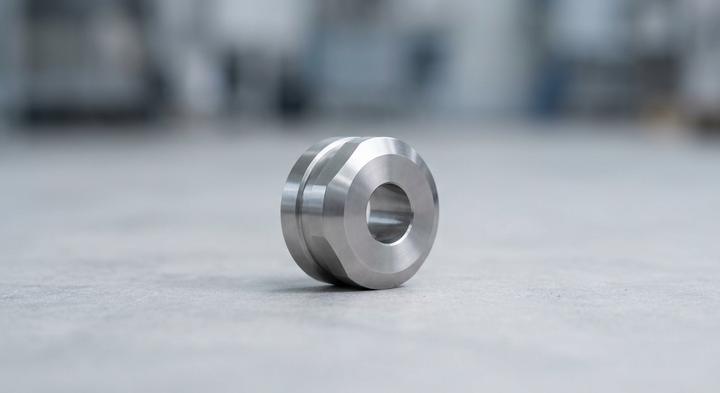
Rigorous technical audits ensure that every component meets stringent medical-grade quality standards.
While the procurement matrix establishes the baseline for documentation, the actual risk of a failed shipment often hides in the gap between a supplier’s ISO certificate and their daily floor reality. A remote video audit is the only way to verify if the quality management system is a living process or just a folder of paperwork kept for auditors. Use this checklist to move past the sales pitch and into the technical specifics of their production environment.
| Audit Item | What to Ask For | Red Flag | Green Flag | Responsible Party |
|---|---|---|---|---|
| Material Traceability | Heat lot logs linked to POs | Missing heat lot records | Full digital traceability | Materials Manager |
| Equipment Calibration | Current calibration certificates | Expired or missing stickers | Logged, scheduled intervals | QC Supervisor |
| PPAP Capability | Sample PPAP documentation | “We don’t do PPAP” | Standardized PPAP packages | Quality Engineer |
| Non-Conformance | Last 3 internal NCRs | “We have zero defects” | Documented root cause analysis | Production Manager |
When reviewing these items, look for the rhythm of the shop floor. A supplier who can pull a heat lot log for a part produced six months ago is demonstrating a mature system, not just a one-off effort. If the response to a question about non-conformance is that they have never had a defect, treat that as a signal to look closer; every shop has issues, and the ones you want to partner with are those that document, analyze, and learn from them. Anyone who has actually managed a production line knows that the ‘zero defect’ claim is usually a sign that the defects are simply being hidden from the customer until they reach the assembly line.
If you are ready to evaluate a potential partner’s technical capabilities, you can book a 20-minute video factory audit with the WenXinDa engineering team to review these specific audit points against your project requirements.
Next Steps: Requesting a Quote and Engineering Consultation
Now that you have a clearer view of the documentation and audit requirements for medical-grade CNC machining, the final step is to translate your technical needs into a formal quote. Many projects stall at this stage because the initial RFQ lacks the specific data a factory needs to provide an accurate lead time or cost estimate. To get a 24-hour turnaround on your quote, include your 3D CAD files, a 2D drawing with GD&T callouts, and a clear list of material specifications and required surface finishes.
If you are in the early stages of design, don’t wait for a final production drawing to start the conversation. Requesting a Design for Manufacturing (DFM) review with the WenXinDa engineering team can help you identify potential cost drivers—like overly tight tolerances or complex geometry—before you commit to a design that is unnecessarily expensive to machine. We often find that small adjustments to corner radii or hole depths can significantly improve throughput without compromising the device’s function.
For those ready to move forward, you can book a 20-minute video factory audit to see our CNC lines and quality management systems in real-time. This is the most efficient way to verify our capacity and documentation standards before placing a purchase order. Whether you need a single validated prototype or a full-scale OEM production run, contact the WenXinDa engineering team today to request a custom quote or download our latest technical capabilities guide.