
Low-Volume Metal Stamping: How to Launch Your First 1,000 Units Without Die Debt
The Tooling Trap: Why Your First 1,000-Unit Run Doesn’t Need a $25,000 Progressive Die
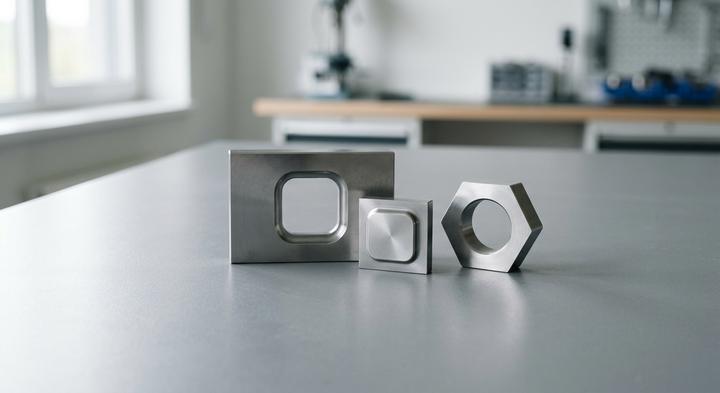
Modular tooling inserts offer a highly flexible, low-cost alternative to massive progressive dies.
The Monday morning email brings an RFQ response that stops your hardware pilot cold: a $25,000 tooling charge for a simple sheet-metal bracket. It is a classic sticker-shock moment, but the issue rarely lies with your design. Instead, you have hit the algorithmic quote trap. Most automated manufacturer portals run on software built for high-tonnage, high-volume production. Their systems assume a multi-year run where tooling eventually amortizes to pennies, so they default to quoting a complex, multi-station progressive die. For a 1,000-unit run, this means paying for high-speed automated throughput you do not need, creating massive ‘die debt’—sinking $20,000 or more into hardened tool steel before your market even validates the physical design.
The danger of this early investment is the ‘design lock’ illusion. It is easy to assume a design is final, but actual physical assembly often dictates otherwise. A single change—moving a mounting hole by 2mm or adjusting a flange angle—instantly trashes a completed progressive die. You cannot simply patch a high-precision progressive setup; you scrap it and start over. Rather than over-specifying tolerances and paying for hard tooling early, smart procurement relies on bridge-tooling economics. At WenXinDa, we match the press setup directly to your actual 90-day order forecast. For low and mid-volume runs, we bypass the $25,000 progressive beast entirely, using manual stage dies and modular master frames to keep your initial cash free for marketing.
When you are launching a pilot, tooling should serve your cash flow, not the other way around: always ask your supplier to quote modular stage dies before you sign off on a five-figure progressive tool.
CNC Laser, Stage Tooling, or Progressive Dies: The Real Cost Break-Even Points
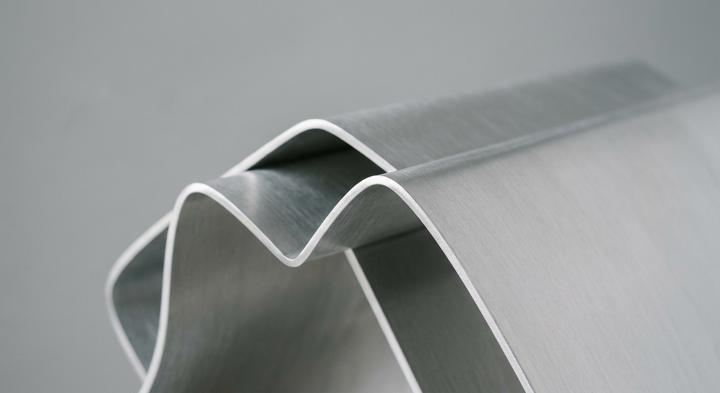
Consistent and precise bends achieved through modular stamping without high tooling overhead.
At what production volume does metal stamping become cheaper than CNC laser cutting?
That is the question that defines your manufacturing strategy, yet automated pricing portals rarely give you a straight answer. While zero-tooling laser cutting offers immediate turnaround for initial prototypes, its high per-part cycle cost quickly drains capital as production volumes climb. Moving to hard tooling transitions your run times from minutes of manual press-brake labor to split-second press strokes, dropping your piece price from double digits to pennies.
| Production Method | Typical Tooling Cost (USD) | Unit Cost (1,000-Unit Run) | Lead Time to First Article | Design Revision Cost / Risk |
|---|---|---|---|---|
| CNC Laser & Brake Press (Zero Tooling) | $0 | $12.00 – $18.00 | 3 – 5 Days | Low (software change only) |
| Modular Master Dies & Inserts | $2,000 – $4,500 | $4.50 – $6.50 | 2 – 3 Weeks | Moderate (replace inserts only) |
| Single-Stage Compound Dies | $4,000 – $8,000 | $1.80 – $3.00 | 3 – 4 Weeks | Moderate (requires tool modification) |
| Progressive Dies | $15,000 – $35,000 | $0.25 – $0.80 | 6 – 8 Weeks | High (requires wire EDM rework) |
Calculating the True Break-Even Point
Let’s trace the amortization math. If a modular tool carries a $3,000 fabrication charge, that tooling cost amortizes to $3.00/unit on a 1,000-piece pilot run. Push that run to 10,000 units, and the tooling hit drops to $0.30/unit. If you keep that same 10,000-unit run on a CNC laser bed with an average manual labor and machine charge of $12.00 per part, your total run cost lands at $120,000. Running the exact same batch on modular tooling—even when you include the upfront tool fabrication—drops the overall cost to under $20,000.
Volume, however, is only one side of the coin; part geometry often forces your hand much earlier. When a bracket design requires more than three manual press-brake hits, your operator spend climbs and part-to-part consistency drops. Standard manual brake forming struggles to hold tolerances tighter than ±0.2 mm across a large batch due to material springback and physical handling variables. Additionally, parts with complex, highly concentric hole patterns or narrow webs between cuts tend to warp under the heat of a laser bed.
Stamping solves these mechanical issues by freezing your geometry into a single tool set. Single-stage compound dies cut the inner holes and outer profile in a single stroke, preserving perfect concentricity and eliminating thermal distortion entirely. To mitigate the high entry barriers of dedicated hard tooling, WenXinDa utilizes standard, in-house master holder frames. This means we only need to machine your custom cavity inserts to get your project running, cutting your initial tooling investment in half and shifting your break-even point in your favor.
From Brackets to Connectors: Three Real-World Tooling Profiles
The toolmaker adjusting the shut height on a stamping press knows exactly when a design team over-specified their tooling. When choosing between progressive dies and modular stage setups, the raw geometry and material thickness of the part must dictate your toolroom investment, not a generic online quote engine. Overpaying for high-end D2 or carbide tooling is a common mistake when basic, cost-effective Cr12 or A2 tool steels can easily survive the contract volume without wearing out.
Scenario A: The Multi-Bend Enclosure Bracket For Industrial Use
When you are running a 1.5mm SPCC sheet-metal bracket with a loose ±0.2mm tolerance, you do not need a five-figure progressive tool. A lot of suppliers will quote a complex progressive die because their automated pricing systems only know how to calculate high-speed line time, but on a couple of thousand units, simple manual stage dies are the smarter play. Hardened A2 tool steel blocks can handle these broad bends and basic holes over three or four quick presses without showing real wear. The real cost-killer here is unnecessary tool complexity: simple design-for-manufacturability (DFM) adjustments—like widening a tight bend radius or pushing a slot just a millimeter further away from a bend flange—instantly eliminate the need for costly side-action cams, keeping the initial tooling cost in the low thousands.
Scenario B: The Beryllium Copper Connector Leaf
Stamping a 0.15mm Beryllium Copper connector leaf is a completely different discipline where a single microscopic edge burr can cause a critical failure in the final assembly. With springy, thin-gauge Beryllium Copper and tight ±0.03mm tolerances, standard tool steels like A2 will dull and warp within the first few thousand hits. This is where premium materials earn their keep. At WenXinDa, we build these cutting stations using solid carbide inserts or high-speed D2 tool steel in a precision-guided progressive die. By paying more for carbide inserts that hold their razor edge over millions of high-speed strokes, you avoid the constant downtime of taking the tool down for grinding every Wednesday afternoon.
Scenario C: The Scaling Road Map
Consider a medical hardware team that came to us last autumn needing a quick 1,500-unit pilot run of an internal RF shield. They were stuck between a massive $15,000 progressive hard tool that would consume their entire cash reserve and a modular $3,200 stage-die insert set that required manual loading but left room for on-the-fly modifications. They chose the modular stage path, saving $11,000 in upfront tooling costs. That decision paid off when the testing lab flagged an RF leak after the first 200 units; we modified the modular insert in 48 hours for a few hundred dollars, whereas modifying a progressive die would have been a financial disaster. This bridge-tooling phase gave them the proof of concept they needed before they scaled to high-speed progressive tooling once their order book took off.
Before you sign off on any tooling deposit, make sure your tool steel choice matches your immediate assembly tolerance rather than your five-year sales projection.
The Hidden Cost Drivers in Your Stamping Quote: What the Fine Print Means
Tooling design errors and restrictive contract clauses will quietly double your metal stamping costs long before your first production batch clears the press. While the unit price is what gets reviewed by accounting, the actual commercial risk lies buried in toolroom decisions and the legal custody of the physical dies.
Progressive dies are the only way to guarantee part-to-part consistency for precision stampings.
Suppliers often push expensive progressive tooling because their shop floor is optimized for automated, long-run setups—not because your part geometry demands it. For mid-volume runs under 10,000 units, manual stage dies or modular compound tools deliver the exact same dimensional accuracy without forcing you to front $20,000 for a massive multi-station tool. Always ask the toolmaker why a modular insert system cannot handle the job before agreeing to dedicated progressive tooling.
Hole placement is a simple design detail that has no impact on tool fabrication costs.
Punching a hole closer than twice the material thickness to a bend line deforms the metal during forming, leaving you with an out-of-round feature. To bypass this, the toolmaker must design complex side-action slide punches or plan for secondary drilling—both of which add thousands in custom tool steel and manual labor. Moving that hole just a millimeter further from the bend line often completely eliminates the need for expensive multi-stage actions.
Paying a 100% tooling invoice automatically guarantees you own the physical die sets.
Many contracts hide custody clauses or refuse to hand over the engineering CAD drawings, locking your hardware production to their specific presses forever. When procurement teams work with an open-book partner like WenXinDa, they secure explicit physical ownership of both the die plates and the CAD files in the initial purchase order, preventing vendor lock-in.
Tooling maintenance is a free lifetime service included in every stamping quote.
Sharpening cycles, die revision fees, and target lifetime limits are rarely covered under generic maintenance promises unless the parameters are written down. Before depositing the first 50%, verify who pays for insert replacement when the tool hits 50,000 strokes, and confirm that the vendor lists the exact die steel grades (such as D2 or Cr12MoV). Never sign a tooling agreement without a written clause defining both the steel grade and your absolute right to retrieve the physical tool.
Vetting the Toolroom: How to Audit a Stamping Factory’s Short-Run Capability
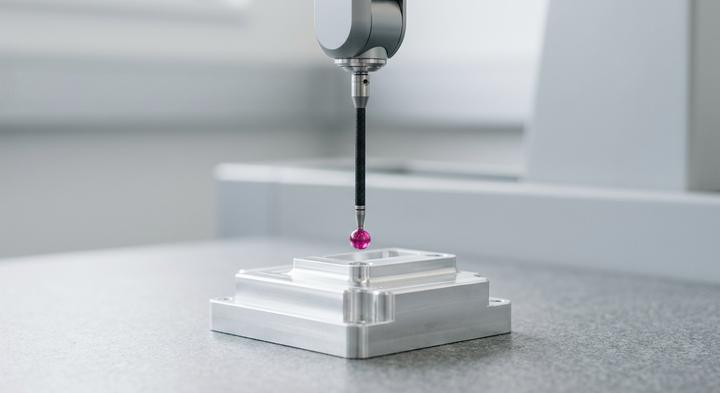
Rigorous first-article inspections using coordinate measuring machines ensure parts meet dimensional tolerances.
Once you map out whether your part requires simple stage tooling or high-speed progressive runs, the challenge shifts from selecting a theory to auditing a physical factory floor. Knowing what a supplier is capable of on paper means very little if their shop floor is optimized only for million-unit automotive runs that push small orders to the back of the queue.
| Audit Checkpoint | What to Ask the Engineer | The Answer You Want | The Red Flag to Watch For |
|---|---|---|---|
| Press Tonnage Matching | “Do you run low-volume pilot batches on the same high-tonnage automated lines as your bulk contracts?” | “We run dedicated 45-to-110 ton mechanical presses alongside our 300+ ton lines to keep setup costs low and run times flexible for pilot projects.” | A fleet composed exclusively of 300+ ton automated presses, which guarantees excessive setup fees and long scheduling delays due to massive down-times. |
| In-House Toolroom Diagnostics | “Can you modify, sharpen, or adjust a metal stamping die in-house, or must the tool go back to an external toolmaker?” | “We run a fully staffed, in-house toolroom right off the floor to handle wire EDM, precision grinding, and tool modifications within hours.” | Outsourced toolroom maintenance, meaning simple die adjustments halt your production line for days while tools are shipped to external shops. |
| Material Traceability & QA | “Do you provide original mill test reports (MTRs) and FAI reports using calibrated coordinate measuring machines?” | “Yes, we provide full material traceability with original MTRs and step-by-step First Article Inspection (FAI) reports mapped using calibrated CMMs.” | Generic certificates of conformity without specific heat numbers, or dimensional checks performed solely with manual calipers. |
| Die Storage & Lifecycle | “How are customer-owned dies stored between runs, and who covers the cost of routine sharpening or wear?” | “All dies are rust-proofed, dry-racked, and maintained with a lifetime sharpening guarantee at our expense while running with WenXinDa.” | Dies stored exposed to moisture on the factory floor without maintenance records, or lack of clear ownership and wear-liability agreements. |
Evaluating these checkpoints during an audit prevents the common mistake of onboarding a high-volume supplier that treats pilot runs as minor filler. True capability in metal stamping for medium-run projects is defined by how quickly a factory configures and inspects your parts without scheduling delays. WenXinDa structures its floor around this balance, keeping dedicated capacity for both agile prototyping and rapid tooling scaling.
To ensure your supplier translates these capabilities into clear economics, our next section breaks down the pricing models governing successful production runs.
De-Risking Your First 1,000 Units: How WenXinDa Handles Short-Run Stamping
Now that we have mapped out how specific part profiles dictate your tooling choice, the execution comes down to how a shop actually handles your first 1,000 Units on the floor without letting quality drift. The reality of short-run metal stamping is that low volume shouldn’t mean loose tolerances or secondary treatment. We process sheet-metal parts ranging from 0.1 mm up to 4.0 mm in thickness—covering SPCC, aluminum alloys, copper, and stainless steel—and hold critical dimensions to ±0.05 mm. We do this by utilizing modular die shoes and single-stage tooling rather than complex progressive setups. This custom approach lets us execute a short Run Stamping While keeping your upfront tooling costs manageable and your lead times predictable. Every single batch goes through the exact same quality gate as a high-volume production run; we use in-house 2D projectors, digital height gauges, and coordinate measuring machines (CMM) to verify critical dimensions and secure your First Article approval before the press starts its real run.
Instead of guessing how your geometry will behave under a press, send us your 3D STEP file. Our engineering team will run a direct Design for Manufacturability (DFM) review and lay out a clear tooling amortization schedule. We will show you exactly where adjusting a bend radius or a hole-to-edge clearance can simplify the tooling, keeping your initial setup fast, predictable, and within budget. This technical feedback ensures that when we cut tool steel, the parts coming off the press match your print on the very first strike.