

Medical Device Component Selection Guide: Verifying Traceability in Premium Metal Stamping
Surgical-Grade vs. Commercial Metal Stamping: Where the Tolerances Diverge
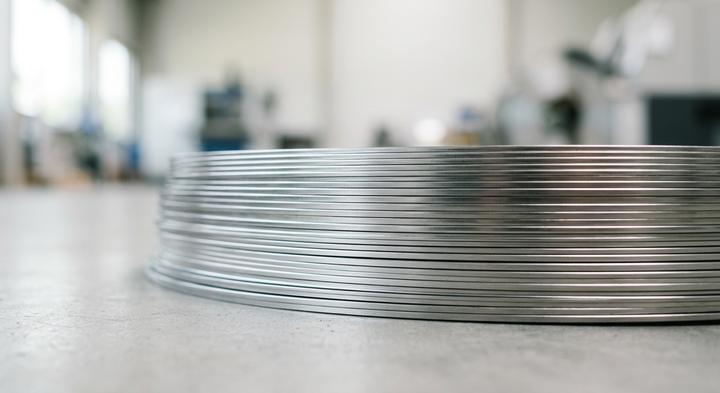
Raw premium metal coils inspected for micro-tolerance processing.
Tool wear, not initial machine calibration, determines whether a critical medical stamping remains within safety margins over a million-cycle run. In commercial metal stamping—such as manufacturing internal brackets for consumer electronics—the overriding goals are high operating speed and the lowest possible unit cost. If a bracket’s dimensions drift by 0.05 mm, the assembly line usually absorbs the variance without a system failure. However, when producing micro-stamped surgical components like laparoscopic stapler anvils, vessel-sealing jaws, or trocar needles, that same 0.05 mm variance can cause a clinical device to jam or fail during a procedure. Standard stamping houses struggle to hold consistent ±0.01 mm tolerances over long production runs because generalist high-speed presses lack the thermal stability, real-time tonnage monitoring, and specialized tool-steel grades required to combat progressive die wear.
Securing clinical-grade reliability requires shifting the focus from basic dimensional capability to a validated, closed-loop manufacturing system. While many precision machine shops can produce a small batch of tight-tolerance prototype parts, true medical-grade metal stamping requires strict clinical validation—including operational qualification (OQ) and performance qualification (PQ)—alongside ISO 13485 compliance and certified cleanroom packaging. This is where generalist stamping operations diverge from specialized partners like WenXinDa. As an ISO 13485 certified manufacturer, WenXinDa bridges the gap between low-volume clinical prototyping and automated, high-speed press runs by providing full trace records and maintaining cleanroom-level packaging standards. Our engineering teams design tooling with integrated acoustic emission sensors to detect minute punch-to-die misalignments before they translate into out-of-tolerance parts, ensuring that high-volume output matches the structural integrity of the initial pilot run.
The Technical Selection Criteria for Surgical-Grade Components
What are the technical and chemical quality baselines required for surgical-grade metal stamping?
Securing high-precision medical metal stamping components requires moving beyond standard commercial mill sheets to establish unambiguous, measurable quality agreements before production begins. For surgical-grade components, procurement teams must align raw material specifications with exact tooling limitations, post-processing chemistry, and downstream bioburden standards. This systematic vetting ensures that critical structural elements—such as endoscopic stapler anvils, surgical jaw inserts, or implantable springs—do not fail under clinical stresses.
| Surgical Alloy (Buyer Spec) | Key Tooling & Design Limits | Recommended Application Fit | Primary Verification Risks | Sourcing Verdict |
|---|---|---|---|---|
| 316L Stainless Steel (Surgical Grade) | High work-hardening; requires sub-0.01 mm punch-to-die clearances. Wall thickness must be >1.5× strip thickness to prevent micro-fracturing. | High-corrosion orthopedic implants, surgical staples, endoscope caps. | Excess burrs (>0.02 mm) from tool wear; chemical drift if MTRs lack heat traceability. | Specify ASTM F138. Enforce automated optical edge inspection every 5,000 strokes. |
| 17-7 PH Stainless Steel (Precipitation Hardened) | High formability in soft Condition A; sharp bends must run strictly perpendicular to the coil grain to prevent micro-cracking. | High-fatigue mechanical springs, surgical clips, internal chassis. | Severe dimensional warp and flat-plate distortion during the 482°C aging cycle. | Lock bending orientation relative to grain. Mandate post-heat treatment fixture testing. |
| Titanium Grade 5 (Ti-6Al-4V Alloy) | Low elasticity causes up to 15% springback; requires heavy carbide dies and ultra-slow press stroke speeds. | Load-bearing orthopedic implants, bone plates, dental instruments. | High tool chipping and galling; rapid creation of a brittle “alpha-case” surface layer. | Run on slow-ram presses with synthetic lubricants. Require acid pickling to strip alpha-case. |
Validation Protocols and Material Validation
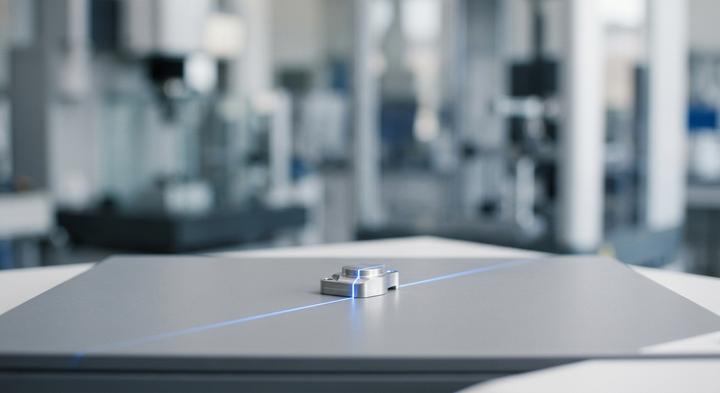
Advanced optical quality validation of stamped medical components.
To eliminate bioburden and structural failures, manufacturers must validate raw stock and parts through a closed-loop quality protocol. Standard Mill Test Reports (MTRs) are a necessary baseline, but high-reliability partners like WenXinDa back these records with optical emission spectroscopy (OES) at the receiving dock to verify chemistry before stamping begins. To address the strict <0.02 mm burr height limit required to prevent surgical tissue damage, stamping lines should integrate automated in-die optical metrology and non-contact laser-scanning profilers.
Tooling Strategy: Progressive Dies vs. Modular Tooling for Clinical and Production Phases
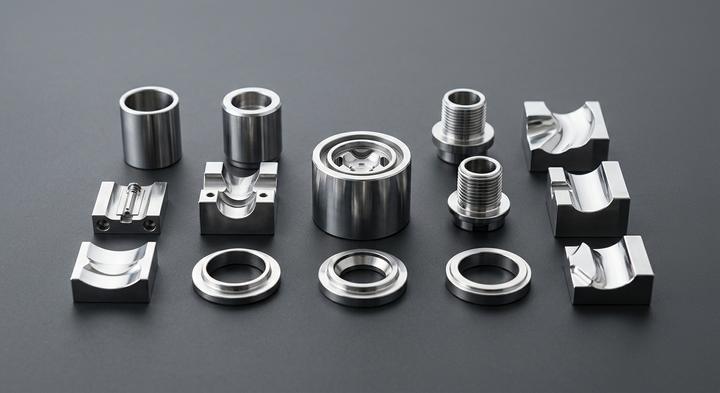
Highly polished modular tool steel inserts designed for progressive and pilot-phase runs.
The procurement lead staring at a $45,000 progressive tooling quote on a Monday morning is usually trying to dodge a classic medical hardware trap: committing to hard tool steel before clinical design freeze. Trying to save on upfront tooling costs by stretching proto-tools into clinical trials often backfires during regulatory audits because prototype parts do not possess the same edge-hardening, shear-to-break ratio, and grain structure as the final stamped components. This choice is not merely financial; it determines the regulatory validity of the physical testing itself.
Clinical Trials and Prototyping (100 to 1,000 Parts)
An engineering team three weeks out from a critical human-factors test with a run of 800 stamped titanium clip appliers finds themselves caught between paying a massive premium for wire EDM micro-machining at over one hundred dollars per part, or rushing a $35,000 progressive die that would be completely scrapped if surgeons requested a grip adjustment. To bridge the gap, running modular soft-tooling inserts on standard master press frames allows them to test physical form and functional clearances with realistic stamped edges. This modular path means that when clinical feedback inevitably forces a minor shift in hinge placement, only a single inexpensive insert block needs to be remade, keeping the budget intact and the timeline on track.
Pilot Validation and Verification (1,000 to 10,000 Parts)
The QA director refusing to sign off on laser-cut blanks for design verification testing represents the exact moment when prototyping methods must yield to production intent. Moving to single-stage compound dies at this juncture allows the manufacturer to stamp consistent physical lots on a production press, capturing the exact material flow and stress concentration points of a true metal stamping run without the massive capital outlay of a multi-station progressive setup. This intermediate step ensures that fatigue and mechanical testing remain valid for regulatory submissions while postponing the major tooling cash outlay until the design is officially locked.
High-Volume Commercial Launch (50,000+ Parts)
The first shift of a high-volume commercial run is the wrong time to discover that a single tooling crash can derail a launch, especially when unit costs have plummeted to fractions of a cent on a high-speed progressive press. Medical metal stamping partners like WenXinDa mitigate this catastrophic risk by designing multi-station progressive dies with built-in acoustic, optical, and tonnage sensors that detect misalignments or slug pulling before the press can execute a second damaging stroke. If you cannot guarantee the design will not change by a fraction of a millimeter in the next twelve months, invest in modular insert systems; only cut hard progressive dies when the validation documentation is fully signed and frozen.
Four Sourcing Missteps in Stamped Medical Component Specifications
Delayed tooling approvals are almost always caused by nominal CAD specifications that ignore how raw metal behaves inside a high-speed stamping press. When designing ultra-precise medical components, translating theoretical models to physical metal sheets requires accounting for the friction, shear stresses, and high-volume limits of the shop floor.
Standard mill certifications are enough to guarantee raw material performance during high-speed medical runs.
Bulk importer paperwork rarely reflects the localized mechanical deviations across a single slit coil. In precision medical metal stamping, slight tensile variations alter the springback behavior, leading to dimensional drift in micro-formed features. Savvy procurement teams look for partners like WenXinDa that run independent tensile and chemical verification at the receiving dock, ensuring the material actually behaves like the nominal specification before the press strokes.
Drawing notes should specify a flat “zero-burr” requirement to ensure patient safety.
Specifying an absolute zero burr forces manufacturers to over-quote or plan for manual deburring operations that destroy part-to-part consistency. Punches wear down from the very first stroke, making a true zero edge mathematically impossible in continuous production. Instead of a blanket “zero-burr” callout, specify a realistic micro-burr threshold—such as a maximum height of 0.02 mm—and define how that burr orientation is controlled relative to downstream surgical assembly directions.
If the hand-fed, single-cavity prototype sample passes inspection, the high-speed progressive production run will too.
A single tool-steel insert run slowly on an R&D press does not experience the thermal stresses, lubrication dynamics, or progression forces of a 400-stroke-per-minute production run. Tool steel expands as heat builds, and micro-stamping lubricants behave differently under high-velocity shearing. To bridge this gap, require your metal stamping supplier to perform short pilot runs on active automated lines to validate dimensional stability under continuous operating temperatures before committing to hard production tooling.
“Parts must be clean and free of oils” is a sufficient specification for medical-grade components.
Vague cleaning notes leave the door open to chemical residues that can cause biocompatibility failures or prevent sterile packaging from sealing. Simply specifying “clean” does not tell a production line whether a part is ready for cleanroom assembly. Buyers must define precise residual oil limits, typically expressed as a target under 10 mg/m², verified by gravimetric testing or oil-residue spectroscopy.
The Quality Lab Audit: Verifying Metrology and Traceability on the Shop Floor
How do you audit a medical metal stamping quality lab? Our Shop Floor How protocol relies on pulling a finished component from the pack line and demanding the quality team prove its physical dimensions and material pedigree on the spot.
Shop Floor Audit Matrix
| Ask | Expected Evidence | Red Flag | Responsible Party |
|---|---|---|---|
| Verify automated CMM and high-resolution optical comparator capability on intricate surgical shapes and micro-edge geometries. | Verifiable calibration certificates displaying ISO 17025 certification; complete Gage R&R documentation showing measurement system error consumes less than 10% of the allowed dimensional tolerance; active automated program logs demonstrating the equipment is run systematically. | Operators measuring features smaller than 0.05 mm with manual hand micrometers or vernier calipers; missing or hand-written calibration tags on the metrology systems; CMM programs being overridden manually without engineering sign-off. | Lead Metrology Technician |
| Execute a randomized heat lot trace audit on a completed bin of surgical stampings pulled directly from the packaging station. | A complete, unbroken digital or physical production traveler matching the finished part’s unique batch run to the chemical OES analysis and mill test reports in under 15 minutes. | Unlabeled work-in-progress bins sitting on the production floor; paperwork containing generic batch identifiers that do not tie directly back to the chemical composition of the original metal coil. | Materials Control Manager |
| Review toolroom logs and physical die-wear tracking procedures for active progressive and modular tooling. | Integrated tool maintenance databases showing press stroke counters with automatic preventative maintenance alerts triggered by precise hit thresholds, alongside physical tool sharpening logs. | Die maintenance schedules driven by arbitrary calendar milestones rather than actual press strokes, ignoring accelerated wear caused by high-tensile medical materials. | Die Shop Supervisor |
This level of structural accountability separates capable medical manufacturers from those relying on paper-thin credentials. When validating custom components, a medical-grade stamping partner must present transparent, traceable records that match physical realities on the shop floor. For medical device OEMs, WenXinDa integrates this strict control directly into daily operations, furnishing full ISO compliance data, detailed coordinate measuring machine reports, raw chemical material certs, and precise punch life logs with every shipped batch. If a factory cannot pull an active production traveler and complete a trace audit in under 15 minutes while you stand in their lab, their quality system is merely a marketing facade.
Sourcing Surgical Components: Realizing Scale with WenXinDa
Now that the tooling strategy has defined the path from prototype to high-speed progressive die, the physical execution shifts to managing cleanroom boundaries and contamination control during long-run metal stamping. The reality of surgical-grade stamping is that you cannot stamp a finished, sterile medical device on a standard factory floor, nor should a metal stamping shop try to own the sterile validation process. At WenXinDa, we set a clear boundary to keep your regulatory path clean: we handle the custom progressive micro-stamping, the multi-stage automated ultrasonic degreasing, and the final packaging inside an ISO Class 7/8 dust-free cleanroom. We deliver these components cleanroom-packed but unsterilized. This keeps your component manufacturing costs predictable and leaves the terminal sterilization to your validated downstream sterilization loops, avoiding the mess of redundant, overlapping validations.
Realizing scale on a surgical micro-stamping run is really a battle against progressive tooling wear, which starts showing up as tool steel drifts past the hundred-thousand-stroke mark. The absolute best way to de-risk this is to run a design-for-manufacturing (DFM) review before we ever cut steel—catching geometry issues early is far cheaper than modifying a complex progressive die mid-run. Sourcing surgical components successfully means testing the hardware under real lab conditions. To verify our tolerances and edge-finish limits on your own equipment, send your 3D CAD files in STEP or IGES format to our engineering desk for a direct DFM assessment, or request a production sample pack of our micro-stamped parts to evaluate burr heights in your QC lab.