
From CAD to Production: OEM Metal Stamping with In-House Tooling and Dies
Why Progressive Die Tolerances Fail on the Production Floor
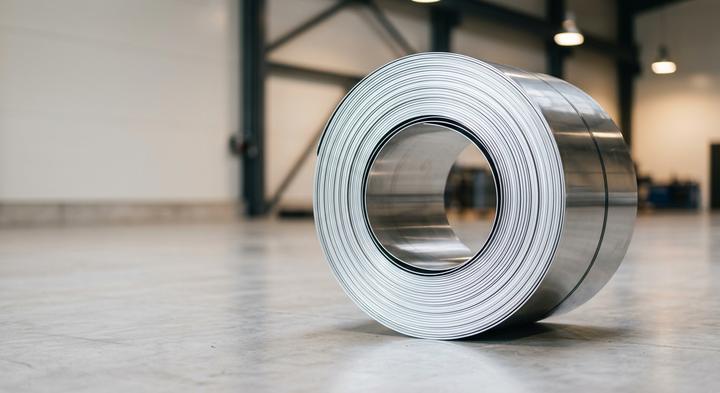
Raw material coil quality dictates real-world stamping precision long before the tool reaches the press floor.
At 6:00 AM on a Tuesday, a high-speed progressive die designed to hold a tight ±0.03 mm tolerance starts spitting out out-of-spec brackets. The culprit isn’t the press; it’s a 0.02 mm variation in coil thickness that just entered the feed. While the CAD simulation assumes a perfectly uniform, isotropic material with predictable springback, the real-world coil has fluctuating yield strengths and grain directions that vary from the outer wraps to the inner core. Under 200 tons of continuous press force, these physical variations transform a clean mathematical model into an unpredictable mechanical battle.
When high-volume runs drift out of spec, the toolroom often gets the blame, but the failure usually starts much earlier. If stripper plate pressure isn’t strong enough to keep the metal strip dead-flat during forming, the material flows unpredictably. If guide pilots are slightly misaligned, the strip wanders and loses its pitch. Worse, poor scrap-shedding leaves tiny metal slivers behind to jam the die stations and halt the entire line. Treating Design for manufacturability (DFM) as a proactive physical reality check—rather than a late-stage formality—is the only way to protect a six-figure tooling investment.
On the Production Floor At WenXinDa, we address these physical variables before a single block of tool steel is cut. A practical DFM review evaluates how grain direction, strip lift, and pitch progression behave under worst-case coil tolerances. When vetting a metal stamping partner, ignore generic accuracy claims. Ask how their strip layout manages raw material thickness variations without losing pitch. An experienced supplier should show you exactly how their layout compensates for coil variations before you sign off on a tooling invoice.
Comparing Tooling Classes: Balancing Progressive, Transfer, and Stage Dies
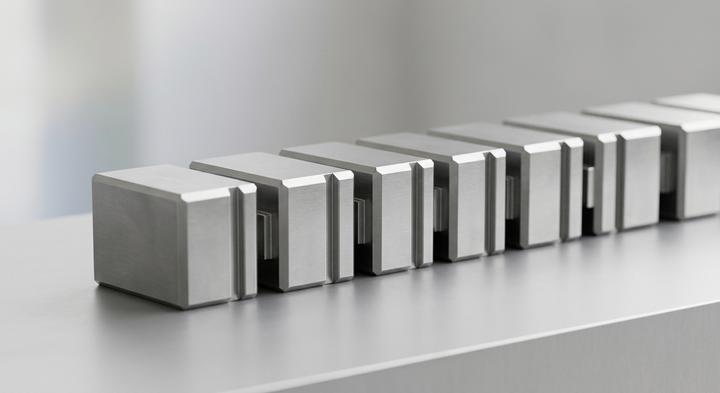
Choosing the correct tooling class involves balancing initial tooling capital against long-term operational tolerances.
Which metal stamping die class offers the best balance of tooling cost and production speed for my volume?
Selecting the wrong tooling class can double your initial capital expenditure or cripple your per-part margin with slow run speeds and frequent maintenance. Evaluating this choice requires weighing annual production volume, part complexity, and raw material thickness stability. Tooling engineers look past the initial invoice to calculate the total cost of ownership across the entire life of the program.
| Buyer Type | Decision Factors (Part & Material) | Best Tooling Class (Fit) | Primary Risks & Wear | Verdict & Payback Threshold |
|---|---|---|---|---|
| Low-volume, short-run OEMs | Heavy-gauge plates, simple blanks, thick material (>4.0 mm) | Single-Stage / Manual Stage Dies | High labor costs, slow production speeds, operator safety risks | Ideal under 20,000 units annually; lowest upfront cost, but slow cycle times make it unviable for scaling. |
| High-volume automotive & electronics | Complex geometries, thin to medium gauge (0.2–3.0 mm) | Progressive Dies | High upfront tooling cost, sensitive to coil thickness variations (+/-0.05 mm), risk of punch chipping | Payback typically starts above 100,000 units; highest run speeds (>200 SPM) justify the upfront tooling engineering. |
| Medium-to-high volume deep draw | Large parts, deep shells, or parts requiring rotation during forming | Transfer Dies (Automatic/Manual) | Complex transfer finger setups, higher machine maintenance, slower speeds than progressive | Best for parts over 150 mm in size or deep cans; pays off when strip carrier scrap reduction offsets transfer mechanism costs. |
The Math Behind Tooling Payback and Coil Thickness Risks
The threshold where high-speed progressive tooling becomes more economical than manual stage dies depends entirely on labor amortization; for example, an $80,000 progressive tool running at 150 SPM amortizes rapidly above 150,000 units, whereas stage tooling at 10 SPM becomes unviable due to cumulative labor costs. However, progressive dies are highly sensitive to raw coil thickness variations (+/- 0.05 mm), where tight die clearances can cause tool binding and punch chipping. At WenXinDa, we mitigate this by engineering adjustable stripper plates and incorporating nitrogen gas springs that absorb these physical thickness fluctuations. When auditing a custom metal stamping supplier, always verify that their tooling clearances are engineered around maximum material tolerance extremes rather than nominal stock thicknesses to ensure long-term tool survival.
Three Procurement Scenarios: Matching Your Stamping Needs to the Right Press Setup
An RFQ for 10 million miniature spring contacts requires a completely different operational footprint than a run of 10,000 heavy industrial brackets, yet buyers frequently assume any press shop can handle both. Running these contrasting parts on the same line is a quick way to chip expensive tool steel or throw tolerances out of spec. Securing the Right Press Setup At WenXinDa or any other capable facility means recognizing that press tonnage, lubrication, and tool materials must align with the material thickness. Treating every job as a generic stamping run ignores the physical realities of metal forming.
Scenario 1: High-Speed Miniature Connectors
Running high-speed lines designed to yield tight Tolerance Copper Components When stamping thin-gauge micro-connectors at 800 strokes per minute demands precise thermal management. Holding ±0.02 mm tolerances on these delicate parts requires dissipating the heat generated by rapid, repetitive punching. Even a small temperature rise in the progressive die causes thermal expansion, which throws off the pitch progression. To prevent this, the press setup pairs tungsten carbide dies with precision automatic coil feeders and vanishing synthetic lubricants. These lubricants dissipate heat and evaporate without leaving a gummy residue that would otherwise clog stripper plates and cause misfeeds.
Scenario 2: Heavy-Duty Structural Brackets
When running heavy Gauge Structural Parts For automotive brackets thicker than 4.0 mm, high run speeds are swapped for deep forming control and springback management. Stamping thick carbon steel generates massive shock loads that reverberate through the press frame during material breakthrough. To prevent structural damage to the tool and the press, the setup relies on slower mechanical or hydraulic presses equipped with high-tonnage nitrogen gas springs to absorb the breakthrough shock. Here, tooling must be engineered to overbend the material, compensating for the wide variations in yield strength that characterize raw hot-rolled steel.
Scenario 3: Aesthetic Enclosures
With Cosmetic Housing Panels Stamping, the priority shifts from raw dimensional limits to protecting surface aesthetics and eliminating micro-scuffs. For stainless steel or aluminum enclosures destined for anodizing or brushing, standard tool steels are too abrasive and will cause galling. The setup requires mirror-polished inserts treated with Physical Vapor Deposition (PVD) coatings, paired with synthetic lubricants that form a protective barrier. Managing cosmetic quality also means applying a protective poly-masking film at the decoiler before the metal ever meets the die face, ensuring the finished panels exit the press without a single line-mark.
Tooling Pitfalls: Where Digital CAD Designs Clash with Physical Sheet Metal
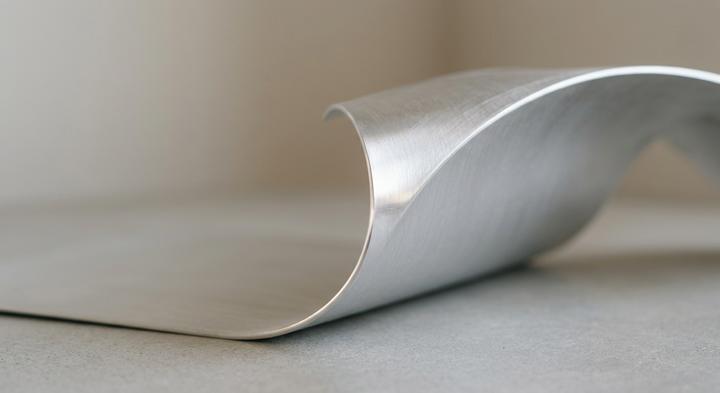
Physical sheet metal behavior, such as springback, must be physically calculated rather than purely simulated.
Every CAD model is an idealized fiction until it meets Physical Sheet Metal. Three mechanical realities—anisotropy, springback, and tooling wear—decide whether those perfect digital lines can actually be stamped.
Bending is just geometry, so a 90-degree CAD bend will yield a 90-degree part in any temper of the same alloy.
Identical CAD profiles behave completely differently when stamped in T4 versus T6 aluminum because of elastic recovery. While soft T4 yields easily to a nominal bend, the higher yield strength of T6 aluminum causes it to spring back outward by up to several degrees once the punch retracts. To compensate, a toolmaker cannot rely on default software tables; they must cut the overbend angle directly into the tool steel based on the specific mill run. At WenXinDa, we address this by matching tool geometry to actual coil tempers rather than generic software presets. When sourcing custom stampings, specify the exact temper on your engineering drawings rather than just the generic alloy grade.
Parts can be nested in any direction on the strip layout to maximize material yield.
Bending sheet metal parallel to the coil’s rolling grain causes micro-cracking and structural failure along the outer radius. Sheet metal is highly anisotropic; its mechanical properties are significantly stronger across the grain than along it, much like the grain in a piece of oak. To prevent splitting on high-strength alloys, the progressive die’s strip layout must be engineered so that critical load-bearing bends run perpendicular or at a 45-degree angle to the coil’s rolling direction. If a supplier prioritizes material utilization over grain alignment during nesting to win a cheap quote, you will face high field-failure rates. Demand to see the strip layout and verify the grain orientation before tooling fabrication begins.
Standard D2 tool steel is sufficient for any high-volume stamping tool.
Relying on standard D2 steel for high-volume alloys leads to premature punch chipping and rapid tolerance drift. When stamping modern high-strength low-alloy (HSLA) steels or thick stainless runs, the abrasive pressure quickly wears down standard D2 cutting edges. For these demanding runs, upgrading to premium powder metallurgy grades like CPM 1V or Vanadis 4 Extra is necessary to prevent frequent downtime for tool sharpening. Never approve a high-volume tool quote until the supplier specifies exactly which powder metallurgy grades they will use to handle abrasive wear.
Vetting the Die Shop: Audit Metrics that Prevent Production Halts
Once you match the part’s complexity to the right press setup on the floor, the entire production run still hinges on the tool steel running inside it. If the toolroom lacks the machinery to maintain that progressive tooling, even a multi-million-dollar press becomes an expensive paperweight.
On-Site Technical Audit Matrix
| Audit Metric | What to Ask & Observe | Expected Evidence | Red Flags | Responsible Party |
|---|---|---|---|---|
| In-House Toolroom Capabilities | Walk the floor of the Die Shop. Ask to see active wire-EDM, CNC mills, and surface grinders. Observe if they are performing live tool modifications or if they outsource tooling repair. | On-site machinery running. Maintenance logs for grinders and EDM. Dedicated space for toolmakers with a library of replacement punches and die inserts. | The “toolroom” is just a workbench with hand files and a manual drill press; major tooling repairs are outsourced, adding 3 to 5 days to any production halt. | Lead Tooling Engineer & Sourcing Manager |
| In-Process Defect Prevention | Check the progressive die setup on the press. Ask how the system detects a misfeed, a doubled strip, or slug pulling before the press completes its stroke. | Physical proximity sensors, optical sensors, or active tonnage monitors wired directly into the press control system to trigger an emergency stop. | Operators manually watching the strip run with no automated sensor shutoffs; high reliance on the operator’s eye to catch 0.1 mm misfeeds at 100 strokes per minute. | Quality Assurance Director & Press Lead |
| Raw Material Steel Traceability | Select a random coil on the warehouse floor. Ask to trace its mill test certificate (MTC), heat number, and the specific progressive die run it is allocated to. | ERP routing sheets or barcode labels tying raw coil stock to heat numbers, with matching mill certs confirming actual yield and tensile strength. | Unlabeled coils sitting in the yard; material certificates filed in a loose pile without any cross-reference to production run batch numbers. | Materials Controller & Warehouse Auditor |
| Die Maintenance & Tool Wear Tracking | Ask for the historical tool maintenance card of their most active progressive die. Inspect the stroke counter and physical maintenance triggers. | A physical or digital log showing sharpening schedules, punch replacement records, and inspection of guide pins after a set stroke limit (e.g., every 100,000 strokes). | “Run to failure” mentality with no preventive maintenance schedule; tool cards are blank or only updated when a catastrophic die crash occurs. | Toolroom Manager & Maintenance Lead |
Securing Your Production Line: Navigating Stamping Feasibility with WenXinDa
Once you align your part geometry to a specific press setup and operating speed, the financial safety of your program shifts to the tooling design—specifically, where raw coil tolerances meet our physical production envelope. At WenXinDa, we ground this feasibility check in our real-world machinery boundaries, running coil widths up to 600 mm and handling material thicknesses from 0.1 mm up to a heavy 6.0 mm. Our high-speed and progressive press lines top out at 400 tons of striking force, which defines exactly how much force we can apply to form tough alloys or thick-gauge parts without tool deflection. Instead of running generic simulations, our tooling engineers map out a DFM strip-layout review for every RFQ. We analyze the carrier strip stability, progression pitch, and nesting patterns to squeeze the maximum yield out of every expensive ton of raw material. Modifying a strip progression by a fraction of a millimeter or nesting parts at an angle routinely slashes strip scrap rates by 15% to 30%. That is a direct material cost reduction that goes straight back into your margin before we ever release a drawing to the toolroom.
Moving a part from a 3D model to a stable, high-volume production run means planning for raw material grain directions and springback, not just nominal dimensions. To verify stamping feasibility for your next production run, we recommend sending your STEP or IGES CAD files directly to our engineering desk for a rigorous DFM and tooling analysis. Our toolmakers will look at your critical tolerances, identify tight radii prone to splitting, and suggest premium tool steels like D2 or DC53 for the active inserts to guarantee tool life. We will return a transparent tooling quote alongside a preliminary strip-layout plan, showing you exactly how we intend to run the part. This step removes the risk of discovering thinning walls or cracking during first-article testing, giving your procurement team an honest, verified manufacturing plan before committing CapEx. Send your CAD files to our engineering office today to receive your DFM review and tooling quotation.