

What to Ask a Metal Stamping Factory During a Video Quality Audit
Why Video Quality Audits Are the New Baseline for Global Metal Stamping Procurement
Every global metal stamping procurement manager has a shared folder filled with identical-looking ISO 9001 PDF certificates. They look reassuring on a compliance checklist, but they tell you absolutely nothing about whether the factory floor is slick with hydraulic leaks or if an operator is manually tapping a progressive die with a brass drift because the strip feeder is misaligned. A static paper trail cannot verify real-time shop floor conditions. In an industry where a 0.05 mm variance in a terminal lug or bracket can shut down an entire downstream assembly line, relying on a supplier’s self-polished PowerPoint deck is an unnecessary gamble.
This transparency gap is why live, unvarnished video quality audits have shifted from a temporary pandemic workaround to the new baseline for global sourcing. Instead of spending thousands of dollars on flights and hotels to check a factory’s basic hygiene, smart procurement teams are running 30-minute virtual inspections before they sign a tooling agreement. A pre-arranged slide deck can hide a broken scrap conveyor or a dusty tool room; a live lens panning across a 200-ton high-speed press run cannot. At WenXinDa, we manage this by opening our floor directly to remote buyers—not through slickly edited marketing videos, but via raw, unannounced live feeds. Showing the progressive tool cycling at 150 strokes per minute, the feeder strip tension, and the scrap chute running clean is the fastest way to build actual trust.
To make these virtual inspections useful, bypass the sales representative’s office or the corporate display room. Instruct them to start the call directly at the coil feeder. Have them hold the camera close to the straightener rolls, the die-space safety guards, and the outfeed bin where completed stampings are collected. If they hesitate to pan five feet to the left of their designated showcase line, they are likely hiding the exact mechanical bottleneck that will wreck your production schedule.
Question 1 & 2: How Do You Match Press Force to Progressive Tooling Complexity?
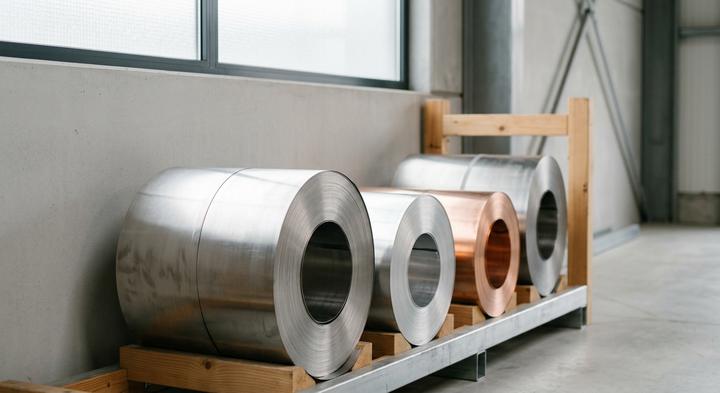
A well-organized industrial environment with proper material management before stamping.
How do you verify if a factory’s stamping press actually matches your progressive tooling specs? You cannot rely on a PDF capacity sheet; calculating the actual baseline requires combining the shear and forming forces across all progressive die stations, then adding a 20% safety margin to prevent structural bolster deflection under off-center loads. During a live video walkthrough, make the operator point the camera directly at the physical metal nameplates on the pneumatic or mechanical presses to confirm the rated tonnage, slide stroke, and shut height before you approve any run.
| Press Tonnage (Tons) | Speed (Strokes/Min) | Maximum Strip Width (mm) | Key Application | Recommended Material Thickness |
|---|---|---|---|---|
| 45 – 80 Tons | 100 – 400 | Up to 150 mm | Small electronic brackets, micro-terminals, and precision custom connectors. | 0.1 mm – 1.0 mm |
| 110 – 200 Tons | 60 – 200 | Up to 300 mm | Automotive clips, structural chassis braces, and household appliance housings. | 0.8 mm – 2.5 mm |
| 250 – 400+ Tons | 30 – 120 | Up to 600 mm | Heavy-duty industrial busbars, automotive structural frames, and deep-drawn metal stampings. | 2.0 mm – 6.0 mm |
Auditing Coil Feed and Tension Synchronization
Even the heaviest press will fail if the raw coil feeder setup slips or loses loop synchronization during a high-speed run. On your video audit, have the operator focus the camera on the loop area between the decoiler and the high-speed servo feeder to ensure the stock moves with smooth, controlled tension rather than jerky jumps. Here at WenXinDa, we run high-speed progressive tooling lines with integrated tension monitoring to prevent strip buckling and maintain positioning accuracy across high-volume production batches. If a supplier’s operator hesitates to pan the camera to show the physical press nameplate or a perfectly synchronized feed loop under load, their line isn’t set up for high-precision progressive production runs.
Question 3: How Do You Catch Raw Coil Thickness Deviations Before Press Feeding?

Precision measurement verification plays a critical role in high-volume stamping runs.
The QC lead stands by a three-ton cold-rolled steel coil, digital micrometer in hand, knowing the mill certificate guarantees a neat ±0.05mm thickness tolerance that is structurally impossible to maintain across the entire 1,500-meter run. In progressive stamping, that tiny variance is the difference between a smooth shift and a ruined die. When a raw coil drifts thicker than the tool clearance, the metal physically cannot flow; it wedges, buckles, and slams the punch with thousands of tons of unintended press force. That is why relying on mill test reports is an honest hedge at best and a financial gamble at worst—if a supplier is not measuring thickness right at the feeder inlet, they are essentially guessing.
The High-Volume Structural Steel Run
A procurement manager managing a heavy-gauge automotive bracket run faces a nightmare scenario: a thickness spike in structural steel that can crack an active die block, instantly destroying a custom progressive tool worth upwards of $80,000. At WenXinDa, we manage this risk on our high-speed lines by mounting contact-type electronic sensors right before the press feeding mechanism to read raw thickness continuously. If the coil gauge deviates by even 0.04mm from nominal, the sensor triggers an automatic press brake within milliseconds, while the operator physically isolates the out-of-spec coil segment in a red-tagged quarantine zone. This mechanical interlock prevents the defect from ever entering the press bed, ensuring that raw material deviation is caught and segregated on the floor before it ruins the tooling or pollutes the final shipping lot.
The Delicate Aluminum and Brass Setup Stamping
When shifting production to softer metals like brass or aluminum, the engineering risk flips from violent tool damage to subtle strip deformation and edge curling. If the supplier sets the progressive feed guides too tightly to compensate for incoming coil thickness drift, those rigid steel edges will pinch, shave, and warp the softer aluminum strip, throwing off the feeding pitch and causing out-of-spec part dimensions. Conversely, running hard stainless steel through those same tight guides would cause rapid friction wear and severe scoring along the raw material edges. The fix requires low-friction roller guides engineered with adjustable clearances matched to the exact physical thickness of the specific alloy batch, guiding the metal smoothly without scratching, pinching, or sacrificing progression accuracy.
The Virtual Inspection Test
Question 4: Can You Show Me the Scrap Shute and Strip Layout in Real Time?
The stamped carrier skeleton is the ultimate diagnostic report of a tool designer’s skill, showing the 80% of tool performance that cannot be simulated on a computer. While beautiful 3D models look pristine in procurement reviews, they cannot predict how physical coil stock reacts when a mechanical press strikes it eighty times a minute. Analyzing the physical Strip Layout and scrap management during a live run reveals the real structural stability of the process.
A perfect 3D CAD layout guarantees the physical metal stamping run will perform without distortion.
No virtual design accounts for the directional stresses, material thickness variations, and localized work hardening that occur as a progressive tool runs at speed. A designer’s actual competence is stamped directly into the carrier skeleton—the leftover brass, steel, or aluminum strip. If progression spacing is designed too narrow in an aggressive attempt to reduce raw material weight, the strip will warp, pull, and twist, dragging your parts out of tolerance. When auditing WenXinDa or any global supplier on a live video stream, ask them to show you the stamped carrier skeleton in Real Time; it should lay completely flat and show uniform web margins without any visible edge-burring or vertical twisting.
Scrap disposal is a secondary maintenance issue that doesn’t impact unit costs or delivery schedules.
Shedding waste is actually the primary bottleneck in high-speed progressive operations, where a single trapped slug can instantly crack a punch or cause a severe die-jam. Have the operator point their camera directly at the Scrap Shute and the under-die conveyor systems while the press is running. If you observe piles of slugs backing up in the exits, or operators standing by with brass drift pins to manually clear the die space, you are looking at a line destined for high scrap rates and constant micro-stops. Clean tool design ensures that scrap drops freely through the bolster without relying on operators to manually clear the path.
Maximizing material utilization on the strip always yields the lowest overall production cost.
Squeezing parts too tightly on the strip to save pennies on raw material frequently backfires when the remaining web bridges fail under the high-speed press load. While optimized material utilization directly reduces the unit price on high-volume runs, a weakened carrier strip will buckle, causing progressive misfeeds that stop the press or destroy the progression pitch. Competent engineers design the Strip Layout to maintain a rigid backbone, ensuring the carrier has the structural strength to pull the stock accurately through the press.
Question 5: What Does Your Live Statistical Process Control (SPC) Actually Track?

A clean, climate-controlled quality inspection environment ensures precise and stable measurements.
Catching raw coil thickness deviations at the feeder is only half the battle; those physical swings multiply as the strip works through the progressive die stations. To stop these shifts from turning into bulk scrap, a supplier must run active Statistical Process Control (SPC) inside a climate-controlled room instead of relying on a single golden sample signed off at the start of the shift.
| QC Metrology Equipment | Primary Measurement Target | Measurement Accuracy (mm) | Live Calibration Check | Virtual Red Flag |
|---|---|---|---|---|
| Coordinate Measuring Machine (CMM) | 3D complex geometries, hole positions, GD&T profiles | ±0.002 mm | Ask to see the metrology room log (must be 20°C ±1°C). | CMM sitting on an active factory floor or in a room with open windows. |
| Optical Comparator / Vision System | 2D profiles, edge burr heights, pitch spacing | ±0.005 mm | Verify a physical calibration reticle or glass master standard on the camera. | Operator guessing the edge boundary on an uncalibrated monitor. |
| Custom Go/No-Go Fixtures | Critical press-side dimensions, bend angles, overall length | ±0.05 mm | Check the physical calibration sticker on the check fixture itself. | Fixtures with worn edges, missing ID tags, or left uncovered in a dusty bin. |
| Digital Micrometers & Calipers | Coil thickness, simple step heights, raw strip width | ±0.01 mm | Ask for a quick zero-check with a physical gauge block live on screen. | Caliper jaws showing light leakage when closed, or missing calibration seals. |
Thermal expansion is the quiet enemy of high-tolerance metal stamping. Because steel expands as it heats up, metrology accuracy drifts quickly if the lab isn’t locked down. If a supplier’s metrology room is sitting at 28°C, their measurements are a guess; the space must be strictly climate-controlled to 20°C ±1°C to make those micron-level checks valid. During your virtual audit, don’t settle for static PDF sheets. Ask the QC manager to share their screen or hold a live CPK chart up to the lens—if that process capability index isn’t consistently above 1.33 for critical features, their process is out of control. Watch how physical check fixtures are treated at the press side; custom go/no-go gauges should be cleanly stored, clearly labeled, and regularly calibrated rather than thrown into random tool drawers. Finally, trace controls must run from the raw heat numbers stamped on the coils down to the final boxed parts. At WenXinDa, we link every finished carton back to its raw steel heat number so any out-of-spec event is isolated instantly without halting your entire production run.
From Screen to Shop Floor: Securing Your Custom Tooling Pipeline with WenXinDa
Moving from validating coil thickness tolerances and feed-loop synchronization on a live screen to drafting a commercial agreement is where many custom metal stamping projects stall. Sourcing teams frequently find themselves trapped in circular negotiations over progressive die amortization or facing unexpected T1 sample delays because the initial commercial terms were decoupled from actual shop floor capabilities. We mitigate this risk by keeping all progressive tool design, wire EDM cutting, and die assembly entirely in-house at WenXinDa. This eliminates the standard markup of outsourced tool shops and avoids the finger-pointing that happens when a tool needs revision. Our tooling amortization structures are calculated against clear, volume-based milestones, ensuring your upfront costs align with the real-world scale of your production run. By bringing engineering metrics to the contract stage, we verify that your 2D or 3D CAD files map to the appropriate press force and bolster dimensions before capital is committed.
Instead of relying on static paper quotes that leave critical tolerances open to interpretation, we provide a direct engineering analysis of your part geometry. Send your CAD files to our team for a comprehensive Design for Manufacturability (DFM) review where we assess thin-wall sections, bend radii, and material utilization. Along with a detailed commercial proposal covering tooling depreciation and T1 lead times, we will schedule a live, 20-minute video walkthrough of our high-speed progressive lines, giving you direct visibility into our coil leveling, optical sensors, and QC inspection protocols.