

Four Crucial Checks for Your First Metal Stamping Sample Approval Batch
Why Your First Metal Stamping Sample Is Where Mass Production Margins Live or Die
A golden first sample is often a lie. Buyers celebrate when the initial inspection batch looks flawless, but they rarely ask how those parts were actually made. Usually, those first articles were babied—hand-polished, wire-cut slow, or run on soft development tools by a senior toolmaker who coaxed the metal into tolerance. When you transition to a continuous run at 100 strokes per minute, the physics change. High-speed progressive dies face intense heat buildup, fluctuating coil feeding forces, and material variation that a prototype environment simply doesn’t replicate. The result is sudden dimensional drift that destroys your yield before the first production run is even packed.
The first-article trial is your last cheap window to adjust the tool. Once the high-carbon progressive die is hardened and heat-treated, making even a minor 0.1 mm correction requires slow, expensive wire EDM work that burns through your margin and delays the launch by three weeks. In our engineering reviews at WenXinDa, we treat the first physical run as a stress test for material springback rather than a checklist formality. Every coil of cold-rolled steel or brass has its own material memory; the digital CAD model doesn’t account for how actual physical grain directions behave under 200 tons of high-speed pressure.
Accepting “close-enough” dimensions during this initial run creates massive assembly-line bottlenecks down the road. If a stamped bracket is out of flatness by a fraction of a millimeter, it might clear a casual incoming QC inspection, but those tiny variances compound when automatic robotic screwdrivers try to force mating parts together on your assembly line. The smartest way to avoid this is to ask your stamper one question before signing off: “Was this sample run at full production speed on the final, hardened progressive die, or was it coaxed out of a soft development tool?”
Evaluating Dimensional Accuracy: The Four Hard Checks for Stampings
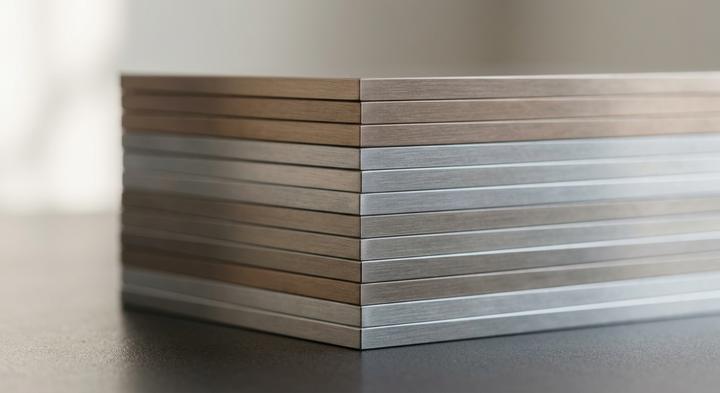
Verifying dimensional stability and material grain alignment during the first-article run prevents production drifts.
For custom metal stampings, how do you verify the dimensional tolerance of a sample before approving mass production? Once a factory claims they ran samples at full production speed on the final progressive tool, verifying those physical parts requires moving past basic handheld calipers. The evaluation must isolate flat-part dimensions, material chemistry, burr heights, and flatness to prove the tool’s geometry is structurally stable before heat treatment.
| Stamping Quality Parameter | Standard Measurement Method | Mass Production Defect Risk | WenXinDa Reference Target |
|---|---|---|---|
| Precision Dimensional Tolerance | 3D coordinate-measuring machine (CMM) mapping and multi-sensor optical systems to scan critical hole patterns and distances. | Accumulated pitch error or tool shift causing assembly misalignment and interference during high-speed automated runs. | Critical features held to ±0.05 mm or tighter based on drawing; non-critical features held to ISO 2768-m. |
| Material Grade and Mill Verification | Spark optical emission spectrometry (OES) for alloy chemistry; tensile testing for yield strength, elongation, and n-value assessment. | Out-of-spec yield strength causing unpredictable springback, cracking in deep draws, or rapid die wear. | 100% chemical and mechanical alignment with raw mill test reports (MTR) and ASTM/EN standard limits. |
| Burr Height and Shear-to-Break Ratios | Optical comparators, depth-focus digital microscopes, or stylus-type surface roughness profilometers along sheared edges. | Excessive burrs causing assembly friction, wire insulation damage, plating flaking, or manual handling hazards. | Burr height locked below 10% of sheet thickness; shear-to-break ratio maintained at a stable 1:2 to 1:3 ratio. |
| Flatness Control and Residual Stress | Multi-point dial indicator sweep on a calibrated Grade 00 granite surface plate or 3D laser scanners under zero-clamping force. | Internal stresses causing post-ejection warping and twisting, preventing proper mating with adjacent components. | Overall flatness kept within 0.1 mm per 100 mm of span, minimizing downstream assembly-line distortion. |
Verification and Acceptance Protocol
Passing The Four Hard Checks verifies that the progressive die’s internal clearances and stage geometries are fundamentally locked in. At WenXinDa, this multi-point dataset is what actually authorizes final tool hardening. Trying to fix a dimensional slip after heat treatment means paying for slow wire EDM modifications or scrapping expensive carbide inserts. Once your physical samples consistently clear these checks, the tooling is ready to run high-speed mass production without drifting out of spec.
How Sourcing Requirements Pivot Across Industrial Applications
A QC lead stands over a 300-ton press at 6:00 AM on a Tuesday, watching the setup crew strip out a progressive die that was punching 0.5 mm aluminum shields to make room for a massive, multi-stage tool that stamps heavy structural brackets. This contrast on the shop floor shows why a metal stamping supplier cannot treat every project with a single quality standard. A consumer device housing requires microscopic attention to cosmetic finishes and tight flat-plane tolerances, while a heavy bracket demands structural yield-strength validation and fracture-free bends. A seasoned manufacturer like WenXinDa prevents quality drift by adjusting both the tooling construction and inspection frequency depending on where the finished part lives.
High-Density Consumer Electronics Enclosures
Thin-gauge stamping is always a race against tool wear. When stamping parts out of 0.5 mm stock for high-density consumer electronics enclosures, a tiny fraction of a millimeter of tool wear doesn’t just cause a cosmetic burr—it warps the flat plane of the enclosure, causing assembly gaps that robotic screw-driving systems cannot force together. The quality focus here must be on continuous coplanarity and edge quality, meaning the progressive tool must use high-grade tungsten carbide inserts at high-wear shear points. When vetting a supplier, look past the initial golden sample and ask for their sensor-tracked tool maintenance log to see if they sharpen punches before wear shows up on your parts.
Automotive Components and PPAP Submissions
In automotive supply chains, shipping a perfect part is only half the job; the other half is proving your process can repeat that perfection millions of times. For structural automotive components, a PPAP submission demands a rigorous 18-element documentation package, including process capability studies that prove a stable Cpk above 1.33. This means the factory cannot rely on manual checks with hand calipers. Instead, the progressive tooling must be designed with built-in acoustic or tonnage sensors that flag raw material thickness variations in real-time, stopping the press before a thick coil split can damage a critical draw die and shut down a tier-1 assembly line.
Heavy-Gauge Industrial Mounting Brackets
Stamping heavy-gauge industrial mounting brackets shifts the focus from cosmetic perfection to raw structural integrity and weld preparation. When bending heavy-gauge plate steel, the primary failure mode is micro-cracking and material thinning along the outer bend radii, which can cause sudden structural failure under load. Procurement teams sourcing these brackets must verify that the vendor uses heavy-duty presses with precise stroke controls and high-tonnage pressure pads that prevent part wrinkling. The critical inspection metric here isn’t a flawless surface finish, but clean edge-sheared zones free of deep stress fractures, ensuring brackets are ready for automated secondary welding operations without requiring manual grinding or repair.
Three Costly Blind Spots Buyers Face During First-Article Inspections

Proactive DFM analysis and tolerance alignment help avoid hidden costs down the line.
A stamped metal part that looks pristine on your desk is meaningless if the process used to make it cannot survive high-speed production. When reviewing First-Article Inspections Three mechanical offsets usually determine whether your margins hold or vanish. Sourcing teams regularly sign off on perfect measurement sheets without realizing those early samples were babied on laboratory-grade tooling.
The wire-EDM prototype parts represent how the production progressive die will perform.
A wire-cut prototype operates under zero material stress, whereas a progressive die running at high speed slams the metal sheet, creating massive internal strain. When you jump from slow wire-EDM samples to a stamping press running at 200 strokes a minute, that pent-up stress releases as unpredictable springback. The parts warp, dimensions slip, and the mating holes no longer line up. If your supplier ran those first samples on a soft prototype die or an EDM bench, you have not actually tested the production process. Ask if the sample came off the hardened production progressive tool or a laboratory wire-cutter.
Plating and powder coating thicknesses can be factored in later as minor downstream adjustments.
Skipping secondary finish thickness during the initial tool design ruins press-fit tolerances. A standard 10-micron electroplated zinc barrier adds 20 microns to a mating diameter, converting a smooth slip-fit into a locked assembly. At WenXinDa, we adjust the CAD models and progressive tool geometries to build this plating allowance directly into the raw tool. If your supplier cuts the carbide tooling strictly to the raw print’s nominal values, your finished parts will fail incoming inspection the moment they return from the plating bath.
A perfect 50-piece initial sample run guarantees tool stability and quality for the life of the project.
A 50-piece run only proves that a skilled master toolmaker spent hours hand-adjusting a die for a single moment in time. In real-world production, punch clearances shift, tool steel wears, and burr heights climb with every single strike of the press. If you do not write maximum burr limits and mandatory die-sharpening intervals directly into the quality agreement, your dimensional tolerances will drift long before the first production run is complete.
Are these exact clearances and maintenance intervals locked into your supplier’s quality agreement, or are you waiting for the assembly line to jam before you negotiate them?
Vetting the Factory Floor: Production Capacity and Traceability Controls
How do you verify a metal stamping factory floor is ready for high-volume production without tolerances slipping? A flawless first-article sample proves the progressive tooling works on a slow test run, but it won’t tell you if the press can run hundreds of thousands of parts without a hitch.
| Factory Quality Process | Audit Question | Acceptable Objective Evidence | Supplier Red Flag | Responsible Party |
|---|---|---|---|---|
| Die Maintenance and Preventive Plans | How does the press shop track punch wear and progressive die stroke counts to schedule sharpening? | Mechanical or digital stroke counters on every press, tied to a maintenance database that schedules punch polishing and die sharpening at predefined intervals (e.g., every 50,000 strokes) before burr heights degrade. | Maintenance is purely reactive, meaning the tool runs until the Quality Assurance Inspector flags unacceptable parts or excessive burrs. | Tooling Engineering & Press Production Supervisor |
| Heat Number and Coil Traceability | How does the supplier trace a finished stamping back to its original steel lot and mill test report? | A physical or digital traveler card system that follows the coil from receiving to the press feed, linking the Heat Number directly to the physical shipping carton label. | Coils are loaded onto decoilers without active inventory tracking tags, or parts sit in unmapped, unlabeled warehouse bins before packaging. | Inventory Control & Quality Assurance Inspector |
| Measurement Calibration Standards | How are custom checking fixtures, vision systems, and metrology equipment verified against absolute master standards? | Valid ISO / IEC 17025 third-party calibration certificates attached to CMMs, backed by daily verification logs using certified master-setting blocks. | Checking fixtures lack master blocks, testing gear has expired calibration stickers, or inspectors rely on uncalibrated hand tools. | Metrology Lab Lead & Quality Management Director |
To keep high-volume lines moving, WenXinDa aligns every production run with these exact requirements on the Factory Floor. Traceability Controls How we verify raw metal lot integrity, ensuring that a batch of material can be traced back to the mill, while our toolmakers track press strokes dynamically to avoid dimensional drift before it begins. Requesting these maintenance logs and calibration records prior to the first production run is the only reliable way to guarantee your bulk parts match the signed-off sample.
Securing Long-Term Dimensional Stability at the Sample Gate
Even after physical parts clear those four dimensional checks, signing off at the Sample Gate Once remains the single most critical transition point between a CAD model and high-speed mass production. Squeezing a golden sample out of a soft prototype tool is relatively easy, but maintaining tolerances across a 100,000-part run is where most custom stamping programs succeed or fail. When procurement and engineering teams simply pass 2D drawings back and forth without active co-design, minor tolerance stack-ups and material thinning limitations stay completely hidden until the progressive tooling is already hardened and running. If a flange splits or a bend drifts during production, you are not just looking at a delayed shipping date; you are paying for slow, slow wire EDM modifications and scrapping expensive carbide inserts that were supposed to last millions of cycles. That is where mass production margins are quietly eaten away by constant tool maintenance and downtime.
At WenXinDa, we manage this transition by matching our in-house progressive tool design directly with our shop-floor production capacity. Our lines run press capacities up to 400 tons, processing sheet metal stock thicknesses from 0.1 mm to 6.0 mm. We do not just run your file as-is and hope for the best; our engineering team works directly with yours to analyze bend limits, springback compensations, and die progressions to ensure your part geometry survives high-speed runs. Before you release capital for hard tooling, send your 2D and 3D drawings to our engineering team for a technical DFM review. We will evaluate your part’s metal flow limits, critical bend radii, and tool feasibility so you can protect your margins before cutting steel.