
High-Precision Metal Stamping for Medical Prototypes and Regulatory Compliance
The Machining-to-Stamping Trap: Why Approved Prototypes Fail Volume Press Runs
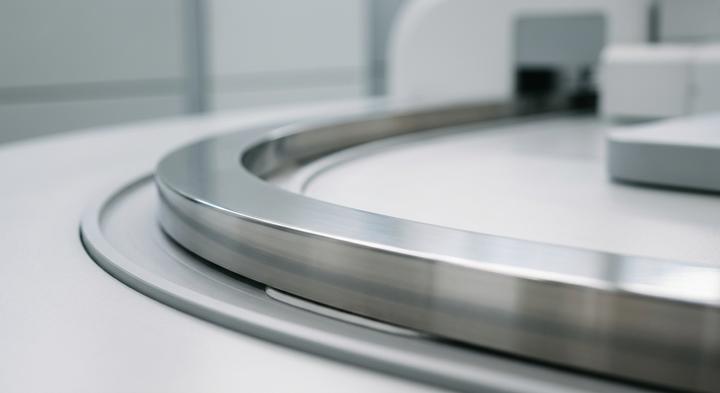
Validating physical material flow and internal stress during early-stage precision stamping development.
On a Tuesday morning, a medical quality engineer measures a surgical stapler anvil from the first high-speed production run and catches a 0.08 mm dimensional variance—even though the CNC-machined prototypes sailed through clinical trials without a single note. This is the classic disconnect when transitioning from low-stress prototyping to high-volume manufacturing. CNC machining is a subtractive process that carves components from stress-free extruded bar stock, leaving minimal residual tension. By contrast, precision metal stamping relies on high-speed plastic deformation, rapid localized shearing, and cold-working. When a progressive die punches and forms implant-grade alloys like 316L stainless steel, it forces the grain structure to align and introduces internal stresses that cause significant springback—phenomena that a milled sample cannot replicate.
Moving from clinical batches to commercial output under ISO 13485 requires addressable design-for-manufacturability (DFM) mapping before designs are frozen. Relying solely on laser-blanked blanks or rapid prototypes for functional evaluation often results in late-stage regulatory delays and expensive tooling rework when the geometry fails to hold tolerances in a 100-ton press. Early-stage DFM audits that evaluate edge-to-thickness ratios, micro-features, and minimum web widths help bridge this gap. Using modular prototype stamping dies early in the design cycle allows medical developers to validate physical parts produced under actual press forces, preventing the severe cost of recutting hardened steel progressive tools.
At WenXinDa, we address these physical realities at the DFM stage, analyzing grain direction and shear-to-tear ratios on critical micro-features before any metal is cut. Testing a prototype is only half the battle; the real test is validating how the material flows under pressure. If a supplier cannot show you exactly how grain-structure orientation will impact part geometry after the third bending station, they are quoting a component they do not yet know how to build at scale.
CNC vs. Modular Stamping: The Hard Transition Limits for Surgical Alloys
When does it make financial sense to switch surgical instrument production from CNC machining to metal stamping? For high-precision medical components, the decision involves more than just calculating tooling depreciation against unit price; it requires evaluating how surgical-grade alloys behave under mechanical stress. While CNC machining offers unmatched low-volume flexibility, the transition to modular metal stamping dies must occur far earlier than the standard 1,000-unit threshold to account for physical forming differences and surface-integrity validation under ISO 13485.
| Manufacturing Method | Dimensional Tolerance Limit | Tooling Cost & Lead Time | Validation Suitability (ISO 13485) | Inquiry Recommendation |
|---|---|---|---|---|
| CNC Machining & Laser Profiling | ±0.01 mm to ±0.03 mm; excellent for complex, thick-walled geometries. | $0 tooling fee; 1–2 weeks lead time for custom setups. | Modest; low mechanical stress but high risk of surface contamination from chlorinated cutting fluids. | Restrict to initial R&D prototyping and verification runs below 200 units. |
| Modular Stamping (Prototype Dies) | ±0.03 mm to ±0.05 mm; dependent on precision-ground modular inserts. | $3,500 – $7,500; 3–4 weeks for design and insert fabrication. | High; yields identical metallurgical stress and grain flow to progressive production runs. | Transition here at 300–500 units to run true validation protocols on critical assemblies. |
| Progressive Die Metal Stamping | ±0.02 mm to ±0.04 mm; highly repeatable across millions of strokes. | $15,000 – $45,000; 8–10 weeks including strip-layout validation. | Supreme; automated process controls ensure long-term, batch-to-batch structural uniformity. | Mandate for long-term commercial OEM contracts exceeding 5,000 units annually. |
The Strategic Transition Threshold
Relying on CNC-machined prototypes to simulate stamped behavior is a common risk path in medical device development. For thin-gauge surgical tool handles, the mechanical forming tension and material displacement that occur during metal stamping cannot be simulated accurately by removing material with a CNC mill. Stamping reorganizes the grain structure of 316L stainless steel, titanium, or nitinol, inducing local work-hardening that increases structural yield strength. Attempting to validate a surgical assembly using CNC-cut parts often results in catastrophic failures—such as unexpected springback or structural cracking—once production shifts to actual dies.
Stamping Strategies Across Three FDA Validation Milestones
Phase 1: Benchtop and Feasibility (Under 100 Units)
On a Friday morning at 6:30 AM, a QC lead rejects fifty delivery-system housings because of a microscopic burr on a slot that was perfectly clean on the laser-cut prototypes. This is where benchtop feasibility and sheet metal physics collide. During Phase 1, design changes are a weekly occurrence, and buying expensive hard tooling too early is financial suicide—yet CNC-machined substitutes fail to show how the metal behaves on a press. We get around this by pairing laser-blanking with simple, single-stage temporary forming inserts. This hybrid setup forces the alloy to bend and draw exactly as it will in final production, letting engineers map springback and material flow on 316L stainless steel without committing twenty thousand dollars of capital. It keeps your early-stage documentation accurate and ensures the physical form is locked down before your regulatory filings begin.
Phase 2: Verification and Validation Runs (500 to 5,000 Units)
A validation engineer opens a testing schedule on Monday morning and realizes they need 500 to 5,000 Units for mechanical validation, but the budget for a permanent progressive tool won’t clear until next quarter. The pressure here is proving statistical repeatability to secure the Cpk data required for Installation Qualification, Operational Qualification, and Performance Qualification (IQ/OQ/PQ) Validation Runs. We solve this bottleneck by mounting modular die inserts into universal master plates. It is a middle-ground strategy: you get parts stamped on high-speed mechanical presses under real-world pressures, but at a fraction of the tooling cost. The continuous tonnage monitors on our presses catch minor stamping variations, giving you the clean capability index (typically Cpk ≥ 1.33) you need for FDA submissions while keeping the tooling flexible enough for late-stage design tweaks.
Phase 3: Clinical Trials and Market Pilot Launch (Over 5,000 Units)
During the tooling kick-off meeting for Clinical Trials, an operations manager points out that a single micro-crack on a deep-drawn shell could halt a pilot launch of over 5,000 Units. At this scale, the room for error drops to zero, and the engineering discussion shifts entirely to tool wear, shear-edge maintenance, and long-term dimensional drift. This phase requires hardened-steel progressive dies designed for millions of strokes, featuring integrated optical sensors to prevent misfeeds before they crash the tool. While it is a major capital investment, it is the only way to safeguard your unit economics and regulatory standing during a Market Pilot Launch. A solid rule of thumb is to demand modular tooling designed to fit standard master frames during early runs, allowing you to defer major capital investments until the design is legally frozen.
Where Medical CAD Files Go Wrong: Tolerances That Inflate Tooling Costs
Applying machining tolerances to stamped medical components is the fastest way to blow a production budget before a single coil of steel is ordered. Bending metal is not the same as carving it, and overlooking this distinction creates tolerances that inflate tooling costs. Basing medical CAD drawings on multi-axis CNC expectations instead of progressive stamping mechanics guarantees expensive tool modification loops, high scrap rates, and delayed FDA validation timelines.
“To ensure the surgical instrument casing feels comfortable, we must apply a ±0.01 mm tolerance to all outer profile contours.”
Demanding ±0.01 mm on non-mating cosmetic profiles forces the toolmaker to design high-maintenance shaving stations that dull quickly on 316L stainless steel. Sheet metal edges do not cut like machined blocks; they naturally shear and tear. Relaxing these non-functional outer edges to ±0.1 mm or ±0.15 mm allows standard progressive blanking without secondary operations. At WenXinDa, we regularly see that relaxing just three cosmetic dimensions can reduce a tool from a twelve-station progressive die down to eight, lowering the initial tooling bill by 30% while improving run speed.
“The CAD model is locked for FDA clearance, so the stamping tool must be built exactly to these nominal dimensions.”
If a toolmaker cuts progressive dies strictly to nominal CAD dimensions, the stamped parts will fail inspection due to material springback. Medical alloys like temper-hardened stainless steel or implantable titanium exhibit high elastic recovery when formed. Tool designers must offset physical die geometry—overbending angles or adding coining features at bend radii—to achieve the drawing’s final nominal shape. The practical solution is to lock your functional assembly requirements but leave the internal tooling offsets open to the stamping partner’s simulation data.
“Since the prototype parts passed validation, the progressive tool will produce the exact same dimensions at 200 strokes per minute.”
Prototype samples run on slow modular tools or wire-EDM do not match high-speed progressive reality. When a production press runs at high speeds, dynamic force, coil tension variation, and heat expansion of the die steel introduce dimensional drift that never shows up in a low-speed prototype shop. Never approve high-speed production tooling based solely on static first-article samples; demand a continuous run of at least 5,000 parts at speed to prove dimensional capability.
The Medical Stamping Audit: Verifying Traceability, Cleanliness, and MSA
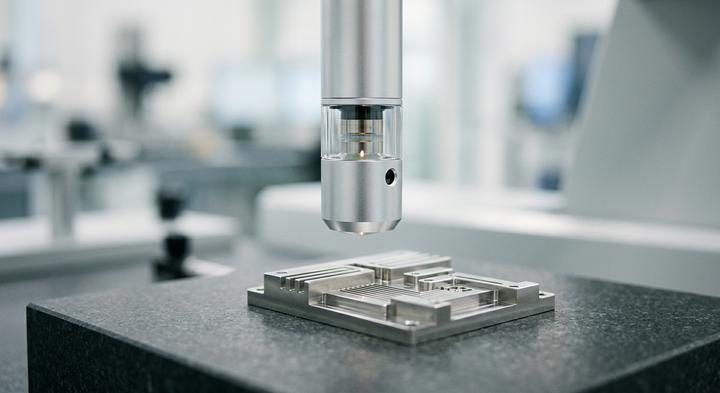
Securing strict tolerances with metrology systems and advanced measurement validation protocols.
Once a medical device team defines their IQ/OQ/PQ protocols, the focus shifts from theoretical validation on paper to physically auditing the supplier’s shop floor. It is here, under the noise of active press runs, where a precision metal stamping partner either proves medical-grade control or exposes themselves as a basic industrial shop. If a stamping partner cannot connect their press outputs back to the original raw coil heat lot, your regulatory submission is built on sand.
An auditor who inspects the scrap-segregation bins often learns more in five minutes than they would reading a thirty-page quality manual. If tool steel shavings or oily industrial brass scrap are co-mingling with biocompatible 316L stainless steel, your material traceability exists only on paper. Verifying a supplier’s quality management system requires matching their physical actions to their digital logs across material tracking, equipment validation, and metrology systems.
| Audit Category | Supplier Requirement | Red Flag to Watch For | Verification Method |
|---|---|---|---|
| Material Traceability | Upstream mill test reports (MTRs) linked to unique heat numbers; positive material identification (PMI) on incoming stock; strict isolation of recycled scrap to prevent cross-contamination. | Coils stored with hand-written tags or missing heat lot identifiers; scrap metal from non-medical runs mixed in the same recovery bins. | Request a random pull of a finished medical component and trace it back to the chemical composition certificate of the raw material coil. |
| Process Validation | Documented IQ/OQ/PQ runs matching the exact operational windows for press speeds, coil feed rates, and real-time tonnage limits. | Stamping presses operating outside validated speed parameters without an active deviation log or engineering sign-off. | Compare the active press PLC settings during the audit run with the locked-down values recorded in the validated OQ report. |
| Measurement Systems (MSA) | Completed Gauge R&R studies for all critical-to-quality (CTQ) dimensions; CMM and optical comparator calibration records updated within schedule. | Calibration stickers that are past due; using manual micrometers without a demonstrated Gauge R&R study showing less than 10% variance. | Review the raw repeatability and reproducibility (R&R) data sheets for the specific coordinate measuring machine (CMM) inspecting the parts. |
| Cleanliness & Contamination | Strict lubrication control using medical-grade, USP Class VI compliant or volatile vanishing oils that leave zero residue after washing. | Standard sulfur-based industrial drawing compounds used on the same tooling without a validated, multi-stage ultrasonic cleaning cycle. | Inspect the part-cleaning area; review the water quality logs (TOC and conductivity) and chemical analysis reports for residual oils. |
Securing Mass-Production Tolerances: Partnering with WenXinDa
Once the validation milestones and gauge repeatability protocols are locked, the operational challenge moves from paperwork to holding tight dimensional integrity over millions of continuous press strokes. Transitioning a medical device component from prototype tooling to a high-speed progressive die is where critical dimensions usually drift. If a prototyping shop used soft modular inserts to save short-term cost, they likely glossed over how high-tensile 316L or work-hardened 301 stainless steel behaves under continuous mechanical stress. WenXinDa mitigates this hand-off risk by engineering both short-run development tooling and multi-station progressive production dies within the same facility. The same engineering team that analyzes the initial strip layouts also designs the high-volume carbide punches, ensuring that springback corrections and material flow dynamics observed during early runs are physically machined into the final production tooling.
Securing Mass production runs while holding strict Production Tolerances down to 0.01 mm over millions of cycles requires exceptional tooling control. Processing demanding surgical alloys—specifically medical-grade 301, 304, and 316L stainless steel—demands specialized tool steels like vanadium-carbide alloys to prevent micro-galling and premature die wear. To ensure these components are ready for downstream medical assembly, WenXinDa integrates cleanroom-adjacent packaging protocols to eliminate particulate contamination directly at the press. Before committing to high-volume tooling, submit your 3D CAD files (STEP or IGES format) for a confidential engineering assessment. Within 48 hours, our technical team will deliver a comprehensive design for manufacturability (DFM) review, outlining strip layout feasibility and springback compensation.