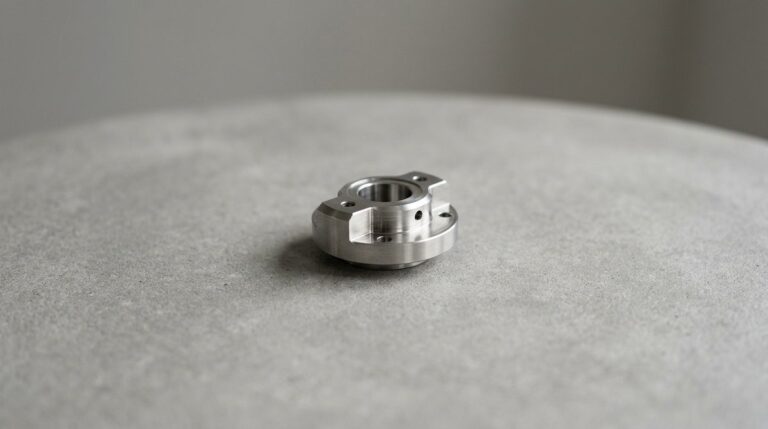
Meeting Automotive Standards with Precision CNC Machining
The Hidden Costs of Automotive CNC Machining
Process stability is the foundation of reliable automotive production.
Most procurement teams find that the jump from a perfect prototype to a 10,000-piece production run is where the real budget leaks start. It is easy to get a shop to hit a tight tolerance on a one-off sample; it is much harder to keep that same tolerance on a Tuesday night shift when the tooling is starting to wear and the raw material lot has shifted slightly. When you are buying for automotive, the cost isn’t just the price per part—it is the cost of the line stoppage that happens when a batch arrives with out-of-spec dimensions.
Many buyers fall into the trap of picking the lowest unit price, only to find that the supplier lacks the infrastructure to handle IATF-aligned consistency. If a shop doesn’t have a formal system for Statistical Process Control (SPC), they are essentially guessing that the parts are good until they get caught by your incoming inspection. At WenXinDa, we manage this by integrating quality verification into the initial CNC setup phase. We don’t just check the finished part; we monitor the process drift in real-time. If you aren’t seeing data logs or PPAP documentation as part of your standard delivery, you are likely paying for that lack of control in rework fees and expedited shipping costs later on.
When you are auditing a potential partner, don’t just ask if they can hit the spec. Ask how they handle the drift that happens during a long run. A shop that relies on manual inspection after the fact is fundamentally different from one that uses in-process probing to catch deviations before they become defects. The former looks cheaper on a quote sheet, but the latter is almost always cheaper once you account for the total cost of ownership. If a supplier can’t show you their process stability metrics, assume you are the one who will be paying for their downtime.
Selecting a CNC Partner for Automotive Components
Most shops can hit a tight tolerance on a single prototype, but automotive production is a different game. You aren’t just buying a part; you are buying a process that needs to stay stable for 50,000 units without drifting. If a supplier can’t show you how they maintain that stability on a Tuesday night shift, you aren’t looking at a production partner—you’re looking at a job shop that will eventually force you to manage their quality for them.
| Decision Factor | Look For | Primary Risk | Impact on Production |
|---|---|---|---|
| Tolerance Capability | 0.01mm repeatability | Assembly failure | High: Scrap rates |
| Material Traceability | Full mill certs per batch | Safety recalls | Critical: Liability |
| Quality Documentation | PPAP / SPC reporting | Unpredictable defects | High: Line speed |
| Pilot Lead Time | 8 weeks (tooling) | Timeline slippage | Medium: Launch delay |
| Risk Mitigation | In-process inspection | Quality drift | Critical: Batch integrity |
When you audit a potential supplier, don’t just look at their machines. Ask to see the control charts for a similar automotive component. A shop that relies on final inspection to catch errors is already behind; you want a partner who uses Statistical Process Control to catch the drift before the part goes out of tolerance. If they can’t pull a report showing their process capability index (Cpk) for a similar geometry, they are likely guessing at their own consistency.
At WenXinDa, we see the same bottleneck repeatedly: buyers focus on the unit price while ignoring the cost of a line stoppage. A part that costs 10% less is a net loss the moment a single batch fails to meet the Production Part Approval Process requirements. If the supplier can’t provide the documentation to prove they have a handle on their own process, the risk of a recall or a line-down event is yours to carry.
If a supplier can’t show you a control chart for a similar part, assume they are managing quality by inspection rather than by process.
Real-World Scenarios: From Pilot to Full-Scale Production

Transitioning from pilot to full-scale production requires rigorous process discipline.
Most procurement teams treat the transition from a CAD file to a 50,000-unit run as a linear progression, but the reality is that the machine settings and QC requirements for a prototype will actively sabotage a production line. If you treat a pilot run like a mass-production job, you pay for overhead you don’t need; if you treat a production run like a prototype, you are one shift away from a line-down event.
The Prototype Sprint: Speed Over Unit Cost
When you need to validate a bracket geometry before a Friday design review, the only metric that matters is cycle time. You need a shop that treats prototyping as a distinct workflow, using manual setups and flexible tooling that can handle design tweaks without triggering a full re-tooling cost. The trap here is forcing a high-volume supplier to handle the prototype; they will often try to force their rigid, PPAP-heavy process onto a part that is destined to change next week. That adds weeks of delay and unnecessary paperwork to a simple iteration. If the shop isn’t set up to pivot on a Tuesday afternoon, they aren’t the right partner for your sprint.
The Bridge-to-Production: Stability Gap This
This is where most projects hit the wall. You are moving from ‘make it work’ to ‘make it consistent,’ often while the design is still being finalized. When a quality team flags a tolerance deviation that didn’t appear in the initial samples, the temptation is to push the existing equipment to its limit. A more reliable approach is to transition to a supplier that uses in-process probing and automated inspection. While this adds a slight premium to the per-part cost, it eliminates the risk of a batch-wide failure during the pilot. At WenXinDa, we have found that the cost of a single failed pilot batch—including the emergency air-freight and the lost production time—far outweighs the investment in a more stable, probed machining process during the bridge phase.
Scale Production When: The Economics of Cycle Time
Once a design is locked and volumes scale into the tens of thousands, the conversation shifts from iteration to tool life and cycle time optimization. This is where the unit cost is truly defined. A machine that runs 15% faster but requires constant manual intervention is almost always less efficient than a fully automated cell that runs at a steady, predictable pace. We look for suppliers who optimize their machine settings—such as feed rates and coolant pressure—specifically for the material and volume of the run. The goal is to ensure the last part off the line is as precise as the first, without the ‘drift’ that occurs when tooling wears down unnoticed. If your supplier cannot provide a control chart or a clear plan for tool-change intervals, you are managing quality by inspection rather than by process, and that is a cost you will eventually pay in defects.
Always ask for the control chart before you sign off on the first production batch; if they can’t show you the stability data, they aren’t ready for the volume.
Common Pitfalls in Automotive CNC Procurement
Project success in automotive CNC machining is rarely about the machine’s capability and almost always about the supplier’s discipline in managing the transition from prototype to mass production. If you are not actively auditing the process, you are essentially gambling on the consistency of the night shift.
If the sample passes, production will too.
A sample is a showcase piece, often produced under ideal conditions with hand-picked material and extra operator attention. Production is a process that must survive tool wear, material variance, and machine drift. If your supplier cannot show you a staged inspection plan—specifically how they monitor Cpk during the ramp-up—you are not buying a stable process; you are buying a series of individual inspections that will inevitably fail as volume increases.
All CNC shops can handle automotive-grade documentation.
Many shops can hit a tolerance on a print, but few can maintain the rigorous paper trail required for IATF or PPAP compliance. Automotive procurement is as much about the documentation as it is about the metal. If a supplier cannot produce a control chart or a clear non-conformance workflow on demand, they are not equipped for the automotive supply chain. You will end up doing their quality engineering work for them when the first audit hits.
Lower tooling costs always result in lower total cost of ownership.
This is the most common trap for procurement teams. A low upfront tooling fee often signals a shop using soft materials or simplified fixtures that will degrade within the first few thousand cycles. At WenXinDa, we have seen too many projects stall because the ‘cheap’ tooling couldn’t hold a tolerance past the first 500 units. A higher initial investment in hardened, precision-engineered tooling is almost always cheaper than the cost of a line-down event or a batch-wide recall.
Material sourcing is a standard commodity purchase.
Assuming all 6061-T6 or 4140 steel is identical is a mistake that leads to inconsistent machining performance and premature tool failure. Automotive parts require certified material lots with full traceability. If your supplier isn’t providing mill certificates for every batch, you have no way of knowing if the material chemistry is drifting, which directly impacts the structural integrity of the final part. Always verify the source before the first chip is cut.
How to Verify Your CNC Supplier’s Reliability
Now that we have covered why process stability matters for automotive runs, the real question is how to filter out shops that talk about quality from those that actually live it. A shop that relies on final inspection to catch errors is just hoping for the best; a shop that uses in-process probing to prevent them is actually managing your risk. If you are looking at a quote, the difference between these two approaches is the difference between a smooth launch and a line-down event.
| Verification Metric | Expected Evidence | Red Flag | Focus Area |
|---|---|---|---|
| Typical Defect Rate | Historical data < 0.3% on automotive parts | “We don’t track it” or vague promises | Process Capability |
| QC Workflow | In-process probing logs & SPC charts | Final inspection only | Real-time Monitoring |
| Non-conformance | Formal CAPA reports & root cause analysis | Verbal “we’ll fix it” assurances | Risk Mitigation |
| Batch Compliance | Full mill certs & traceability logs | Missing batch IDs or manual logs | Regulatory Audit |
When you are vetting a partner, don’t settle for a “yes” on quality. Ask to see the actual control charts from a previous run. If they cannot show you how they handle a non-conforming part—or worse, if they don’t have a formal process for it—you are essentially paying them to experiment on your production line. Anyone who has sat through a Tier-1 audit knows that a missing batch ID or a lack of traceability is exactly what kills a shipment at customs.
At WenXinDa, we keep the documentation for every batch ready because we know that’s what keeps your production moving. If you want to see how we handle these metrics for your specific part geometry, contact our engineering team for a production consultation or request our full spec sheet.
Moving Forward with Your Automotive CNC Project
Transitioning from a successful pilot to full-scale automotive production requires more than just a capable machine shop; it demands a partner who treats process stability as a deliverable. The difference between a prototype that looks good on a desk and a production run that holds tolerance across 50,000 units is found in the rigor of the engineering collaboration. When the design is locked, the focus must shift immediately to process capability, material traceability, and the documentation required to satisfy Tier 2 requirements.
At WenXinDa, we have found that the most successful projects start with a technical review before the first PO is even drafted. By aligning our machining strategy with your specific assembly needs early, we can often identify potential bottlenecks in tooling or material flow that would otherwise cause delays during the ramp-up phase. A transparent, data-driven partnership means you get more than just parts; you get the process stability metrics and compliance documentation necessary to keep your line moving without interruption. If you are ready to move your project from a concept to a reliable production stream, reach out to our engineering team to request a technical review or a custom spec sheet for your components.